The Passport Paradox: Why Your Indian Travel Document Isn't Conclusive Citizenship Proof
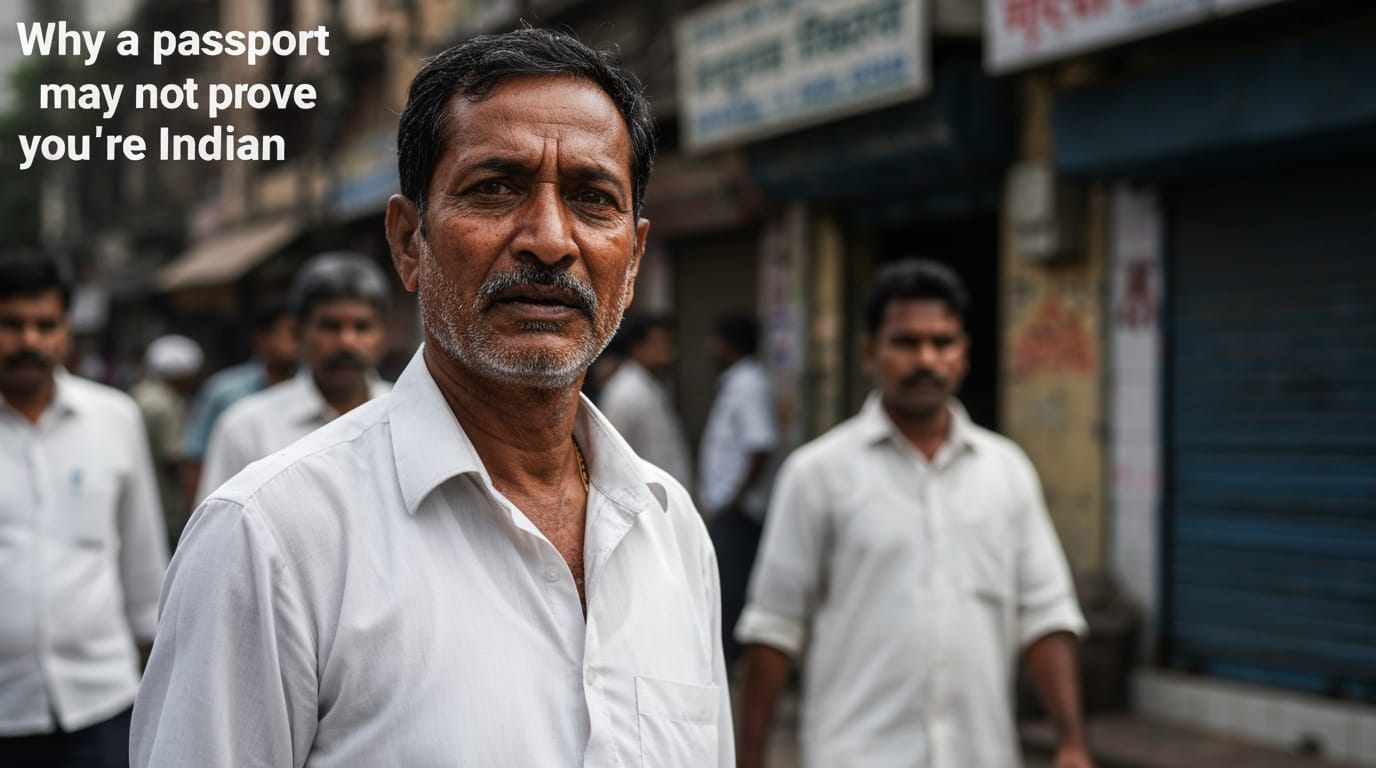
New Delhi — A recent clarification from the Ministry of External Affairs (MEA) has sparked widespread public discourse, challenging a long-held assumption for millions of Indians: that a passport serves as irrefutable proof of citizenship. The MEA unequivocally stated that while an Indian passport is a vital international travel document, it is not considered conclusive legal evidence of Indian citizenship within the country's legal framework. This distinction, though rooted in existing statutes, has brought to light the nuanced and often complex nature of proving one's nationality in India.
The Core of the Confusion: Travel Document vs. Citizenship Proof
The MEA's statement, made during the 14th Passport Seva Divas, highlighted that a passport's primary function is to facilitate international travel and attest to the holder's nationality when abroad, securing consular protection. However, it does not definitively settle a person's status at home. This position is grounded in the legal separation between the Passports Act of 1967, under which passports are issued, and the Citizenship Act of 1955, which governs how Indian citizenship is acquired and determined. The government's Passport Manual itself describes a passport as "strong evidence" of nationality, but explicitly not "conclusive proof" in a citizenship dispute.
This legal differentiation means that while meticulous verification processes precede the issuance of a passport, including checks of other identity documents, the passport itself is considered a "downstream document" rather than a fundamental certificate of citizenship. Courts, therefore, do not typically treat it as an unassailable root document for verifying citizenship. Furthermore, Section 20 of the Passports Act, 1967, provides for exceptional circumstances where a passport or travel document may be issued to a non-citizen in the public interest, further underscoring that possession of a passport does not inherently guarantee citizenship.
Navigating India's Citizenship Framework
Unlike many nations that issue a singular, universal citizenship card, India does not provide one definitive document that conclusively proves the citizenship of all its citizens. Indian citizenship is a legal status defined by the Constitution of India and detailed primarily by the Citizenship Act, 1955. This Act outlines five principal ways to acquire citizenship: by birth, by descent, by registration, by naturalization, or through the incorporation of territory.
The method of acquisition dictates the nature of proof required. For individuals who obtain citizenship through registration or naturalization, a specific Citizenship Certificate issued by the government serves as direct and conclusive proof of their status. However, the vast majority of Indian citizens are those by birth or descent, and they are typically not issued such a standalone certificate. This structural gap means that their citizenship is generally inferred from a combination of records, rather than a single document.
The rules for citizenship by birth have also evolved over time, adding layers of complexity. For instance, those born between January 26, 1950, and July 1, 1987, were considered citizens by birth regardless of their parents' nationality. For those born between July 1, 1987, and December 3, 2004, at least one parent needed to be an Indian citizen. After December 3, 2004, birthright citizenship requires both parents to be Indian citizens or one parent to be an Indian citizen and the other not an illegal migrant. These historical shifts mean the documentary evidence needed can vary significantly depending on the period of birth.
Beyond Identity Cards: What Authorities Seek
Given the absence of a universal citizenship document, proving Indian citizenship often requires presenting a "chain of documents" that collectively establish one's legal standing. For citizens by birth, this typically involves birth records, educational certificates, and documents establishing parentage. Domicile certificates, official records, and other legal documents can also contribute to this body of evidence. In any dispute, the burden of proving Indian citizenship rests on the individual claiming it.
It is crucial to differentiate citizenship from identity or residence. Common identity documents like Aadhaar cards, Voter ID cards, and PAN cards, while widely used for various administrative purposes, are not considered conclusive proof of citizenship. Aadhaar, for instance, establishes identity and residency but does not confirm nationality and can be issued to eligible non-citizen residents. Voter ID cards primarily indicate electoral eligibility and local residency, but the Election Commission of India has clarified that inclusion in the electoral roll does not automatically confirm citizenship. PAN cards are solely for tax identification. Judicial rulings consistently affirm that citizenship cannot be proven by these documents alone, and they are treated as supporting evidence rather than final proof.
Implications and the Way Forward
The MEA's clarification has generated significant discussion, particularly in the context of exercises like the Special Intensive Revision (SIR) of electoral rolls, where questions of eligibility and citizenship have come under renewed scrutiny. Critics have voiced concerns that the lack of a clear, single document for the majority of citizens could lead to difficulties and potential disenfranchisement during such verification processes.
While the government maintains that its position on passports is consistent with existing law, the debate underscores a fundamental challenge in India's governance structure: the absence of a streamlined, universally accepted mechanism for proving citizenship for its vast population. The complexity often leaves citizens to rely on a combination of contextual documents, which can sometimes be inconsistent or difficult to obtain, especially for older generations who may lack formal birth records.
As the nation continues to grapple with these intricacies, the call for clearer legal frameworks and potentially a more explicit system for documenting citizenship for all Indians gains traction. Until then, citizens must remain cognizant that while a passport is indispensable for international travel, its legal weight as proof of citizenship within India is rebuttable, necessitating a comprehensive understanding of the Citizenship Act and a robust collection of supporting documents to affirm one's national identity.


