The Unresolved Paradox of Monticello: Thomas Jefferson's Enduring Moral Test
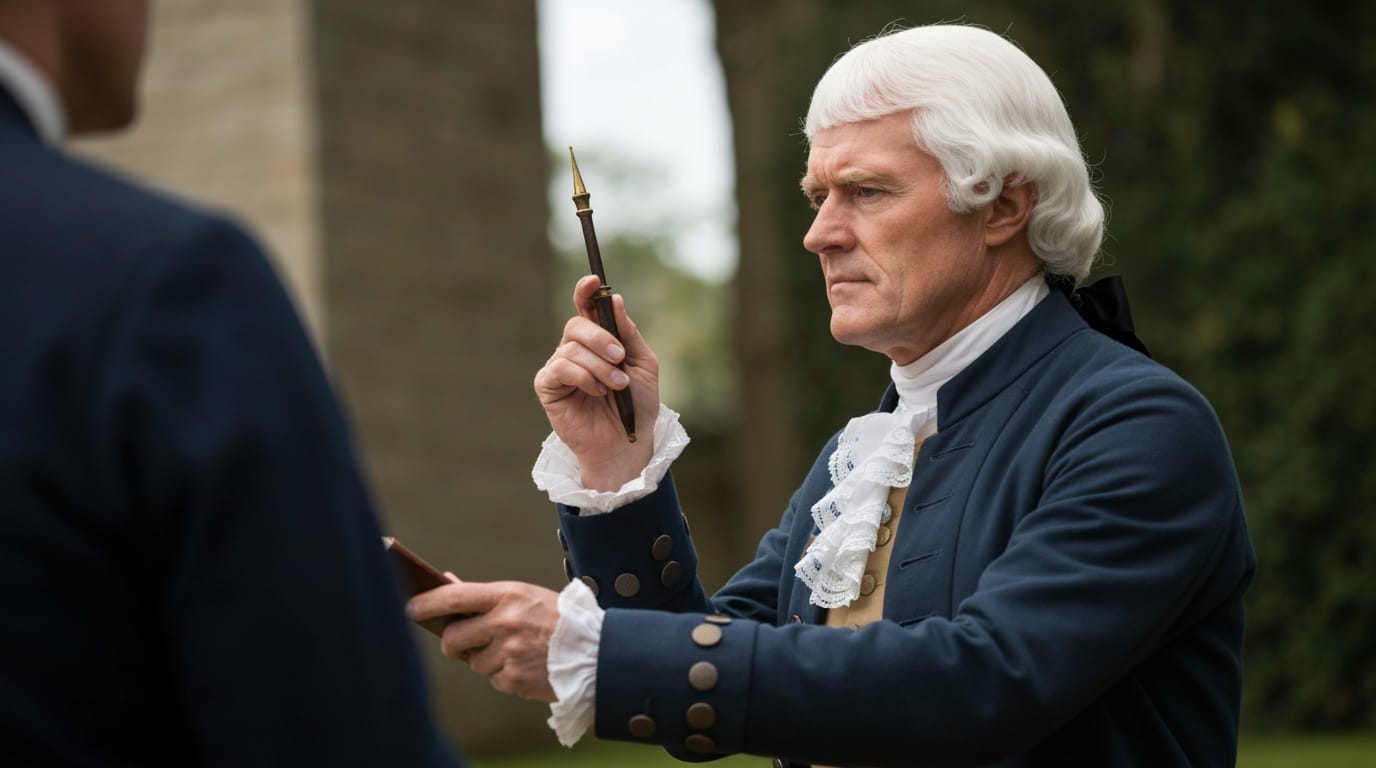
CHARLOTTESVILLE, Va. – Thomas Jefferson, the visionary author of the Declaration of Independence and third President of the United States, articulated the enduring principle that "all men are created equal." Yet, the life of this pivotal Founding Father was marked by a profound contradiction that continues to challenge his legacy: his lifelong ownership of enslaved people and the decades-long relationship with Sally Hemings, an enslaved woman who was also his late wife's half-sister. This dissonance stands as perhaps the most significant moral test Jefferson faced, one that history continues to grapple with and re-evaluate.
Jefferson, born into Virginia's planter class, inherited enslaved individuals at a young age, a common practice in the "slave society" that formed the economic backbone of his era. Despite drafting revolutionary words of liberty and self-evident truths, he would eventually oversee hundreds of enslaved men, women, and children at his Monticello plantation over the course of his lifetime. The paradox of a man who championed human rights while simultaneously denying them to so many has become a central focus for understanding the complexities of early American history.
The Shadow of Monticello: Sally Hemings and Her Children
Central to this moral conundrum is the long-debated relationship between Jefferson and Sally Hemings. Born into slavery in 1773, Hemings was the daughter of John Wayles, Jefferson's father-in-law, and Elizabeth Hemings, an enslaved woman. This familial connection meant Sally was the half-sister to Jefferson's deceased wife, Martha. The relationship between Jefferson and Hemings is believed to have begun in Paris in the late 1780s, when a then 14-year-old Hemings accompanied Jefferson's young daughter to France. In France, where slavery was illegal, Hemings reportedly negotiated her return to Virginia only after Jefferson promised to free her children once they came of age.
Over the following decades at Monticello, Hemings gave birth to six children. For centuries, rumors and accusations of Jefferson's paternity circulated, often dismissed by mainstream historians and Jefferson's white descendants. However, these claims were tenaciously preserved through the oral histories of Hemings's descendants. The historical consensus dramatically shifted in 1998, following a Y-chromosome DNA analysis. This study found a near-perfect match between the male line of the Jefferson family and a descendant of Eston Hemings, Sally's youngest son, while ruling out other potential fathers like the Carr nephews, who had long been presented as the alternative. While the DNA evidence confirmed only the paternity of Eston Hemings by a Jefferson male, the broader historical and circumstantial evidence, combined with the DNA findings, led most historians to conclude that Thomas Jefferson was indeed the father of all of Sally Hemings's children.
A Deep-Seated Contradiction: Ideals Versus Reality
Jefferson's articulated views on slavery were frequently at odds with his personal practices. He often described slavery as a "moral depravity" and an "evil" that contradicted natural law and threatened the nation's survival. Early in his career, he introduced legislation to prohibit the importation of enslaved Africans to Virginia and attempted to ban slavery in the Northwest territories. In the original draft of the Declaration of Independence, he included a passage condemning King George III for perpetuating the slave trade, though this was ultimately removed by the Continental Congress.
Despite these philosophical objections and legislative efforts, Jefferson remained a lifelong enslaver. His complex and often contradictory stance stemmed from several factors. He expressed fears of racial conflict if enslaved people were immediately freed, and he believed that African Americans were racially inferior to whites. This led him to advocate for a gradual emancipation coupled with the deportation of freed individuals to Africa or the West Indies, as he could not envision the two races coexisting peacefully. His personal financial situation, heavily reliant on enslaved labor, also played a role in his reluctance to free his bondspeople during his lifetime. In the end, he freed only a handful of enslaved individuals, primarily members of the Hemings family, in his will.
The Cost of Silence and a Shifting Legacy
Jefferson's "immense silence" on the issue of slavery, particularly after his return from France in 1789, is often cited by historians as a critical point where his active pursuit of abolition waned. The controversy generated by his critiques of slavery within the planter class may have led him to withdraw from a leadership position on the issue. This silence, coupled with his continued enslavement of human beings while promoting ideals of liberty, has profoundly shaped his historical assessment.
Today, Jefferson's legacy is viewed through a more critical and nuanced lens. Institutions like Monticello openly explore the lives of the enslaved people who built and maintained the estate, including the Hemings family, providing a more complete and often uncomfortable narrative of American history. Exhibitions highlight the stark contrast between Jefferson's privileged lifestyle and the forced labor that sustained it. The unresolved paradox of his life serves as a stark reminder that even the most celebrated figures of history can embody profound contradictions, failing moral tests that challenge the very principles they espoused.
Conclusion: An Enduring Reflection
The moral test Thomas Jefferson faced, and arguably failed, concerning slavery and his relationship with Sally Hemings, remains a cornerstone of American historical discourse. It underscores the immense gap between the lofty ideals upon which the nation was founded and the harsh realities of its early existence. The re-evaluation of Jefferson's life, fueled by new historical scholarship and scientific evidence, compels a deeper understanding of the nation's complex origins. It challenges Americans to confront the difficult truths of their past, recognizing that the pursuit of liberty and equality has been, and continues to be, an ongoing and often imperfect journey.


