Tragic Death of German Train Conductor Ignites National Debate on Rising Violence
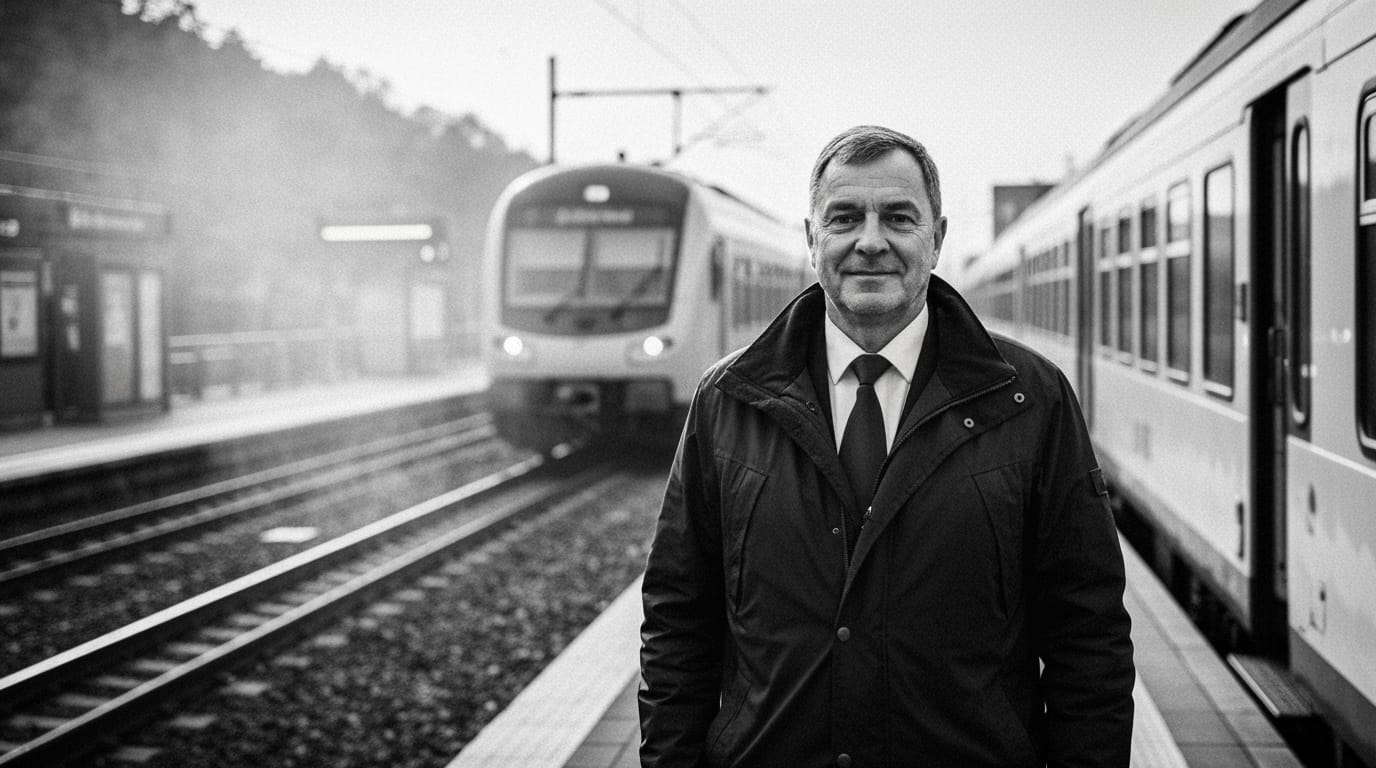
Berlin, Germany – The senseless death of a 36-year-old train conductor in southwestern Germany this week has sent shockwaves across the nation, exposing a deepening crisis of violence against public transport workers and sparking urgent calls for enhanced safety measures. The tragic incident, which saw a dedicated Deutsche Bahn employee brutally attacked during a routine ticket inspection, has brought into sharp focus the escalating dangers faced by frontline staff and the broader societal implications of increasing aggression on Germany's railway network.
The Fatal Encounter on a Regional Line
The incident unfolded on Monday evening, February 3, 2026, aboard a regional train departing from Landstuhl station in Rhineland-Palatinate. Train conductor Serkan C., a 36-year-old father of two, was performing his duties when he encountered a 26-year-old passenger who was unable to produce a valid ticket. Following protocol, Serkan C. instructed the individual to disembark the train. However, the situation quickly escalated when the passenger reportedly launched a violent assault, striking the conductor repeatedly in the head with his fists.
Witnesses on board immediately intervened, administering first aid to the critically injured conductor and alerting authorities. Serkan C. was rushed to a nearby hospital, where doctors battled for two days to save his life. Despite intensive care, he tragically succumbed to his injuries, primarily a brain hemorrhage caused by the severe blunt force trauma, on Wednesday morning, February 5, 2026. The suspected assailant, identified as a Greek national, was arrested at the scene and is currently in custody, facing charges initially of attempted manslaughter, now likely upgraded to intentional homicide. Reports indicate the suspect, a declared resident of Luxembourg, had no prior criminal convictions in Germany. The human cost of the attack was further underscored by news that Serkan C.'s father suffered a heart attack upon learning of the tragic event, while his two sons, aged 11 and 13, reportedly saw their father on his deathbed.
A Deepening Crisis: The Statistics of Escalating Violence
The death of Serkan C. is not an isolated incident but rather a stark symbol of a disturbing trend: the increasing frequency and severity of violence against public transport employees in Germany. Data from various sources paint a grim picture of growing aggression within the country's railway system. A February 2024 survey conducted by the Railway and Transport Union (EVG) revealed that a staggering 82% of railway employees have experienced verbal or physical attacks during their work.
Recent statistics further underscore this troubling trajectory. From January to October 2025, Deutsche Bahn employees faced an average of five physical assaults and four threats per day. This period alone saw 1,231 cases of physical assault and 324 cases of aggravated assault against railway staff. Broader crime statistics for Germany's railway network also show a significant uptick in violent incidents. The total number of violent incidents at German train stations rose from 25,640 in 2023 to 27,160 in 2024. Similarly, crimes against railway employees or service providers climbed from 2,650 in 2023 to 2,824 by November 2024. Train attendants bear the brunt of this violence, accounting for 62% of all assaults on staff, with security personnel also frequently targeted. A significant trigger for these confrontations is often the enforcement of ticket regulations.
A report from late 2025 indicated that while the overall number of crimes at train stations and on trains saw a decrease, violent and sexual crimes continued to rise by 6.6% and 13% respectively. This report also detailed a profile of offenders, predominantly male (79%), with nearly half (49%) under the influence of alcohol or drugs, and just over half (53%) not holding German citizenship.
The Human Cost and Systemic Failures
The constant threat of violence profoundly impacts the mental and physical well-being of public transport workers. Deutsche Bahn CEO Evelin Pala articulated the widespread grief and outrage felt throughout the company, calling the day of Serkan C.'s passing "a dark day for all railway workers in the country" and condemning the "terrible outburst of violence and the completely senseless death of a colleague." Federal Transport Minister Patrick Schneider echoed these sentiments, expressing his shock and dismay at an employee losing their life simply for doing their job.
Trade unions, particularly the EVG, have voiced their anger and frustration, asserting that train conductors should not be forced to endure life-threatening situations as part of their daily work. Martin Burkert, head of the EVG, has been a vocal critic, pointing to austerity measures as a contributing factor, often leaving train attendants alone on regional trains without adequate security personnel. This understaffing, he argues, compromises safety for both staff and passengers alike. The sentiment is clear: the current systems and policies are perceived as insufficient to protect those who keep Germany's extensive rail network running.
Calls for Action and Policy Debates
In the wake of this tragedy, calls for immediate and decisive action have intensified. Deutsche Bahn has announced intentions to ramp up security measures, augmenting its existing force of approximately 4,500 security personnel and working in conjunction with 6,000 Federal police officers deployed across Germany. Efforts are underway to recruit and train more security staff, and measures like bodycams for employees and guard dogs for security personnel have been noted as effective deterrents against attacks.
However, unions are pushing for more fundamental changes. The EVG has explicitly demanded "double staffing" on regional trains to ensure conductors are never alone, a measure seen as crucial for improving worker safety. There are also appeals for a greater police presence on long-distance trains, although this is often hampered by existing staff shortages. The debate around security has also touched upon controversial past decisions, such as the 2024 directive in Thuringia allowing conductors to forgo checking tickets from foreign passengers in an effort to de-escalate potential conflicts. Such measures highlight the complex and sensitive nature of finding effective solutions to this pervasive issue.
Conclusion
The death of Serkan C. serves as a sobering reminder of the growing risks faced by those in public service roles. While authorities and railway operators commit to enhancing security, the incident has laid bare the urgent need for a comprehensive, multi-faceted approach to violence prevention on Germany's public transport. Ensuring the safety of train conductors and other staff requires not only increased personnel and technical solutions but also a broader societal commitment to respect and civility. The German railway family mourns a lost colleague, but the legacy of this tragedy must be a renewed and unwavering dedication to creating a safer environment for all who work and travel on the nation's trains.


