Transatlantic Divide Deepens as US Security Strategy Sparks European Outrage
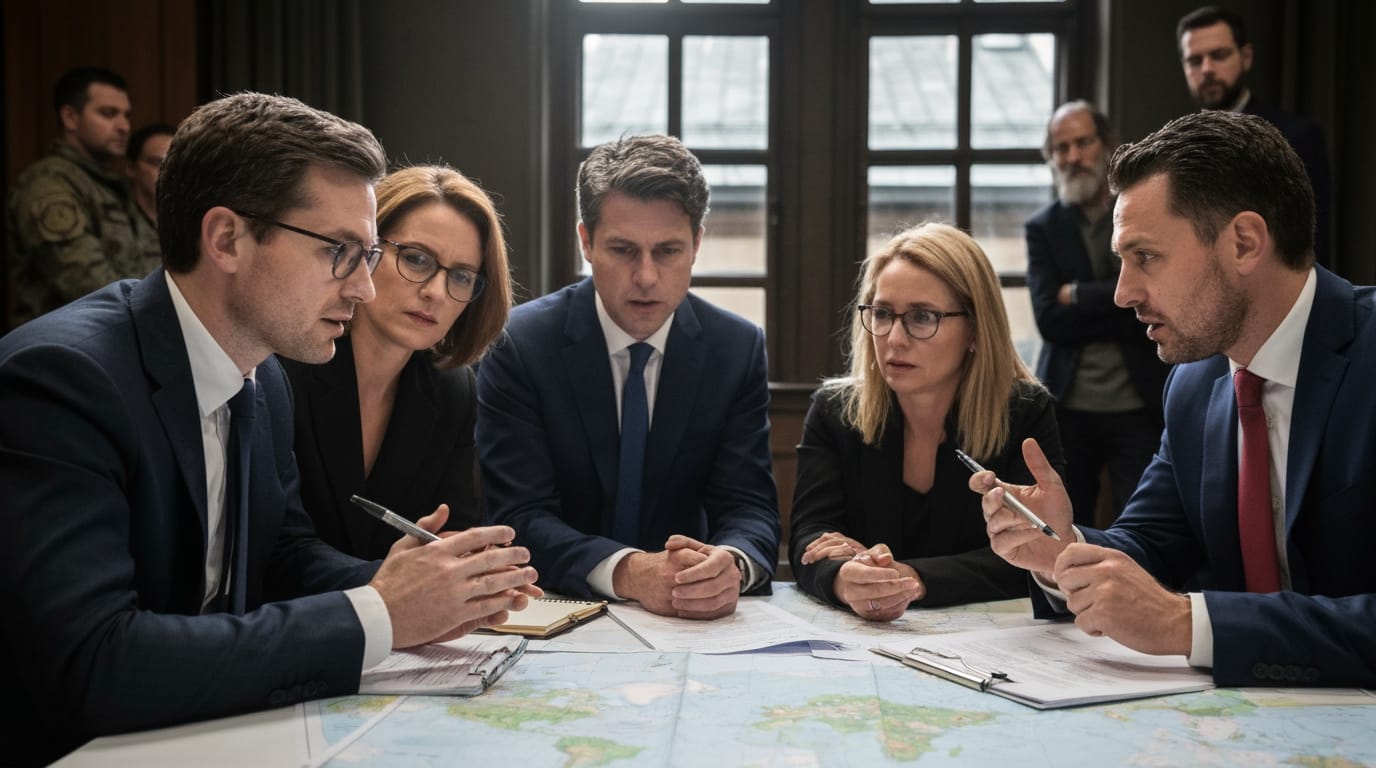
A newly unveiled United States national security strategy is being widely perceived by European leaders and foreign policy experts as an unprecedented affront to the European Union's sovereignty, core values, and strategic interests. The document's assertive tone and specific policy directives have triggered a profound crisis of confidence across the Atlantic, accelerating Europe's urgent pursuit of greater strategic autonomy and signaling a fundamental re-evaluation of the long-standing partnership. This shift marks a critical juncture for the post-World War II international order, pushing the European Union to chart a more independent course in an increasingly complex global landscape.
The "America First" Doctrine's Echoes Across the Atlantic
The foundational premise of the US security approach, often encapsulated by the "America First" doctrine, has consistently prioritized American national interests through a transactional and often unilateral lens. This philosophy, which gained significant momentum in recent years, has frequently sidelined traditional alliances and multilateral institutions, fostering an environment of uncertainty among allies. European officials have long voiced concerns that this approach undermines mutual trust and global stability. The emphasis on bilateral deals over collective security mechanisms and a readiness to impose tariffs on allies further highlights a shift from a shared values-based partnership to one driven primarily by immediate national gains.
This transactional mindset extends to defense and security, where the US has increasingly urged European nations to shoulder a greater financial burden for their own protection. While European leaders acknowledge the need for increased defense spending, the manner in which these demands are presented, often linked to broader trade disputes or other unrelated policy areas, has been a source of significant tension. Critics contend that this approach views allies less as partners and more as clients, creating terms and conditions for what was once considered an immutable security commitment.
A National Security Strategy Ignites European Fury
The latest US National Security Strategy (NSS), published recently, has provoked a strong backlash from European capitals, with leaders describing parts of the document as "unacceptable" and indicative of "ideology rather than strategy." This 33-page document goes beyond merely re-prioritizing American interests; it actively critiques and questions the trajectory of European societies and governance.
A central point of contention is the NSS's perceived interference in European domestic politics. The document explicitly signals support for "patriotic European parties," widely interpreted as an endorsement of far-right nationalist movements across the continent. It further suggests the US will actively "cultivate resistance" to Europe's current direction within European nations, a declaration viewed as an audacious attempt to influence democratic processes and undermine existing political leadership. European Council President António Costa unequivocally stated that the US "cannot replace European citizens in deciding which are the right parties and the wrong parties," emphasizing that such interventions are an unacceptable threat to European political life.
Additionally, the NSS frames Europe as facing a "prospect of civilizational erasure," attributing this to factors such as migration, declining birthrates, and alleged "censorship of free speech" and suppression of political opposition. This narrative, which echoes language typically associated with far-right rhetoric, has been met with incredulity and condemnation. European officials have asserted that the notions of free speech and open societies are fundamental values within the EU and do not require external intervention or correction from the United States.
Furthermore, the strategy outlines a diverging stance on Russia and the ongoing conflict in Ukraine. It emphasizes a US "core interest" in re-establishing "strategic stability with Russia" and ending the conflict on terms that European leaders fear could be unfavorable to Ukraine and European security as a whole. This position contrasts sharply with the unified EU and NATO stance, which identifies Russia as a significant threat to transatlantic security. The NSS's questioning of NATO's perpetual expansion also signals a potential shift away from previous commitments, raising concerns about the alliance's future posture.
Europe's Accelerated Drive for Strategic Autonomy
The perceived unreliability of the US and the recent security strategy have significantly galvanized Europe's long-standing, albeit often debated, ambition for "strategic autonomy." This concept, which gained considerable momentum during the previous US administration, envisions the EU as a more capable and independent security and defense actor, less reliant on external powers for its defense and foreign policy objectives.
German Chancellor Friedrich Merz articulated this sentiment by declaring that the US strategy reinforces Europe's need for "much more independence" in security policy. European leaders are now actively pursuing concrete steps to improve defense capabilities and develop a common strategic outlook. This includes efforts to enhance military industrial bases, reduce dependence on American arms purchases, and foster greater intra-European defense cooperation. The EU aims to bridge capability gaps in areas such as intelligence, cyber defense, and rapid troop deployment, with some US officials reportedly suggesting a tight 2027 deadline for Europe to assume greater responsibility for NATO's conventional defense capabilities.
However, the path to full strategic autonomy is not without its challenges. Internal divisions persist among member states regarding the scope and nature of this independence, with some wary of undermining NATO or creating friction with the US. Despite these complexities, the overarching consensus is that the recent US actions have made the pursuit of a more self-sufficient European security posture an urgent necessity.
Redefining Transatlantic Partnership and Global Security
The current tensions are profoundly reshaping transatlantic relations and carry significant implications for global security. The long-held assumption of a consistently aligned US-European front on major international issues is being replaced by a more nuanced and potentially fragmented reality. The focus on a transactional relationship, rather than one rooted in shared values, fundamentally alters the dynamics of cooperation.
For NATO, the cornerstone of transatlantic security for decades, this shift presents existential questions. While the US maintains its nuclear umbrella, there are indications of a potential "offshore balancing" approach, where Washington might pull back troops and weaponry from Europe, expecting the continent to manage its conventional defense. This would necessitate a massive increase in European defense spending and cooperation, with the potential for new internal challenges within the alliance regarding burden-sharing and strategic priorities.
The diverging strategic perspectives also extend to trade and economic policies. The US continues to pressure the EU on various trade issues while simultaneously urging them to avoid protectionist measures against American products, including military hardware. This double standard creates additional friction, further straining the relationship at a time when cohesion is paramount. The broader international implications include a potential weakening of multilateralism, as both sides of the Atlantic grapple with their evolving roles and priorities, potentially leading to a more multipolar world with less coordinated responses to global challenges.
In essence, the relationship between the US and the EU is undergoing a significant transformation. While historical ties and mutual interests will likely prevent a complete rupture, the era of unquestioning partnership appears to be over. Europe, compelled by US strategic shifts, is determined to enhance its own security capabilities and forge a more assertive and independent role on the world stage. The future of transatlantic cooperation will depend on navigating these profound differences and finding new modalities for collaboration in a world where foundational assumptions are rapidly eroding.


