Transatlantic Fault Lines Deepen as Munich Security Conference Opens Amidst Crisis of Confidence
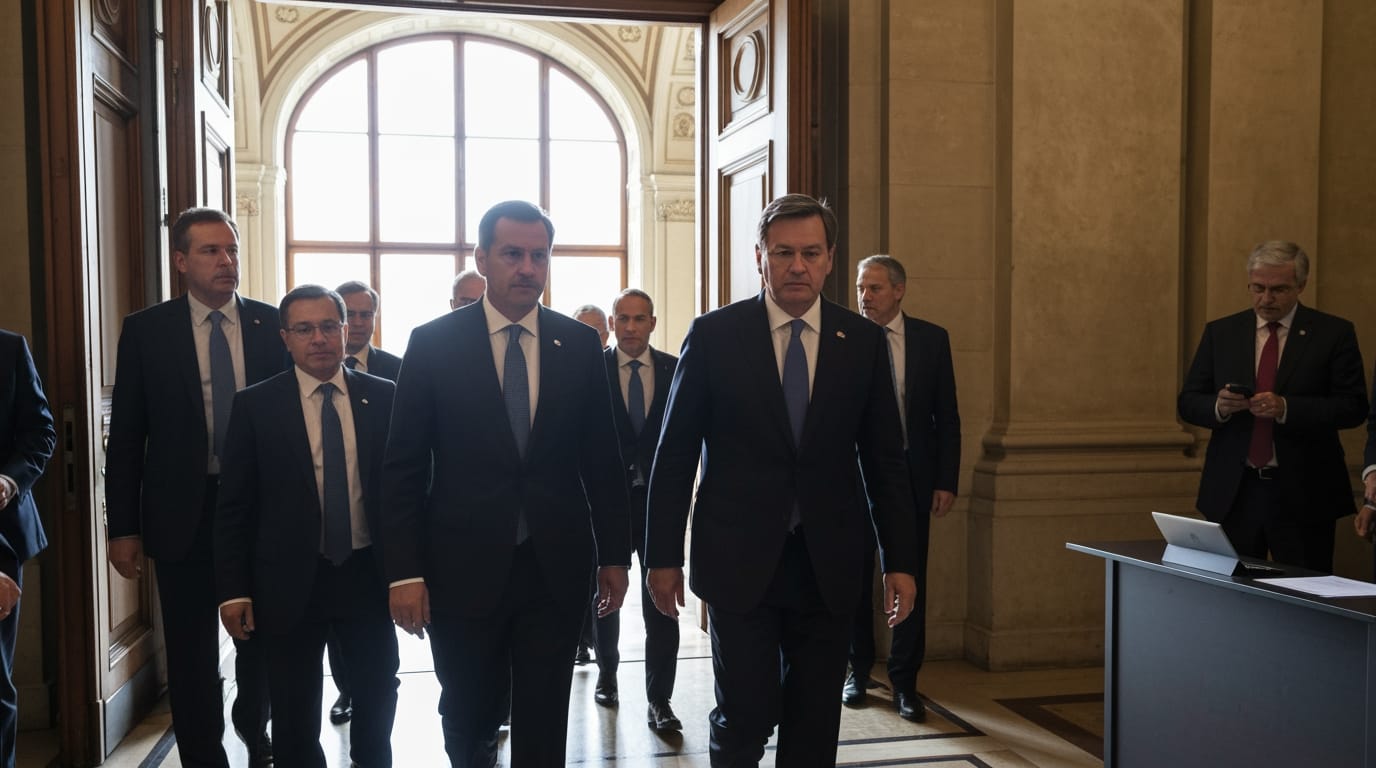
MUNICH – The world's leading forum for international security policy, the Munich Security Conference (MSC), commenced today under the ominous shadow of deepening transatlantic tensions and a palpable sense of anxiety among European leaders. As policymakers and security experts from across the globe gather in Munich, the central theme is not merely external threats, but the internal strains eroding the foundational trust between the United States and its European allies. German Chancellor Friedrich Merz opened the pivotal event, where a significant U.S. delegation, led by Secretary of State Marco Rubio, is expected to navigate a complex landscape shaped by shifting American priorities and Europe’s urgent quest for greater self-reliance. Ukrainian President Volodymyr Zelenskyy and Chinese Foreign Minister Wang Yi are also among the high-profile attendees, underscoring the multifaceted challenges facing the international order.
The 62nd iteration of the annual conference, running from February 13-15, operates under the stark thematic framework of "wrecking-ball politics," as articulated in the Munich Security Report 2026. This title reflects a global environment where political actors often gain ground by dismantling established norms rather than strengthening them, leading to an "eroding state of the post-Cold War order." For decades, the MSC has served as an essential independent forum for dialogue, bringing together heads of state, government officials, military leaders, and security experts from over 70 countries to deliberate on pressing global security challenges. However, the current gathering marks a critical juncture, as its traditional role as a bedrock for the U.S.-led transatlantic alliance faces unprecedented scrutiny. Wolfgang Ischinger, the conference chairman, candidly acknowledged earlier this week that "transatlantic relations are currently in a significant crisis of confidence and credibility," setting a somber tone for the discussions ahead.
The Shifting Sands of U.S. Commitment
At the heart of the burgeoning transatlantic rift lies profound European unease over the United States' evolving commitment to collective defense. The re-emergence of Donald Trump on the political stage and his administration's "inconsistent policies and threats" have fueled "tension and anxiety across Europe," prompting European leaders to openly question the reliability of their long-standing ally. This apprehension was starkly amplified by the 2025 Munich Security Conference, where then-Vice President J.D. Vance delivered a controversial address that stunned European dignitaries. Vance's speech reportedly critiqued European leaders for allegedly suppressing free speech and failing to manage immigration, and questioned whether the U.S. and Europe still shared a common agenda. This sentiment was further underscored by the Trump administration's 2025 National Security Strategy (NSS), which, according to observers, de-emphasized Europe, viewing multilateral institutions like the European Union as potential impediments to national sovereignty.
This perceived shift in Washington's strategic focus, moving away from Europe and towards the Indo-Pacific and the Western Hemisphere, has left European capitals grappling with the prospect of an increasingly conditional partnership. Reports suggest the NSS for 2025 mentioned Europe nearly 50 times, yet painted a picture of an administration seemingly intent on pushing Europe to take primary responsibility for its own defense. Specific instances, such as the "Greenland moment"—where the Trump administration reportedly threatened tariffs to secure U.S. control of Greenland—and broader disagreements over trade policy, have only served to exacerbate these tensions. Secretary Rubio, while perhaps adopting a less confrontational demeanor than his predecessor, is expected to convey a "philosophically similar" message, reiterating the U.S. stance on burden-sharing and the need for European self-sufficiency.
Burden-Sharing and the Quest for European Autonomy
The contentious debate over NATO burden-sharing continues to be a focal point, with Washington consistently pressing European allies to meet or exceed the agreed-upon target of spending at least 2 percent of their Gross Domestic Product (GDP) on defense. While significant progress has been made, with NATO estimating that 24 of 32 members will meet the 2 percent goal in 2024, the discussion extends beyond mere numbers. The critical question now revolves around how these increased expenditures translate into tangible "operational autonomy" and "strategic seriousness" for Europe, particularly in crucial areas such as air defense, missile defense, and strategic airlift.
For many European leaders, the urgency of this autonomy has become undeniable. The 2025 MSC underscored a growing realization that "the old architecture of reliance may be fading," compelling European policymakers to consider pooling resources and accelerating defense spending to avoid being "at the mercy of external actors whose interests have shifted." This sentiment is further amplified by the expiration of the New Strategic Arms Reduction Treaty (New START) in February 2026, which has raised concerns about a potential nuclear arms buildup and heightened calls for Europe to reconsider its own nuclear deterrent. The European Nuclear Study Group has declared this debate "urgent and unavoidable," arguing that Europe "can no longer outsource their thinking about nuclear deterrence to the United States" given the increasing unreliability of U.S. security guarantees.
Geopolitical Chessboard: Ukraine, Russia, and China
Beyond the internal transatlantic strains, the MSC 2026 agenda is heavily shaped by ongoing geopolitical flashpoints. The war in Ukraine remains a critical concern, with discussions expected to revolve around sustained support for Kyiv and potential pathways to a peaceful resolution. However, even here, transatlantic unity has shown cracks, with divergent views on the efficacy of support and the potential for a U.S. withdrawal of focus. The 2025 U.S. National Security Strategy raised eyebrows by suggesting an end to the perception of NATO expansion, a key Russian demand, which some interpret as a troubling signal regarding U.S. commitment to Ukraine's long-term security.
Russia, meanwhile, is perceived as emboldened by perceived Western divisions, its "revisionism" expected to persist regardless of immediate outcomes. The growing focus on China as a strategic competitor for the U.S. also plays a significant role, potentially diverting American attention and resources away from European security concerns. Chinese Foreign Minister Wang Yi's presence in Munich highlights the complex balancing act for European nations, seeking to maintain economic ties with Beijing while aligning with U.S. concerns about China's rising global influence. German Chancellor Merz's planned meetings with Wang Yi and Zelenskyy demonstrate Berlin's efforts to position itself as a central mediator at the intersection of these critical geopolitical axes.
A Defining Moment for the Western Alliance
The Munich Security Conference 2026 convenes at a crossroads, representing a defining moment for the Western alliance. The "crisis of trust and credibility" is not merely a diplomatic platitude but a lived reality shaping strategic calculations across European capitals. The core question facing attendees is whether the transatlantic relationship can adapt to the current era of "wrecking-ball politics" or if it is destined for a more fundamental rupture.
While the conference aims to foster dialogue and cooperation, the underlying currents suggest a significant re-evaluation of Europe's security architecture. As European leaders increasingly recognize the imperative to "reduce the need for [U.S.] reassurance" and build their own capacity, the outcome of these discussions will have profound implications for global stability. The MSC 2026 will not offer quick fixes, but it will undoubtedly serve as a crucial barometer, revealing whether the Atlantic community can still find common ground amidst its internal strains and navigate a world increasingly marked by multipolar dynamics and enduring threats. The conference will lay bare the choices Europe must make to secure its future, either through a revitalized, albeit rebalanced, partnership with the United States or through a more robust and autonomous defense posture.


