Trump Claims "Productive Talks" with Iran Amidst Denials and Escalating Regional Conflict
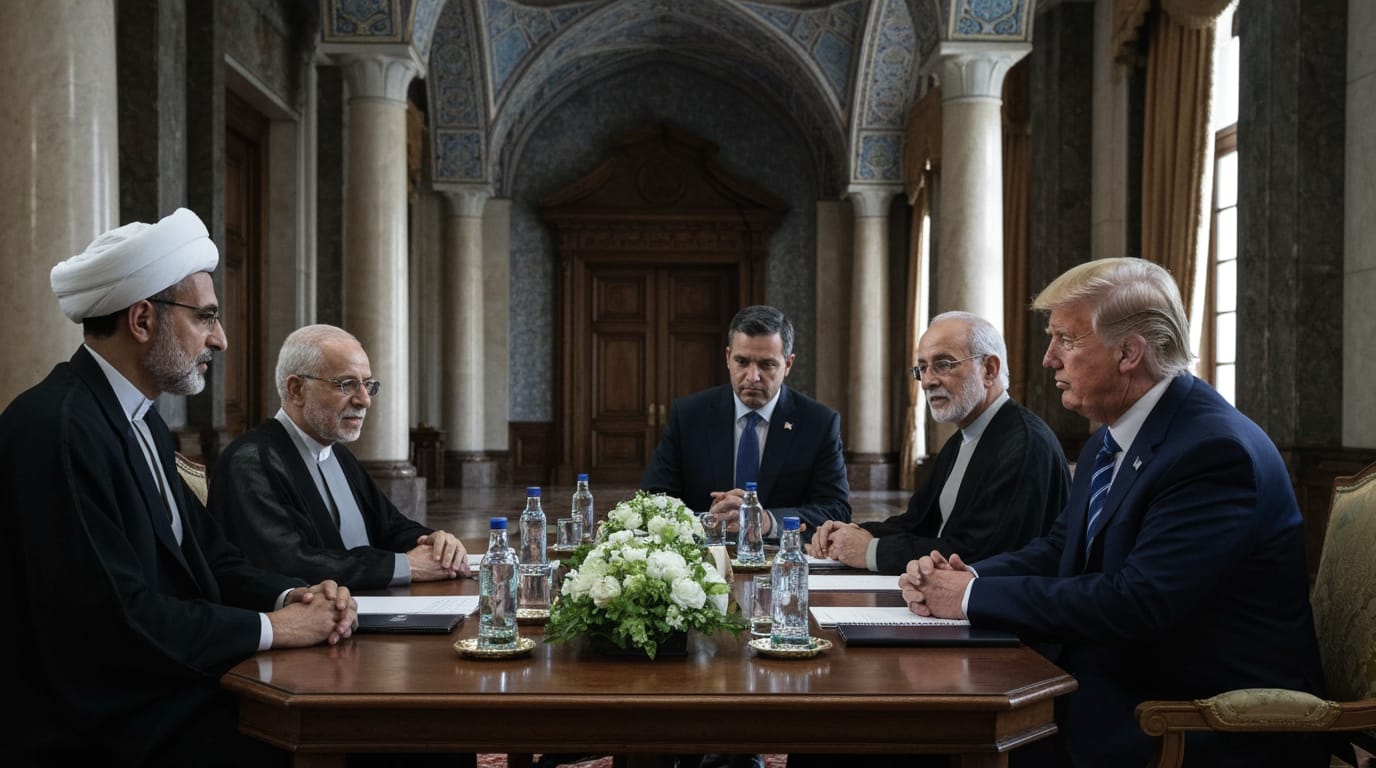
WASHINGTON/TEHRAN — Amidst a volatile backdrop of ongoing military engagements across the Middle East, U.S. President Donald Trump announced Monday that the United States has engaged in "very good and productive conversations" with Iran, signaling a potential diplomatic path to de-escalation. However, these assertions have been met with swift and categorical denials from Tehran, where officials have dismissed the claims as "fake news" and "psychological operations" aimed at manipulating markets. The conflicting narratives highlight the profound distrust and complex maneuvering characteristic of the deeply entrenched animosity between the two nations, even as third-party mediators appear to be working behind the scenes to bridge the communication chasm.
The revelation of alleged talks comes as the region grapples with a nearly month-long conflict, marked by U.S. and Israeli airstrikes on Iranian targets and retaliatory actions from Tehran, causing significant disruption to global energy markets and raising fears of broader instability. President Trump's pronouncements have introduced a layer of uncertainty into an already fraught environment, suggesting a possible, albeit tenuous, shift towards diplomatic solutions despite the continued exchange of fire.
Trump's Diplomatic Overture: A Bid for De-escalation?
On Monday, President Trump publicly declared that the U.S. and Iran had held "very good and productive conversations regarding a complete and total resolution of our hostilities in the Middle East." Speaking to reporters, he expressed optimism, stating there were "major points of agreement" and a "very good chance of reaching a deal." This diplomatic overture notably coincided with a five-day postponement of a looming U.S. ultimatum threatening strikes on Iranian power plants unless the Strait of Hormuz was reopened. The president described this pause as conditional on the "success of the ongoing meetings and discussions."
According to reports, the American side of these discussions is being led by presidential envoys Steve Witkoff and Jared Kushner, his son-in-law. President Trump remained coy about the identity of his Iranian interlocutor, referring only to a "top person" whom he believes is "the most respected," but not the new Supreme Leader, Mojtaba Khamenei. He cited concerns for the individual's safety as his reason for withholding the name. The U.S. goals for a potential deal, as outlined by Trump, include preventing Iran from developing nuclear weapons and ensuring the free passage through the Strait of Hormuz, a critical global oil chokepoint.
Tehran's Vehement Denials: "Fake News" and "Psychological Operations"
Despite President Trump's claims, Iranian officials have been quick and consistent in rejecting any notion of direct talks with the United States. Iran's Foreign Ministry spokesperson explicitly stated that "no dialogue" had taken place, with the IRGC-linked Fars news agency further clarifying that there had been neither direct nor indirect communications. Mohammad Bagher Ghalibaf, the Speaker of the Iranian Parliament, who was reportedly identified by some international media outlets as the unnamed high-level Iranian official in contact with the U.S., also vehemently denied any discussions.
Iranian officials have characterized Trump's statements as a tactic to manipulate financial and oil markets and as "psychological operations" designed to sow discord within Iran. They emphasize that Tehran distrusts U.S. offers of negotiations, pointing to previous instances where talks were followed by military actions. This strong denial underscores a deep-seated suspicion of U.S. intentions and a reluctance to engage publicly in dialogue, particularly amidst ongoing hostilities.
The Role of Mediators: A Silent Diplomatic Channel
While direct communication remains publicly unconfirmed by Iran, evidence suggests that indirect channels are actively being utilized by various international actors. Countries such as Pakistan, Oman, Turkey, and Egypt have reportedly stepped in as mediators, facilitating the exchange of messages between Washington and Tehran. A senior Iranian Foreign Ministry official, speaking anonymously, acknowledged that Iran had received "points from the U.S. through mediators," and that these proposals were under review. This hints at a quiet, yet active, diplomatic effort to navigate the crisis, even as both sides maintain firm public stances.
Reports indicate that Pakistan's military leadership, including Army Chief Asim Munir, has been instrumental in these mediation efforts, having held discussions with President Trump. Oman, known for its historical role in facilitating U.S.-Iran dialogue, also hosted indirect talks in early 2026 involving U.S. representatives and Iran's Foreign Minister Abbas Araghchi. These behind-the-scenes communications underscore the international community's urgent desire to avert further escalation in a region already on edge.
Conflict as Catalyst: High Stakes for Regional Stability
The alleged diplomatic overtures are occurring against a backdrop of intense military conflict that began in late February 2026. U.S. and Israeli forces have launched strikes targeting Iranian leadership, nuclear facilities, and military infrastructure, reportedly aiming for "regime change" and targeting Iran's nuclear and ballistic missile programs. In response, Iran has carried out counter-strikes against Israel, U.S. military bases in the region, and civilian targets in Gulf Arab states. The conflict has led to significant casualties, including the death of former Supreme Leader Ali Khamenei, whose son Mojtaba now leads the country.
The Strait of Hormuz remains a central flashpoint. Following joint U.S.-Israeli airstrikes, Iran closed the vital waterway, causing chaos in global energy markets and driving up oil and gas prices. President Trump's ultimatum to reopen the strait, now temporarily postponed, underscores its strategic importance. Iran, for its part, has threatened to target essential infrastructure in countries hosting U.S. forces if its power plants are attacked. The current diplomatic maneuvers, however fragile, represent a potential shift from the brink of further military escalation, although the path to a lasting resolution remains obscured by deep-seated mistrust and conflicting objectives.
An Uncertain Path Forward
As the Middle East crisis continues to unfold, the true extent and nature of communications between the U.S. and Iran remain shrouded in ambiguity. President Trump's declarations offer a glimmer of hope for a diplomatic off-ramp from the ongoing conflict, while Tehran's consistent denials reflect a hardened stance and a cautious approach to engaging with its long-standing adversary. The involvement of multiple international mediators underscores the complexity of the situation and the urgent need to de-escalate tensions. Whether these nascent diplomatic efforts, however indirect, can pave the way for a comprehensive resolution to the hostilities and address core issues like Iran's nuclear program and regional activities remains a critical question for regional and global stability. The world watches closely for signs that communication, even if clandestine, can prevail over confrontation.


