Trump Declares Fentanyl a 'Weapon of Mass Destruction,' Escalating Drug War
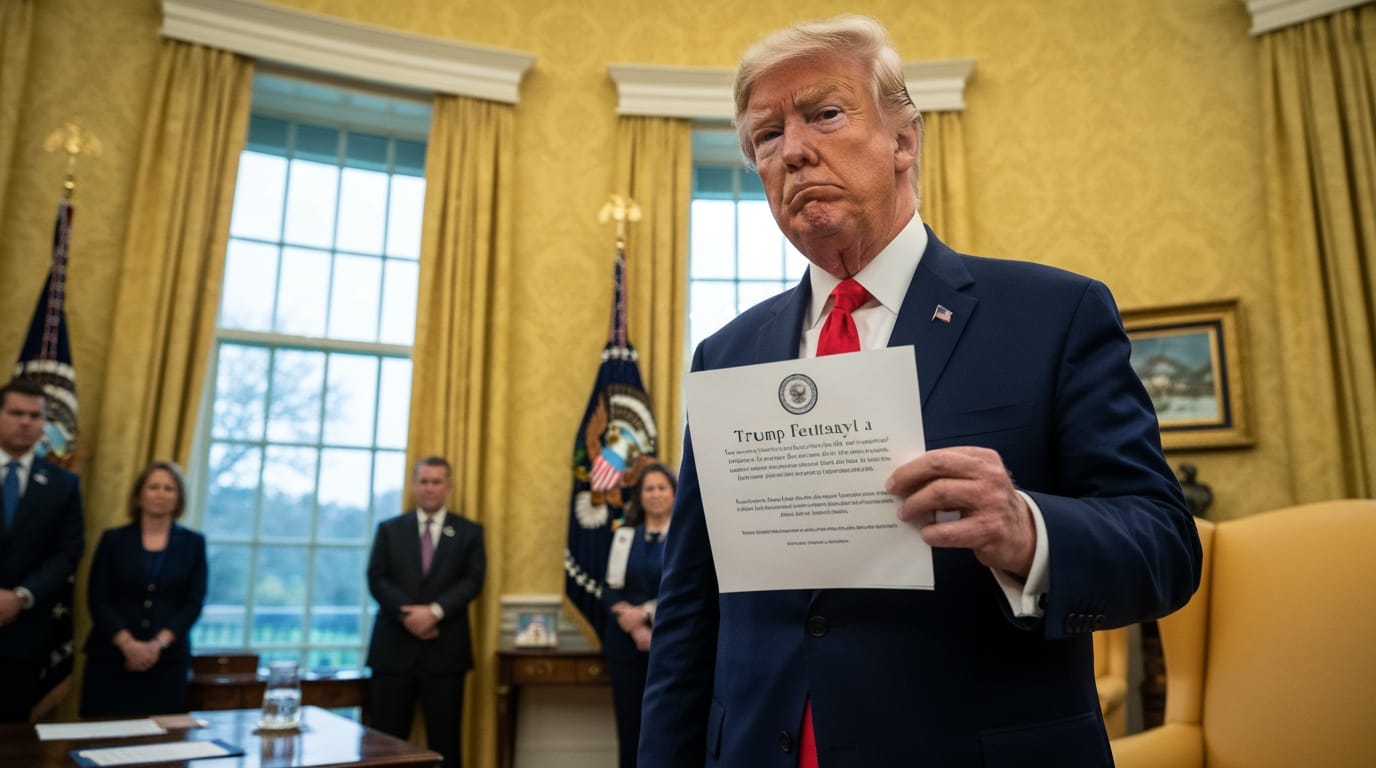
Washington, D.C. — In an unprecedented move, President Donald Trump signed an executive order on December 15, 2025, officially designating illicit fentanyl and its core precursor chemicals as "Weapons of Mass Destruction" (WMD). The declaration marks a significant escalation in the administration's efforts to combat the synthetic opioid crisis, reframing the fight against drug trafficking as a national security imperative rather than solely a public health or law enforcement issue. The executive order emphasizes the extreme lethality of fentanyl and the perceived threat it poses to national security, drawing parallels between the drug's impact and that of chemical warfare agents.
An Unprecedented Classification
The executive order, disclosed through the White House website, asserts that illicit fentanyl is "closer to a chemical weapon than a narcotic." It highlights that a mere two milligrams, an amount equivalent to 10 to 15 grains of table salt, constitutes a lethal dose, underscoring the substance's dangerous potency. President Trump articulated that the manufacture and distribution of fentanyl, primarily orchestrated by organized criminal networks, not only fuels lawlessness within the Western Hemisphere but also poses a direct threat to U.S. national security. The administration's rationale further posits that profits from fentanyl sales fund various illicit operations, including assassinations, terrorist acts, and insurgencies globally, thereby eroding domestic security. A central justification for the WMD label also includes the potential for fentanyl to be "weaponized for concentrated, large-scale terror attacks by organized adversaries." This designation signifies a shift in rhetoric and policy, treating the opioid crisis as an existential threat on par with traditional WMDs.
Fentanyl's Deadly Toll on America
The classification comes amid a devastating opioid epidemic that has claimed hundreds of thousands of American lives. Fentanyl, a synthetic opioid 50 to 100 times more potent than morphine, has become the primary driver of overdose deaths in the United States. In 2023 alone, fentanyl was involved in nearly 73,000 overdose deaths, representing 69.3% of all such fatalities. This figure marks a staggering 2,120% increase in fentanyl-related overdose deaths from 2013 to 2023. Since 2021, over a quarter of a million Americans have died from fentanyl overdoses, with synthetic opioids surpassing both prescription opioids and heroin as the leading cause of overdose fatalities. The drug is frequently mixed with other illicit substances like heroin, cocaine, and methamphetamine, often without the user's knowledge, significantly increasing the risk of a fatal overdose. The ease of production and distribution, coupled with its extreme lethality, has allowed fentanyl to infiltrate communities nationwide, creating a public health emergency that the administration now frames as a national security crisis.
Expanding the Battlefield: Legal and Enforcement Ramifications
The WMD designation is intended to "unleash every tool to combat the cartels and foreign networks responsible for flooding communities with this deadly substance." The executive order directs several key government agencies to take aggressive action. The Justice Department is instructed to immediately pursue investigations and prosecutions against fentanyl trafficking organizations, including potential criminal charges and sentencing enhancements related to WMD statutes. The Defense Department is tasked with determining whether military resources are necessary to assist federal law enforcement in combating the threat, signaling a potential shift towards more militaristic tactics in drug interdiction. Furthermore, the State and Treasury Departments are directed to pursue actions against assets and financial institutions involved in or supporting the manufacture, distribution, and sale of illicit fentanyl and its precursor chemicals. This integrated approach aims to disrupt the global supply chain, which primarily originates from precursor chemicals in China and manufacturing/trafficking operations in Mexico. The designation effectively allows authorities to deploy tools traditionally reserved for preventing the proliferation of nuclear, biological, and chemical weapons against drug organizations.
Expert Debate and Potential Pitfalls
While the administration champions the WMD designation as a necessary and decisive measure, the move has generated significant debate among policy and health experts. Critics argue that classifying an addictive drug as a weapon of mass destruction is a "stretch" and may have little practical impact on curbing drug supply, addiction, or overdose deaths. Concerns have been raised that the designation could exaggerate public fears about fentanyl, potentially undermining its legitimate medical use as a painkiller.
Legal scholars and policy analysts also question the suitability of applying WMD statutes to a narcotic. They point out that existing federal laws define WMDs, and fentanyl, while lethal, does not fit the traditional definition of a "weapon" designed for intentional mass casualty attacks by state or non-state actors. Some argue that the criminal organizations distributing fentanyl are not seeking to cause mass destruction in the traditional sense, but rather to profit from its sale. The possibility of weaponizing fentanyl for large-scale terror attacks, though cited by the administration, has been met with skepticism by some drug policy experts who note that terrorist organizations typically do not employ drugs in this manner.
Additionally, there are concerns about potential resource misallocation, with critics suggesting that focusing counter-WMD resources on fentanyl might divert attention and funding from more conventional threats like nuclear, biological, and chemical weapons. Public health advocates worry that a heavily criminalized, national security-focused approach could overshadow crucial public health interventions, such as increasing access to treatment and overdose reversal medications. The prospect of inappropriate criminal charges for individuals who unknowingly possess fentanyl-laced drugs is another significant concern.
Conclusion
The designation of fentanyl as a "Weapon of Mass Destruction" represents a bold and controversial shift in the United States' strategy to combat the opioid crisis. Driven by the devastating human cost and the perceived national security threats, the Trump administration has opted for an aggressive, expansive approach, leveraging tools typically reserved for international security threats against drug cartels and networks. While proponents argue this will intensify efforts to dismantle illicit operations and protect American lives, critics raise important questions about the legal precedent, the potential for unintended consequences, and the efficacy of such a classification in addressing the complex public health and social dimensions of the fentanyl crisis. The long-term impact of this unprecedented designation on drug policy, public health outcomes, and international relations remains to be seen as the nation grapples with one of its most severe public health challenges.