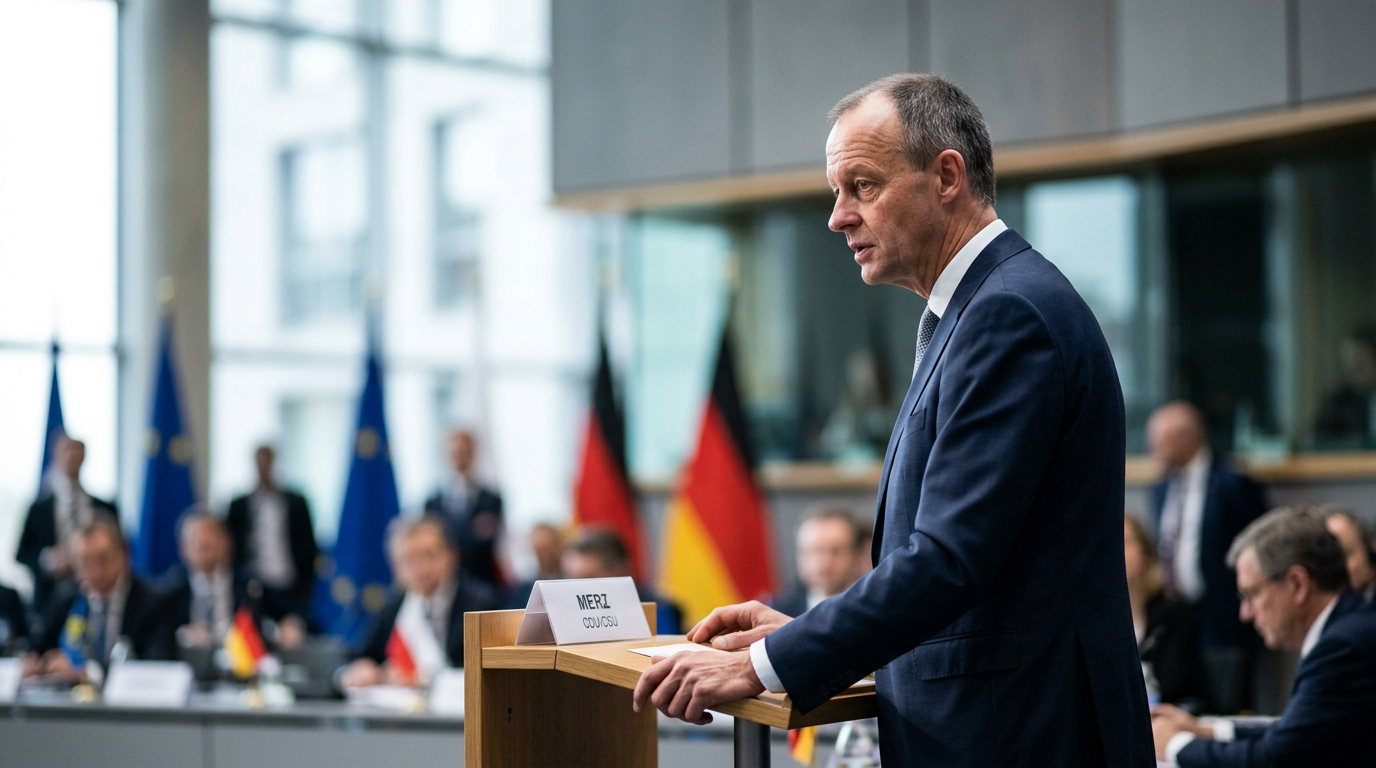
Trump Declares "No Talks" with Iran Amid Escalating Regional Tensions

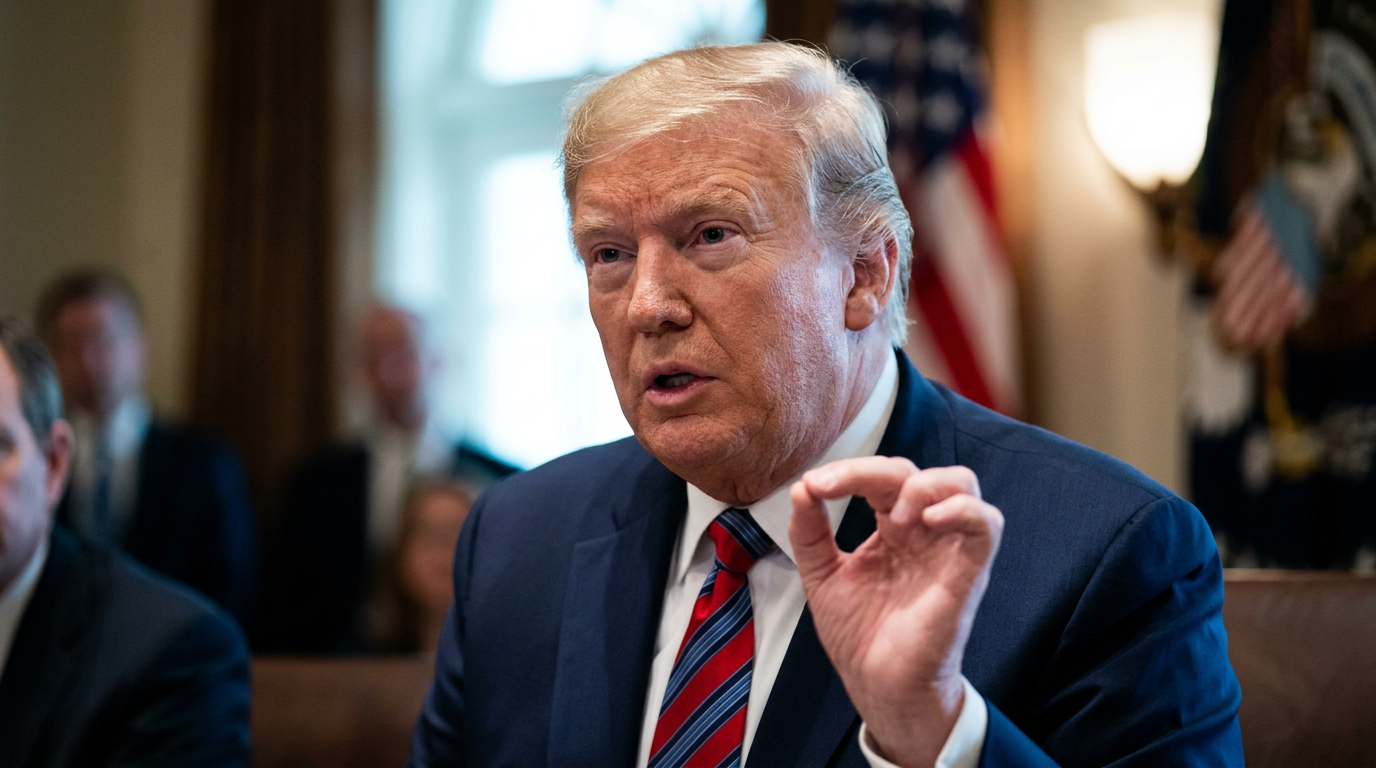
WASHINGTON D.C. — President Donald Trump stated Tuesday that no discussions are underway or scheduled with the Islamic Republic of Iran, a declaration that casts a shadow over recent reports of diplomatic engagement and underscores the deepening chasm between Washington and Tehran. The assertion, made via his Truth Social platform, comes nearly six months into a conflict initiated jointly by the U.S. and Israel, a period marked by intense military actions and a contentious naval blockade in the critical Strait of Hormuz.
The president's firm denial directly contradicted earlier remarks from his son-in-law and special envoy, Jared Kushner, who had indicated on Monday that "very positive and active conversations" were taking place, describing dialogue between the U.S. and Iranian governments as potentially "more robust than it's maybe ever been." This divergence in messaging highlights the complexities and inherent tensions within the U.S. administration's approach to Iran, as the region grapples with the protracted conflict and its far-reaching consequences.
Diplomatic Deadlock Amidst Renewed Conflict
President Trump's current statement marks a critical juncture following a turbulent period of renewed hostilities. The United States and Israel launched a joint attack on various sites in Iran in February 2026, escalating into what has been described as a "war" that Trump had initially predicted would be short-lived. A subsequent 12-day war in June 2026 culminated in a ceasefire agreement on June 14, 2026, which included a 60-day memorandum of understanding (MOU) aimed at de-escalating tensions and addressing issues such as the Strait of Hormuz.
The MOU, reportedly signed at the G7 summit in Versailles, was intended to "instantly reopen" the strategic waterway and "immediately lift" the U.S. naval blockade on Iranian vessels. However, with the 60-day deadline now expired and no apparent resolution, the interim agreement has seemingly fallen apart, leading to renewed uncertainty regarding diplomatic pathways. Trump, in his recent pronouncements, made it clear that "no extension of the agreement would occur," reiterating his stance that Iran "cannot have a nuclear weapon."
The Enduring "Maximum Pressure" Campaign
At the core of the Trump administration's strategy against Iran is the reinstated "maximum pressure" campaign. First implemented during his initial presidency after the U.S. withdrawal from the Joint Comprehensive Plan of Action (JCPOA) in 2018, this policy was revived by Trump on February 4, 2025, upon his return to office. The campaign aims to cripple Iran's economy by restricting oil exports, intensifying sanctions, and denying the regime funds for its activities. Trump has frequently argued that this sustained economic pressure is pushing Iran to the brink of financial collapse, thereby compelling its leadership to acquiesce to U.S. demands.
As part of this strategy, a naval blockade remains in "full force and effect," according to Trump. The administration's objective is to force Iran to abandon its nuclear program and ensure the free passage of international shipping through the Strait of Hormuz. Prior to the reinstatement of "maximum pressure," Iran's Gross Official Reserves had reportedly plummeted from $70 billion in 2017 to $4 billion in 2020. This economic squeeze has been accompanied by a significant drop in oil revenue and severe restrictions on banking transactions, leading to inflation and currency devaluation within Iran.
Contested Waters: The Strait of Hormuz
The Strait of Hormuz, a narrow chokepoint through which a significant portion of the world's oil transits, remains a central flashpoint in the ongoing standoff. While President Trump declared the Strait "open and operating" with all water mines removed or detonated, Iranian officials have publicly contradicted this assertion. Iran's foreign minister stated that the waterway would remain closed until the U.S. meets Tehran's conditions for an interim deal, which includes demands for compensation.
Further exacerbating tensions, a commercial vessel was struck by an "unknown projectile" in the Strait on Tuesday, resulting in one casualty and damage to its engine room, as reported by the British military. Adding a provocative layer to the discourse, President Trump also posted a map on Truth Social depicting the Strait of Hormuz as "NEW U.S. Territory," a move that drew sharp criticism from Iranian officials. Iranian Deputy Foreign Minister Kazem Gharibabadi notably responded on X, suggesting that Trump's "delusion regarding the Strait of Hormuz will either be corrected or we will correct the delusions of this deluded man."
A Future Clouded by Impasse
The current declarations from President Trump underscore a deep diplomatic impasse between the U.S. and Iran, with little immediate prospect of resolution. Despite the explicit denial of talks, some reports suggested that "positive" discussions had occurred, but Trump opted to wait for Iran to be ready for a comprehensive deal. Washington's strategy, as articulated by the president, continues to rely on severe economic leverage, hoping to force concessions from Tehran without direct military engagement. However, the reported strike in the Strait of Hormuz serves as a stark reminder of the volatile nature of the situation and the potential for miscalculation.
As the conflict stretches into its sixth month, the divergent narratives and actions from both sides indicate a protracted struggle for influence and control in the Middle East. The U.S. objective remains firmly fixed on preventing Iran from developing nuclear weapons and ensuring regional stability, while Tehran appears equally resolute in resisting pressure and asserting its interests. The path forward remains uncertain, fraught with economic hardship for Iran, continued regional instability, and the persistent threat of further escalation.
Related Articles

Ratko Mladić, "Butcher of Bosnia" and Convicted War Criminal, Dies at 84
THE HAGUE, Netherlands – Ratko Mladić, the former Bosnian Serb military commander known as the "Butcher of Bosnia" and convicted of genocide, war crimes, and crimes against humanity, has died at the age of 84. Serbian...

Long-Awaited 9/11 Mastermind Trial Set for 2028, Decades After Attacks
GUANTANAMO BAY, Cuba – Nearly a quarter-century after the devastating terror attacks of September 11, 2001, a military judge has finally set a trial date for Khalid Sheikh Mohammed, the alleged mastermind behind the...