Trump Floats Idea of Third Term, Says He's 'Not Joking'
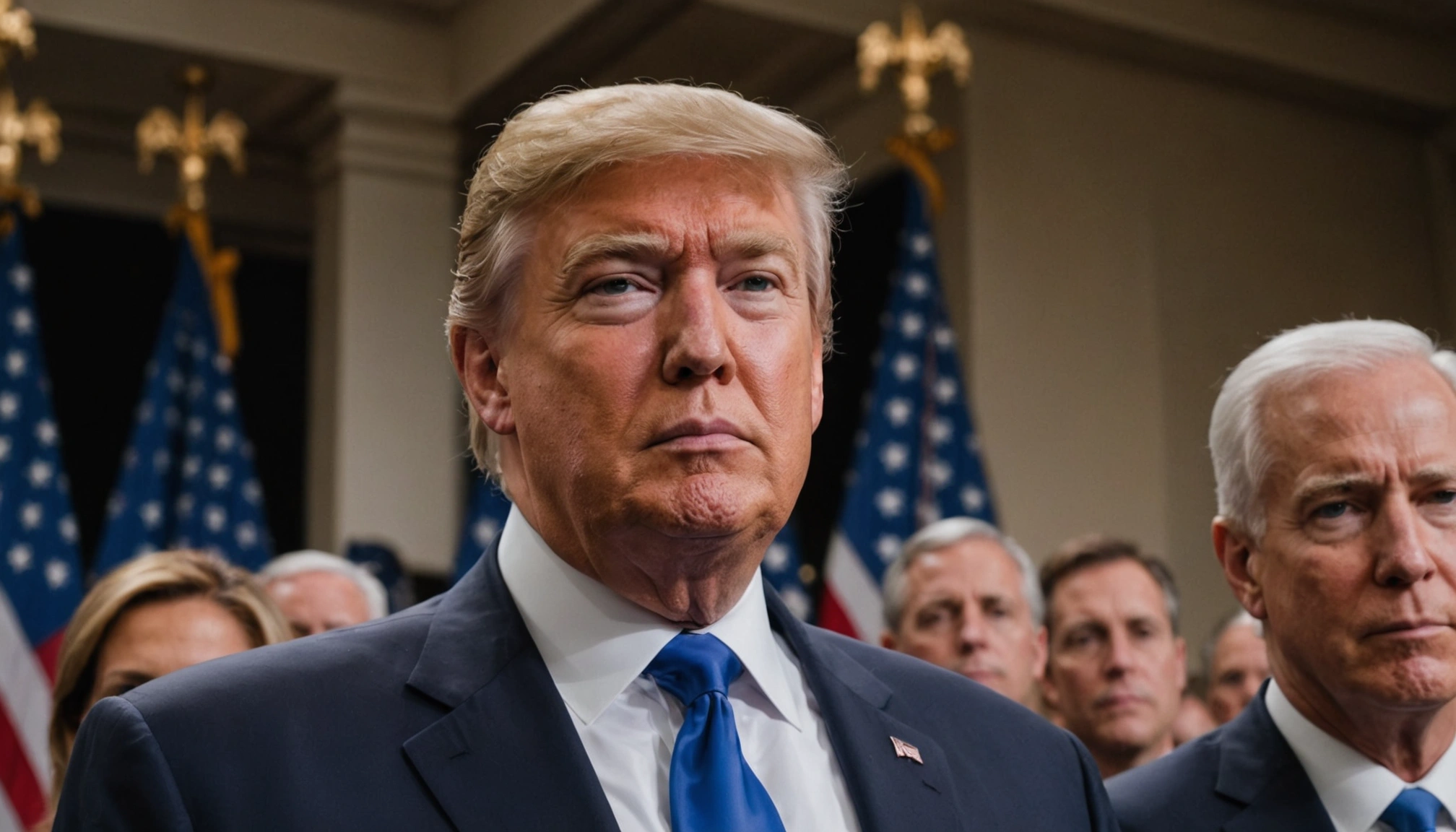
President Donald Trump has ignited a fresh wave of controversy by suggesting he is exploring avenues to serve a third term in office, a notion that directly challenges the U.S. Constitution's established term limits. In an interview Sunday, Trump stated, "I'm not joking" about the possibility, marking his clearest indication yet that he is considering ways to remain in power beyond the two terms permitted by the 22nd Amendment.
The president's remarks, made during a telephone interview with NBC News from his Mar-a-Lago resort in Florida, have sparked debate among legal experts and drawn sharp criticism from political opponents. Trump, whose second term concludes in early 2029, alluded to potential "methods" for circumventing the constitutional barrier, though he did not elaborate on the specifics. He later told reporters that many people have encouraged him to run again.
Constitutional Roadblocks
The 22nd Amendment, ratified in 1951, explicitly states that "no person shall be elected to the office of the President more than twice." This amendment was a direct response to Franklin D. Roosevelt's unprecedented four terms in office. Legal scholars widely agree that any attempt to bypass this amendment would face significant legal challenges.
Jeremy Paul, a constitutional law professor at Northeastern University, stated flatly, "There are no credible legal arguments for him to run for a third term." Derek Muller, a professor of election law at Notre Dame, echoed this sentiment, noting that pursuing a third term would require extraordinary cooperation from federal and state officials, as well as the courts and voters.
Potential Strategies
Despite the constitutional hurdles, speculation has arisen regarding potential strategies Trump might consider. When asked by NBC's Kristen Welker if one option involved Vice President J.D. Vance running for president and then subsequently "passing the baton" to Trump, the president responded, "Well, that's one. But there are others too. There are others." He declined to provide further details.
This scenario raises questions about the 12th Amendment, which addresses the eligibility of vice-presidential candidates. Muller pointed out that the 12th Amendment suggests that if Trump is ineligible to run for president due to the 22nd Amendment, he would also be ineligible to serve as vice president.
Political Motivations
Some observers suggest that Trump's comments are primarily politically motivated. Muller posited that Trump might be raising the prospect of a third term to project strength and maintain influence as a "lame-duck president."
"A lame-duck president like Donald Trump has every incentive in the world to make it seem like he's not a lame duck," Muller said.
Adding fuel to the fire, Steve Bannon, a former Trump strategist, publicly called for Trump to run again during a speech at the Conservative Political Action Conference last month. "We want Trump in '28," he declared.
Reactions and Repercussions
Trump's remarks have drawn strong reactions from across the political spectrum. Representative Daniel Goldman, a New York Democrat who served as lead counsel for Trump's first impeachment, condemned the comments as "yet another escalation in his clear effort to take over the government and dismantle our democracy." He urged Congressional Republicans to publicly oppose Trump's ambitions for a third term.
The president's history of questioning democratic norms, including his efforts to overturn the 2020 election results, has amplified concerns about his recent statements. Critics argue that his continued flirtation with the idea of a third term undermines the principles of constitutional governance and the peaceful transfer of power.
Trump's Defense
Trump has defended his performance as president, suggesting that his popularity would justify a third term. He falsely claimed to have "the highest poll numbers of any Republican for the last 100 years." However, Gallup data indicates that Trump's approval ratings peaked at 47% during his second term, far below the approval ratings of Presidents George H.W. Bush (89% after the Gulf War) and George W. Bush (90% after the September 11 attacks).
When questioned about the constitutional limits on presidential terms, Trump downplayed the issue, stating, "I don't even want to talk about it. I'm just telling you I have had more people say, 'Please run again.'" He also remarked that he enjoys working and suggested that Americans would support his continued leadership.
Looking Ahead
As Trump's second term progresses, the debate over his potential pursuit of a third term is likely to intensify. The legal and political challenges to such an endeavor are substantial, but Trump's willingness to challenge established norms suggests that the issue will remain a prominent topic of discussion. The implications for American democracy and the rule of law are significant, warranting close scrutiny as the situation unfolds.
Related Articles


Ratko Mladić, "Butcher of Bosnia" and Convicted War Criminal, Dies at 84
THE HAGUE, Netherlands – Ratko Mladić, the former Bosnian Serb military commander known as the "Butcher of Bosnia" and convicted of genocide, war crimes, and crimes against humanity, has died at the age of 84. Serbian...

Long-Awaited 9/11 Mastermind Trial Set for 2028, Decades After Attacks
GUANTANAMO BAY, Cuba – Nearly a quarter-century after the devastating terror attacks of September 11, 2001, a military judge has finally set a trial date for Khalid Sheikh Mohammed, the alleged mastermind behind the...