Trump Issues Stark Warning to Iran Amid Nuclear Program Concerns
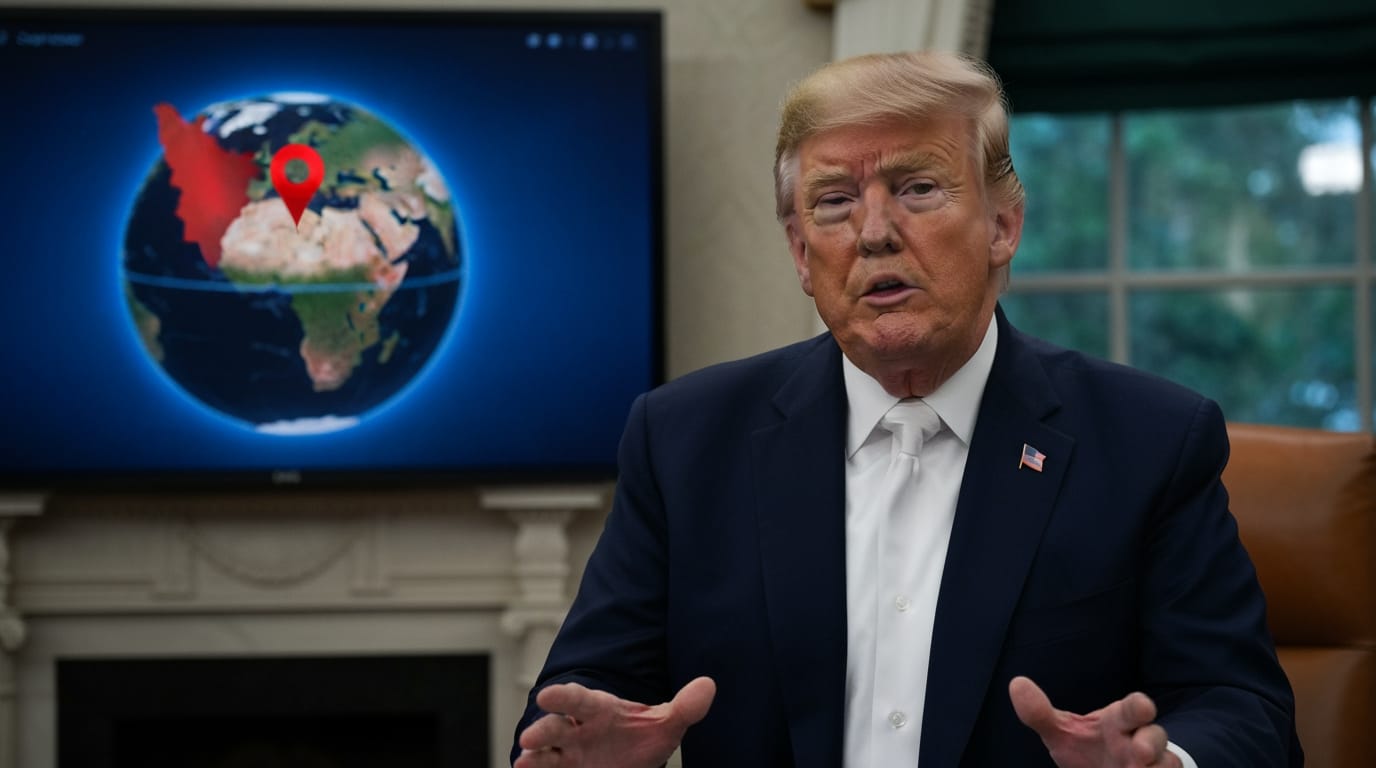
PALM BEACH, Fla. – Former President Donald Trump delivered a potent warning to Iran on Monday, threatening further U.S. military action should Tehran attempt to reconstitute its nuclear program. The declaration, made from his Mar-a-Lago estate alongside Israeli Prime Minister Benjamin Netanyahu, underscores escalating tensions in the Middle East, even as diplomatic efforts continue to falter. Trump’s remarks come months after U.S. strikes in June reportedly targeted key Iranian nuclear enrichment sites, which he had previously claimed were "completely and fully obliterated."
The latest warning serves as a significant escalation of rhetoric, signaling a continued hardline stance against Iran's nuclear ambitions, a posture that has defined his approach to the region for years. The backdrop of these threats includes stalled negotiations on a Gaza ceasefire and ongoing concerns from international observers about Iran's advancing nuclear capabilities.
A Direct Threat Amidst Regional Instability
Speaking to reporters, Trump stated that if Iran was indeed attempting to rebuild its nuclear program, the U.S. would "knock them down." This assertive pronouncement emerged from discussions with Prime Minister Netanyahu, whose government has long expressed profound anxieties regarding Iran's nuclear activities and its regional influence. The meeting between the two leaders was primarily aimed at salvaging a precarious Gaza ceasefire, a complex agreement whose second phase faces significant obstacles, including disagreements over disarming Hamas and establishing an international security force. The linkage between the Iran nuclear issue and the broader regional security landscape highlights the intricate challenges confronting policymakers.
Trump's explicit threat of further military strikes resurrects concerns about potential wider conflict. Just months prior, in July 2025, he had already reiterated his willingness to strike Iranian nuclear sites again "if necessary," responding to comments from Iranian Foreign Minister Abbas Araghchi. Araghchi had acknowledged severe damage to Iranian facilities from previous U.S. strikes but emphasized that uranium enrichment would continue as a matter of "national pride." This exchange demonstrates a persistent cycle of provocation and counter-provocation that has characterized relations between the two nations.
Iran's Accelerating Nuclear Program Post-JCPOA Withdrawal
The current standoff is rooted in the 2018 decision by the United States, under then-President Trump, to unilaterally withdraw from the Joint Comprehensive Plan of Action (JCPOA), commonly known as the Iran nuclear deal. Trump had characterized the agreement as "terrible," "insane," and "ridiculous," arguing it failed to adequately curb Iran's nuclear ambitions, ballistic missile program, or malign regional activities. International partners, including European allies, Russia, and China, largely condemned the U.S. withdrawal, maintaining that the deal was the best mechanism to constrain Iran's nuclear program.
Following the U.S. withdrawal and the re-imposition of sanctions, Iran gradually began to scale back its commitments under the JCPOA starting in May 2019. Since then, Tehran has significantly accelerated its uranium enrichment activities. Reports indicate Iran has increased its uranium stockpile to 30 times the level permitted under the JCPOA and has enriched uranium to 60% purity, with particles even detected at 83.7%. Weapons-grade uranium is typically enriched to 90%. While Iran maintains its nuclear program is exclusively peaceful, international bodies and several nations contend there is no credible civilian justification for such high levels of enrichment.
The International Atomic Energy Agency (IAEA) has voiced concerns over being increasingly hampered in its ability to satisfactorily monitor Iran's nuclear activities, particularly since February 2021. The agency's reports suggest that Iran's "breakout time"—the theoretical period required to produce enough fissile material for a nuclear weapon—has shrunk dramatically, estimated by some analysts to be near zero in June 2022.
The Impact of Recent Military Strikes and Diplomatic Impasse
In June 2025, the U.S. conducted military strikes on Iranian nuclear enrichment sites. While President Trump asserted these facilities were "completely and fully obliterated," assessments from U.S. officials and a leaked Defense Intelligence Agency (DIA) report indicated a more nuanced outcome. These reports suggested significant damage that likely set back Iran's program by months, or up to two years, rather than total destruction. Iranian Foreign Minister Araghchi confirmed "severe damage" to the facilities, yet Iran has declared its intent to continue enrichment.
The strikes prompted mixed reactions globally. Some international leaders welcomed actions to incapacitate Iran's nuclear program, while others expressed alarm over the potential for escalation. Russia, a signatory to the original JCPOA, stated that Iran had demonstrated "maximum restraint" despite what it termed "Western provocations." Following the June strikes, Tehran initially halted cooperation with the IAEA, a move that further complicated international oversight. Although a new cooperation agreement was signed in September, it was later voided by Iran following the activation of the snapback mechanism, a provision for re-imposing sanctions.
The diplomatic landscape remains highly fraught. Five rounds of nuclear talks between Iran and the United States, mediated by Oman in 2025, failed to yield results. Iranian officials insisted on the continuation of uranium enrichment within the country, a point of contention that proved insurmountable. This diplomatic deadlock, coupled with Iran's advanced nuclear capabilities and the ongoing threats of military action, paints a picture of profound uncertainty for regional and global security.
An Uncertain Future for Nuclear Non-Proliferation
The latest warning from former President Trump regarding Iran's nuclear ambitions underscores a persistent and dangerous flashpoint in international relations. With Iran continuing to enrich uranium to unprecedented levels outside the framework of the JCPOA, and the prospect of military confrontation looming, the stakes for nuclear non-proliferation are exceptionally high. The current situation is a direct consequence of the unraveling of the 2015 nuclear deal and subsequent actions by both the U.S. and Iran.
As the international community grapples with the fallout from recent military actions and the diplomatic impasse, the path forward remains unclear. Iran's insistence on its right to enrich uranium, juxtaposed with staunch warnings from the U.S. and Israel, highlights a fundamental disagreement that could lead to further instability. The global community remains watchful, hoping for a diplomatic resolution to avert a potentially devastating conflict, yet the prospects for such a resolution appear increasingly distant.


