Trump Lifts Scotch Whisky Tariffs Following Royal Charm Offensive by King Charles III
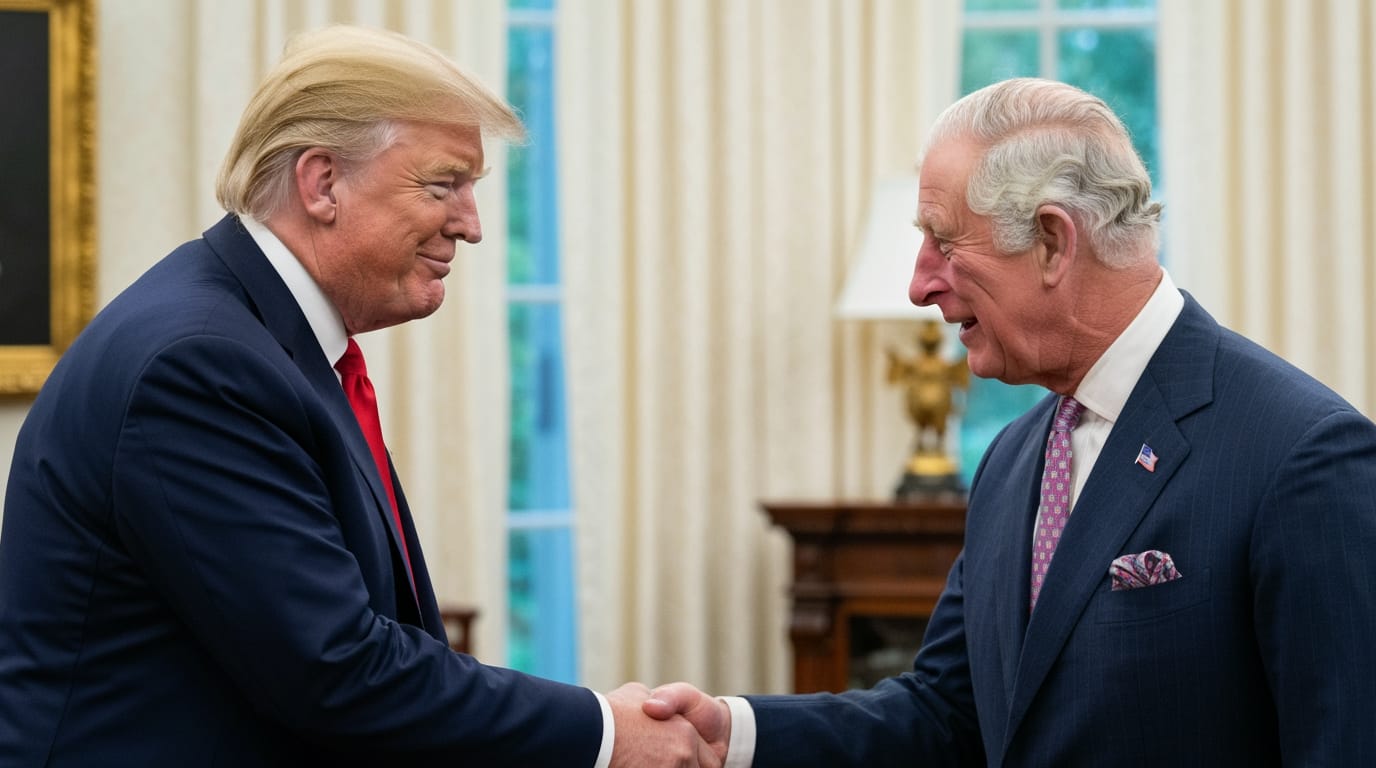
WASHINGTON D.C. — President Donald Trump announced Thursday the immediate cessation of tariffs on Scotch whisky imports from the United Kingdom, a move he explicitly attributed to a diplomatic gesture following the conclusion of a four-day state visit by King Charles III and Queen Camilla. The unexpected decision, unveiled via the President's Truth Social platform, marks a significant concession to a key ally and a substantial victory for the beleaguered Scotch whisky industry.
The announcement came as the British monarchs departed the White House, culminating a visit widely seen as an effort to bolster transatlantic relations amidst evolving global challenges. President Trump declared that the King and Queen had achieved what "nobody else was able to do, without hardly even asking!" This personal acknowledgment underscores the unique influence of the royal visit on the administration's trade policy.
A Royal Intervention in Trade Disputes
The recent state visit by King Charles III and Queen Camilla to the United States proved to be more than ceremonial, culminating in a direct and impactful policy shift. President Trump, notorious for his use of tariffs as a foreign policy tool, publicly praised King Charles as the "greatest king" during the visit, setting the stage for the trade concession. The lifting of these specific tariffs represents a notable success for British diplomacy, which has reportedly been advocating for the exemption of whisky from duties almost since Trump's return to power last year.
The tariffs in question, a 10 percent duty on UK alcohol imports, had been in place as part of a broader trade framework established by the Trump administration in April 2025. This 10 percent rate had replaced an even steeper 25 percent tariff that was temporarily suspended as part of a previous trade truce. While President Trump's initial social media post focused on "removing the Tariffs and Restrictions on Whiskey having to do with Scotland's ability to work with the Commonwealth of Kentucky on Whiskey and Bourbon," particularly concerning wooden barrels, U.S. Trade Representative Jamieson Greer subsequently clarified the scope. Greer confirmed that the United States would indeed extend "preferential duty access for whiskey produced in the United Kingdom," signaling a broader relief for the industry. This clarification eased initial ambiguities regarding whether the tariffs were being lifted on bottled Scotch or only on the materials used in production.
Economic Relief for a Pivotal Industry
For the Scotch whisky industry, the President's decision brings a wave of relief after years of navigating turbulent trade waters. The United States stands as the single largest export market for Scotch whisky, accounting for an annual value of approximately $1.2 billion, or nearly £1 billion. The imposition of tariffs has consistently hampered this vital trade, impacting sales volumes and profitability.
Industry data reveals the significant toll these duties have taken. The Scotch Whisky Association reported a 15 percent fall in export volume to the U.S. following the introduction of the 10 percent tariff just last year. Even more acutely, distillers experienced substantial losses during a prior trade dispute between 2019 and 2021, when a 25 percent tariff briefly targeted single malts. That earlier period alone cost the industry more than £600 million in lost sales, demonstrating how even short tariff windows can erase years of market growth.
The 10 percent duty, though seemingly modest, added roughly a $5 markup to a mid-priced bottle of single malt at U.S. retail, a margin that could critically influence an importer's decision to carry or drop a brand. The Scotch Whisky Association, representing Scottish distillers and supporting approximately 66,000 jobs across the UK, has been intensely lobbying for such a resolution for months. Chris Swonger, president and CEO of the Distilled Spirits Council in the U.S., lauded the move, stating it "strengthens transatlantic ties" and brings "much-needed certainty" to the industry. British Trade Minister Peter Kyle echoed this sentiment, hailing the decision as "great news for our scotch whisky industry."
Diplomatic Threads and Geopolitical Context
Beyond immediate economic relief, the tariff reversal carries significant diplomatic weight. The royal visit itself was designed to strengthen the bond between the two nations, which, according to some reports, had experienced strains. This strain was partially attributed to the UK, alongside other European allies, declining to join a two-month-old U.S.-Israeli war against Iran. In this context, President Trump's tariff concession can be viewed as a strategic olive branch, demonstrating the value placed on the relationship with the United Kingdom.
The move also highlights the persistent efforts by the UK to secure favorable trade terms with the U.S. Following Brexit, Britain has been eager to forge new trade deals, and the removal of these tariffs is a tangible win. While the official reason for King Charles's trip also celebrated the impending 250th anniversary of American independence, the underlying current of mending and reinforcing alliances was clear. The Buckingham Palace spokesperson conveyed King Charles's "sincere gratitude" for the decision, indicating that His Majesty would be "raising a dram" to the President's thoughtfulness, further cementing the symbolic success of the royal engagement.
A Toast to Future Transatlantic Ties
The lifting of Scotch whisky tariffs by President Trump, directly influenced by the state visit of King Charles III and Queen Camilla, marks a pivotal moment in transatlantic relations. It delivers substantial economic relief to a vital Scottish industry, demonstrating the power of diplomatic engagement to overcome trade barriers. More broadly, it signals a renewed commitment to strengthening the U.S.-UK alliance, a bond that remains crucial in an increasingly complex global landscape. The gesture, initiated by a presidential decree following a royal charm offensive, offers a tangible example of how cultural exchange can directly impact international policy and economic fortunes.


