Trump Moves Again to Restrict Birthright Citizenship After Supreme Court Setback

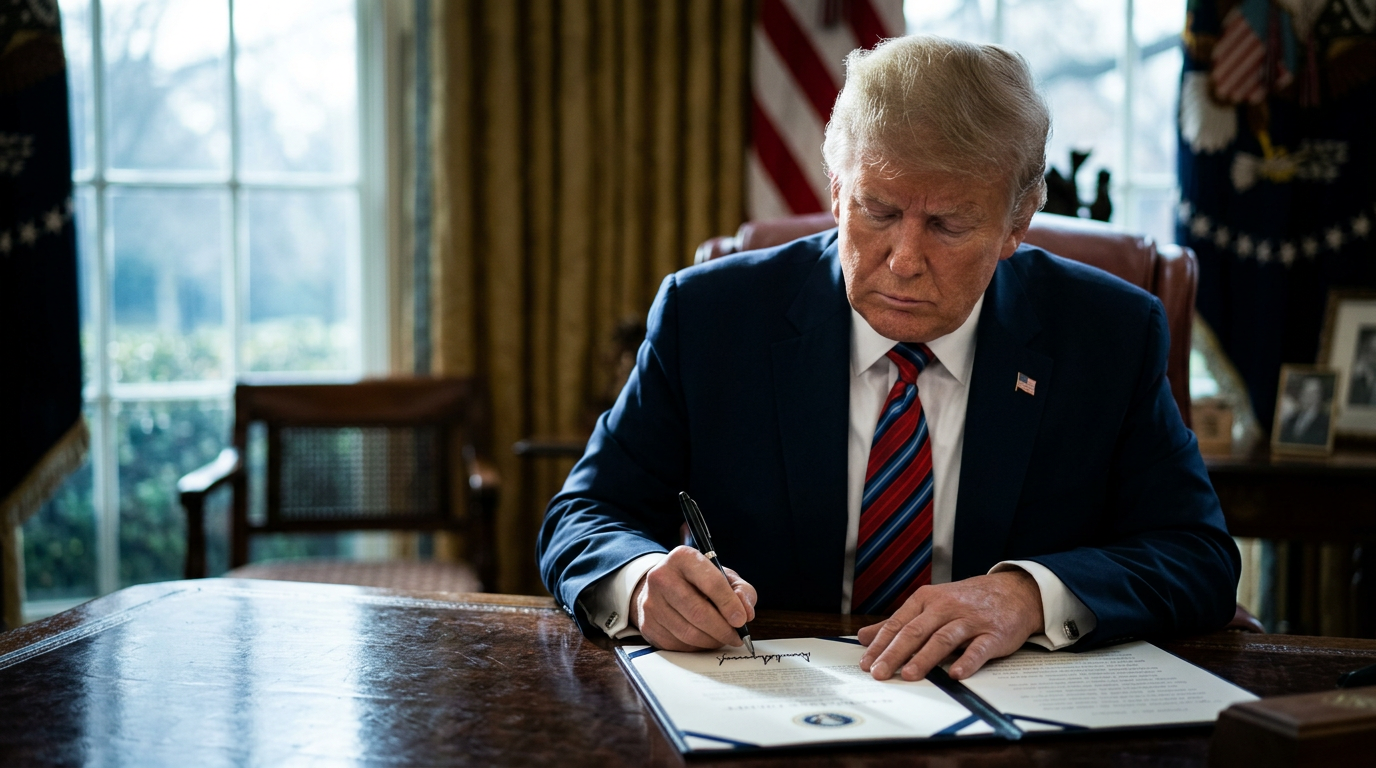
WASHINGTON D.C. – President Donald Trump signed two new executive orders Thursday aimed at narrowing birthright citizenship, doubling down on his administration's efforts to redefine a fundamental constitutional right just weeks after the Supreme Court unanimously struck down a previous attempt. The executive actions underscore the President's ongoing commitment to his immigration platform, setting the stage for renewed legal battles over the 14th Amendment's interpretation.
The latest orders were signed amidst strong opposition from civil rights advocates and constitutional scholars, who contend that birthright citizenship is unequivocally guaranteed by the Constitution. President Trump's move signals a determined push to reshape immigration policy, despite the high court's recent ruling that affirmed the long-standing understanding of who is a U.S. citizen.
The Administration's Latest Executive Actions
The two executive orders, signed in the Oval Office, represent a refined strategy by the Trump administration to limit birthright citizenship. According to White House deputy chief of staff Stephen Miller, one order specifically targets commercial "birth tourism," a practice where foreign nationals travel to the U.S. primarily to give birth on American soil, thereby granting their child U.S. citizenship. The administration has long criticized this practice, arguing it exploits existing immigration laws.
The second order expands the categories of individuals whose children born in the U.S. would, in the administration's view, be ineligible for birthright citizenship. This includes children of certain foreign citizens who lobby on behalf of foreign governments. The White House further clarified that the first order "non-exhaustively identifies certain categories of children of aliens who are not entitled to birthright citizenship consistent with historical exceptions to birthright citizenship recognized by the Supreme Court in Barbara." The second order delegates presidential authorities to the Secretary of State and Secretary of Homeland Security, directing them to halt "birth tourism" practices.
President Trump framed these new actions as "adjustments" following what he called "a very unfortunate decision in the Supreme Court concerning birthright." His administration maintains that these orders aim to "protect the meaning and value of American citizenship."
Echoes of Past Efforts and Legal Battles
This is not the first time President Trump has sought to alter birthright citizenship through executive action. On January 20, 2025, during his presidency, he signed Executive Order 14160, titled "Protecting the Meaning and Value of American Citizenship." That order specifically aimed to deny citizenship to children born in the United States to parents who lacked permanent immigration status, including those without legal status or those present on "lawful but temporary" visas. It also sought to redefine how the 14th Amendment's clause "and subject to the jurisdiction thereof" should be interpreted.
Executive Order 14160 drew immediate and widespread legal challenges from immigrant rights groups, civil liberties organizations, and several states. Lawsuits argued that the order was unconstitutional and sought to impose "second-class status" on U.S.-born children. Federal courts swiftly blocked the implementation of Executive Order 14160 through preliminary injunctions, preventing it from taking effect. The American Civil Liberties Union (ACLU) and its partners were among the key organizations challenging the order, filing lawsuits on the same day it was signed.
The Supreme Court's Stance and Constitutional Foundation
The legal saga surrounding Executive Order 14160 culminated on June 30, 2026, when the Supreme Court struck it down as unconstitutional in the landmark case Trump v. Barbara. The Court's decision unequivocally affirmed that birthright citizenship remains the law of the United States. Specifically, the Supreme Court ruled that the executive order violated the 14th Amendment, ensuring that birthright citizenship for those born in the U.S. remains unchanged and protected, regardless of their parents' immigration status.
The 14th Amendment, ratified in 1868, states: "All persons born or naturalized in the United States, and subject to the jurisdiction thereof, are citizens of the United States and of the state wherein they reside." This clause was enacted in the aftermath of the Civil War to guarantee citizenship to formerly enslaved people and has been consistently interpreted by the Supreme Court to mean that nearly everyone born on U.S. soil is a citizen. A pivotal case, United States v. Wong Kim Ark in 1898, solidified this interpretation, ruling that a child born in the U.S. to Chinese immigrant parents was a U.S. citizen. The only recognized exceptions under this interpretation are children of foreign diplomats, who are not considered "subject to the jurisdiction" of the U.S..
The Administration's Continued Push and Anticipated Challenges
Despite the clear constitutional precedent and the Supreme Court's recent ruling, President Trump and his allies remain steadfast in their belief that the 14th Amendment's citizenship clause was intended to apply only to children of former slaves and not to individuals whose parents are in the country without legal authorization or on temporary visas. Stephen Miller reiterated this view, stating, "This was done right after the Civil War... This was for the babies of slaves."
Legal experts widely anticipate that these new executive orders will face immediate and rigorous legal challenges, mirroring the fate of their predecessor. Civil rights and immigrant advocacy groups have consistently vowed to fight any attempts to dismantle birthright citizenship, citing the constitutional guarantee and longstanding judicial precedent. The ACLU, which successfully challenged the previous order, has repeatedly stated its readiness to defend birthright citizenship, highlighting its role as a "pillar of our democracy." Critics argue that an executive order cannot unilaterally amend the Constitution or overturn established Supreme Court precedent.
Conclusion
The signing of these two new executive orders marks the latest front in a protracted legal and political battle over the scope and meaning of birthright citizenship in the United States. While the Trump administration argues its actions are necessary to safeguard national sovereignty and the integrity of the immigration system, opponents view them as unconstitutional attempts to undermine a fundamental right enshrined in the 14th Amendment. The Supreme Court's recent rejection of a similar executive order underscores the significant legal hurdles the administration faces. As the nation grapples with complex immigration issues, the principle that every child born on U.S. soil is a citizen, regardless of their parents' status, remains a deeply entrenched constitutional tenet, now poised for another round of scrutiny and challenge in the nation's courts.
Related Articles

Ratko Mladić, "Butcher of Bosnia" and Convicted War Criminal, Dies at 84
THE HAGUE, Netherlands – Ratko Mladić, the former Bosnian Serb military commander known as the "Butcher of Bosnia" and convicted of genocide, war crimes, and crimes against humanity, has died at the age of 84. Serbian...

Long-Awaited 9/11 Mastermind Trial Set for 2028, Decades After Attacks
GUANTANAMO BAY, Cuba – Nearly a quarter-century after the devastating terror attacks of September 11, 2001, a military judge has finally set a trial date for Khalid Sheikh Mohammed, the alleged mastermind behind the...