Trump Removes Racially Charged Video of Obamas After Bipartisan Outcry
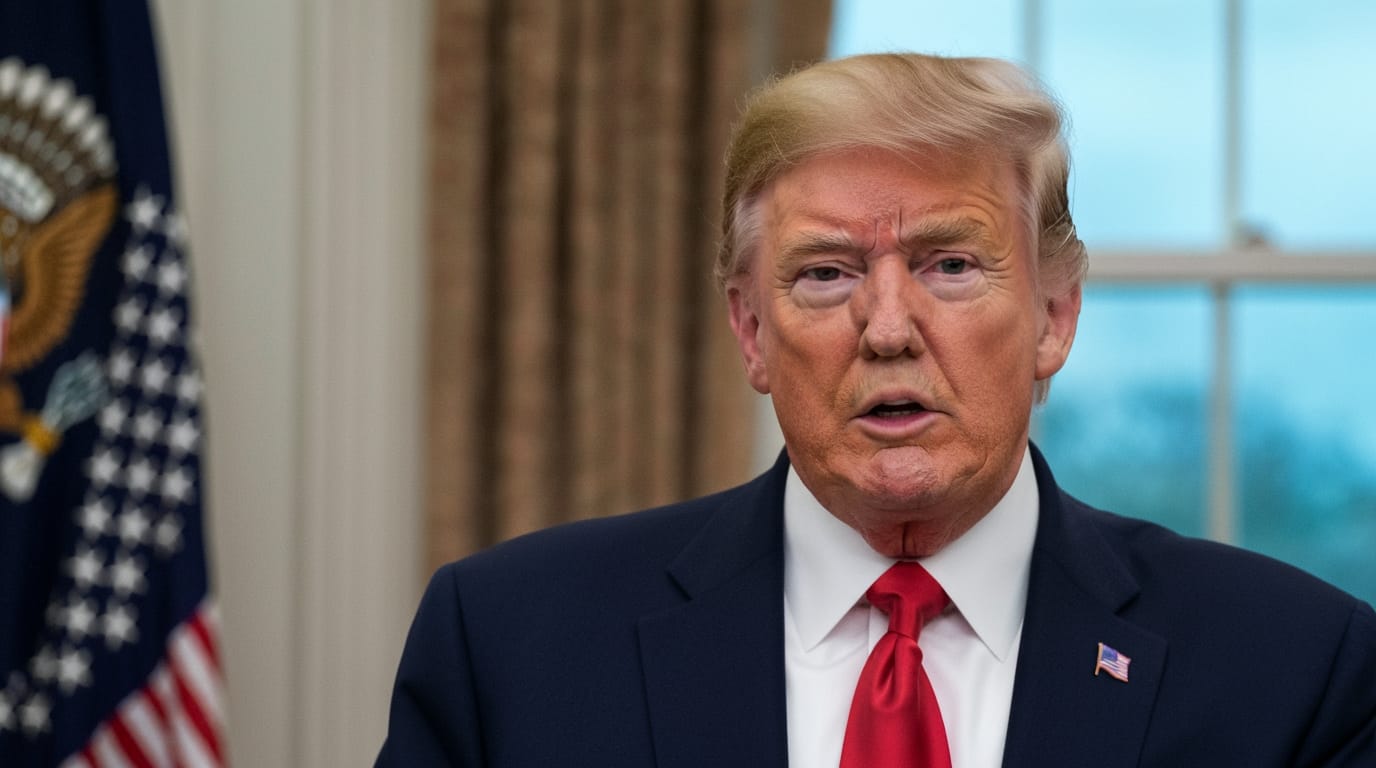
Washington D.C. — A video posted to former President Donald Trump's social media account, Truth Social, depicting former President Barack Obama and former First Lady Michelle Obama as apes, was removed Friday following widespread condemnation from both sides of the political aisle. The incendiary post, which recirculated false claims about the 2020 election alongside the racist imagery, sparked a fierce backlash that prompted the White House to eventually attribute the content to an erroneous staff posting.
The controversy ignited late Thursday night when the minute-long video appeared on Trump's platform. While primarily focused on amplifying unsubstantiated allegations of voter fraud in the 2020 presidential election, the clip concluded with an unsettling visual: the heads of Barack and Michelle Obama superimposed onto the bodies of dancing apes. This imagery, historically used to dehumanize Black individuals, was set to the tune of "The Lion Sleeps Tonight," with its evocative lyrics of a "mighty jungle." The video remained online for approximately 12 hours, drawing intense criticism before its eventual removal around noon on Friday.
The Incendiary Post and its Disturbing Imagery
The video, which circulated across social media platforms, was a jarring composite that wove together conspiracy theories about the last presidential election with overtly racist caricatures. The segment featuring the Obamas, though brief, leveraged a deeply offensive trope. The historical practice of associating Black people with simian characteristics dates back to the 18th century, serving as a tool to justify slavery and to later marginalize and dehumanize freed Black individuals as uncivilized threats. This specific form of racist imagery has been consistently identified as derogatory and harmful by civil rights organizations and anti-racism advocates.
Initial defense from the White House press secretary, Karoline Leavitt, characterized the furor as "fake outrage," describing the video as part of a broader "internet meme" that purportedly depicted former President Trump as the "King of the Jungle" and other Democrats as "Lion King" characters. However, critics quickly pointed out that the specific clip shared by Trump focused exclusively on the Obamas in this demeaning context, a detail that undermined the "meme" explanation. The post quickly became a focal point of discussion, drawing attention to the power of social media to disseminate divisive and offensive content.
Swift and Widespread Condemnation
The public's reaction was immediate and decisive, transcending partisan lines. Democrats, civil rights leaders, and a notable number of Republicans voiced strong disapproval of the video, deeming it racist and unacceptable.
Democratic leaders emphasized the deeply offensive nature of the content and called for a clear stance against such rhetoric. House Minority Leader Hakeem Jeffries praised Barack and Michelle Obama as "brilliant, compassionate and patriotic Americans," representing "the best of this country." Calls for Republicans to publicly denounce the behavior were made, with Maryland Representative Glenn Ivey stating that "Silence is complicity."
Perhaps more significantly, the video drew rare and direct rebukes from within Trump's own party. Senator Tim Scott of South Carolina, the only Black Republican in the Senate, called the video "the most racist thing I've seen out of this White House," expressing a hope that it was fake and urging its removal. Other Republican senators and representatives echoed his sentiments. Senator Pete Ricketts of Nebraska stated that "Even if this was a Lion King meme, a reasonable person sees the racist context to this. The White House should do what anyone does when they make a mistake: remove this and apologize." Representative Mike Lawler of New York called the post "wrong and incredibly offensive," while Senator Roger Wicker of Mississippi deemed it "totally unacceptable." Senators Susan Collins, Dan Sullivan, Katie Britt, and Jerry Moran also publicly condemned the video, using terms such as "appalling," "offensive," and "racist and offensive." Republican Representative John James, who is Black, stated he was "shocked and appalled" and "glad to see that trash has been taken down," while Representative Burgess Owens, also Black, found the imagery "wildly offensive and inappropriate" and "especially troubling." The bipartisan nature of the criticism highlighted the broad consensus against the use of such racially charged imagery in political discourse.
The Official Response and Reversal
In the face of mounting pressure and widespread outrage, the White House shifted its narrative. After initially defending the post as an "internet meme," officials later issued a statement asserting that "A White House staffer erroneously made the post. It has been taken down." This explanation marked a significant reversal from Press Secretary Leavitt's earlier dismissal of the criticism as "fake outrage."
Unnamed White House officials and Trump advisers further indicated that the former President was unaware of the video's content before it was posted late Thursday night and promptly ordered its removal once he became aware of its nature. The identity of the staffer blamed for the post was not disclosed. This move to attribute the incident to a staff error, rather than acknowledging direct responsibility, is a common tactic employed in similar situations involving controversial social media content from high-profile political figures.
The deletion of the post and the subsequent explanation represented a rare public admission of a misstep by the administration, underscoring the severity of the backlash. However, the nearly 12-hour duration of the post online and the initial defensive stance by the White House raised questions about the internal vetting processes for content shared on the President's social media accounts.
A Pattern of Controversy
This incident is not an isolated event in the landscape of American political discourse, nor is it the first time former President Trump has been at the center of controversies involving racial rhetoric concerning the Obamas. Throughout his political career, Trump has been associated with various racially charged statements and actions. Notably, he was a prominent proponent of the "birther" conspiracy theory, which falsely claimed that Barack Obama was not born in the United States and was therefore ineligible to serve as president. This persistent questioning of Obama's legitimacy and origins was widely viewed as racially motivated.
Beyond the former President himself, his political orbit has also seen similar instances. In 2016, a Trump New York co-chair made a "gorilla" comment about Michelle Obama, drawing significant criticism. Such historical context amplifies the gravity of the recent video, positioning it within a broader pattern of rhetoric that critics argue serves to diminish and dehumanize Black leaders and public figures. The recurrence of such imagery in public discourse, particularly from influential political voices, underscores ongoing debates about racial sensitivity, accountability, and the impact of online content.
Conclusion
The swift removal of the racially charged video depicting the Obamas as apes, alongside the White House's explanation of a staff error, highlights the volatile intersection of social media, political rhetoric, and racial dynamics in contemporary American society. The episode generated bipartisan condemnation, forcing a public course correction from an administration often resistant to admitting error.
While the immediate crisis was diffused with the video's deletion, the incident reignited critical discussions about the weaponization of racist tropes, the responsibility of public figures in shaping discourse, and the pervasive nature of online misinformation. The strong and unified condemnation, particularly from within Republican ranks, demonstrated a significant societal pushback against overtly racist content. As political campaigns increasingly rely on digital platforms to communicate, this event serves as a stark reminder of the potent and often damaging implications of unchecked online dissemination, particularly when it touches upon deeply ingrained historical prejudices.


