Trump Replaces Obama Portrait with Controversial Image of Himself
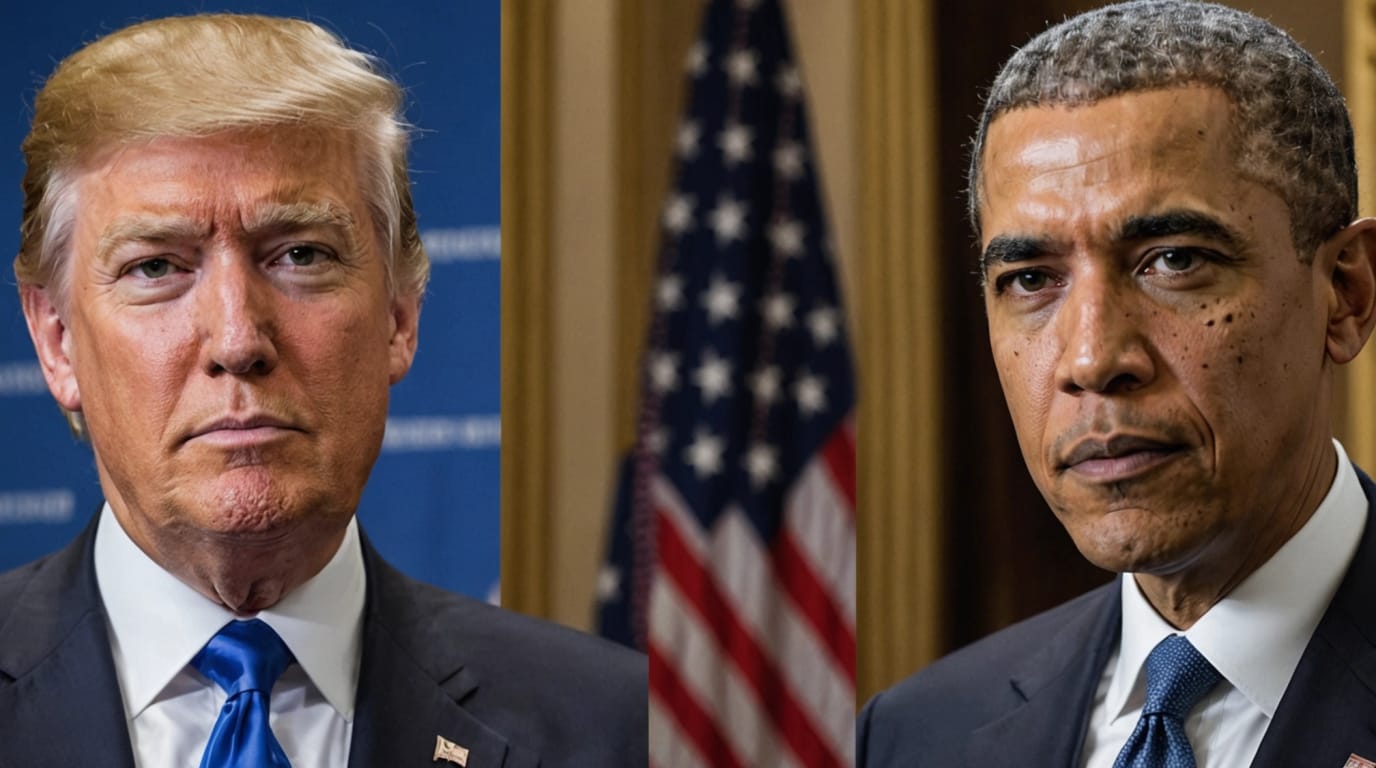
In an unprecedented move that has ignited debate across the political spectrum, President Donald Trump has replaced the official White House portrait of his predecessor, Barack Obama, with a painting depicting himself in the aftermath of an assassination attempt. The switch, made public on Thursday, has been met with criticism from historians and political analysts, who are calling the move a break from long-standing traditions and a reflection of Trump's self-aggrandizing tendencies.
A Break with Tradition
The tradition of presidential portraits dates back to George Washington, with presidents typically commissioning or sitting for portraits during their time in office. These portraits, often oil paintings, are eventually displayed in the White House or the National Portrait Gallery. It is customary for presidents to wait until after they have left office before their portraits are formally hung in the White House. These ceremonies are often bipartisan events, with the current president hosting their predecessor for the unveiling.
President Jimmy Carter began the tradition of inviting former presidents and first ladies back to the White House to unveil their portraits with a ceremony. On May 24, 1978, President Carter and First Lady Rosalynn Carter unveiled the White House portraits of former President Gerald R. Ford and former First Lady Betty Ford.
Trump, however, has deviated from this tradition. Not only did he reportedly fail to host Obama for an unveiling during his first term, but he has now replaced Obama's portrait with one of himself while still in office.
The New Portrait: Defiance After Tragedy
The portrait replacing Obama's depicts Trump with his fist raised in the air, moments after surviving an assassination attempt in Butler, Pennsylvania, in July 2024. The painting, which closely resembles an Associated Press photograph from the event, shows a bloodied Trump surrounded by Secret Service agents. The words he shouted after the incident, "Fight! Fight! Fight!" are said to have become a rallying cry for his supporters during the final months of his 2024 campaign.
White House officials have defended the decision, stating that the executive mansion is the president's home and he has the right to make changes. They also noted that the Obama portrait was not removed from the White House entirely, but simply relocated to another spot in the grand entrance hallway, previously occupied by George W. Bush's portrait. Bush's portrait, in turn, has been moved to the staircase.
Reactions and Implications
The move has drawn sharp criticism from presidential historians and political commentators. Ted Widmer, a presidential historian at the City University of New York and a former speechwriter for President Bill Clinton, called the move "tacky." He stated that it "feels different from our tradition of venerating the distinguished holders of the office from both parties -- and going in a new direction of walking around looking at images of yourself all day long."
Others have pointed to the move as another example of Trump's long-standing animosity towards Obama. Trump famously launched his political career by promoting the "birther" conspiracy theory, falsely claiming that Obama was not born in the United States. This latest action is seen by some as a continuation of that rivalry, now playing out on the walls of the White House.
White House Communications Director Steven Cheung responded to criticism of the move on X, telling one critic to "Pipe down, moron."
Presidential Portraits: More Than Just Decoration
Presidential portraits serve as more than just decoration; they are symbols of continuity, tradition, and the peaceful transfer of power. They offer a visual representation of American history and democracy. The portraits also reflect the individual presidents themselves. The style of the portrait, the pose, the colors, the setting, as well as facial features all convey a measure of the sitter.
The National Portrait Gallery has collected presidential portraits since its creation in 1962 and began commissioning their portraits in 1994, starting with George H.W. Bush.
The decision to replace Obama's portrait with one of himself, particularly one depicting a moment of violence and defiance, sends a powerful message about Trump's view of the presidency and his place in history.
A Reflection of a Tumultuous Presidency
President Trump's decision to replace Barack Obama's portrait with a painting of himself marks a significant departure from presidential tradition. The move, seen by many as a symbol of Trump's self-obsession and his ongoing rivalry with his predecessor, has sparked controversy and debate. Whether it will be viewed as a minor blip in the history of the White House or a more lasting symbol of a tumultuous presidency remains to be seen. The incident underscores the power of symbols and the importance of tradition in the American presidency.


