Trump Signals Deep Skepticism Over Netflix-Warner Bros. Discovery Megamerger, Citing Market Share Concerns
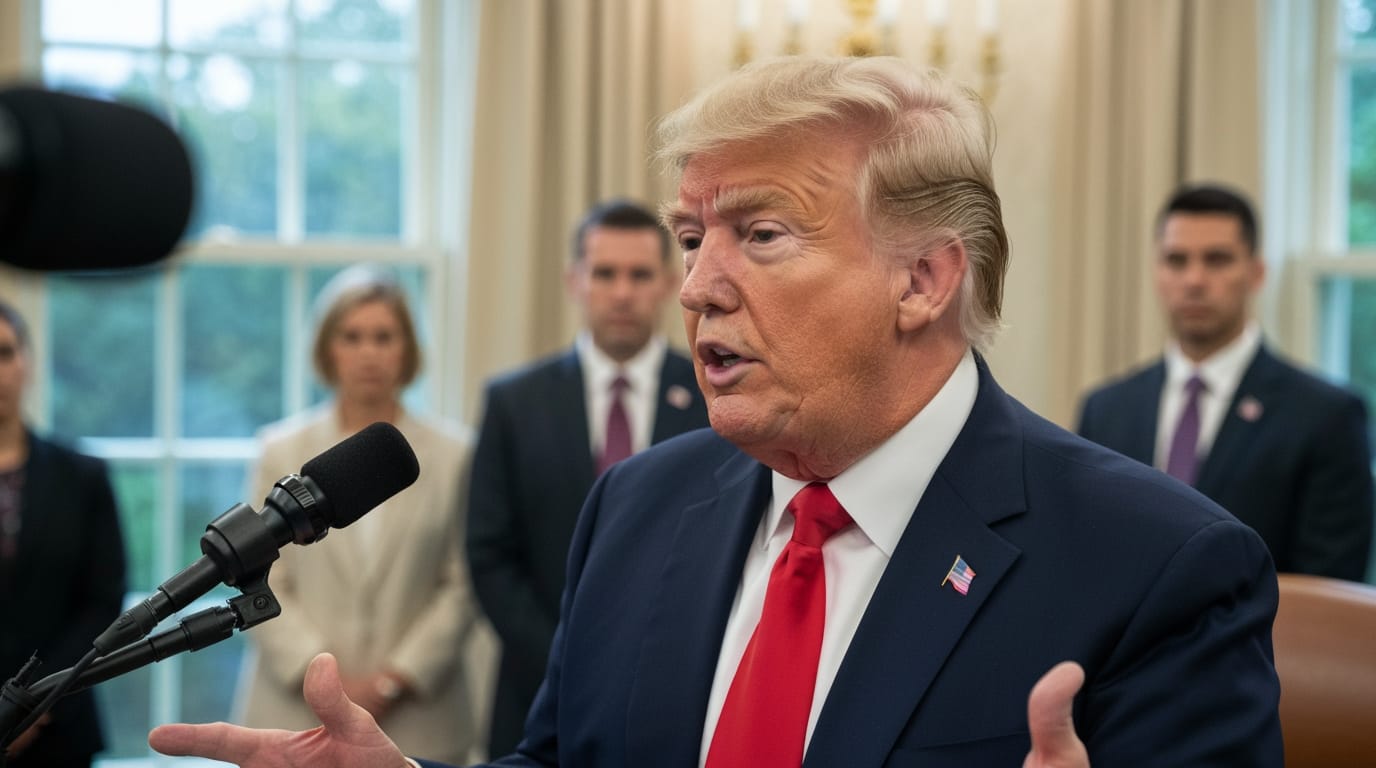
Washington D.C. – A monumental $82.7 billion deal poised to reshape the global entertainment landscape has hit a significant roadblock, as President Donald Trump publicly voiced strong doubts regarding Netflix's proposed acquisition of Warner Bros. Discovery's key entertainment assets. Speaking Sunday ahead of the Kennedy Center Honors, the President signaled his personal involvement in the regulatory review, raising concerns that the combined entity's substantial market share could pose an antitrust "problem" for consumers and the industry at large. This presidential intervention introduces considerable uncertainty into what would be one of the largest media mergers in recent history, prompting widespread discussion among policymakers, industry titans, and consumer advocates.
The Dawn of a Streaming Colossus
The proposed agreement, announced just days prior, would see streaming giant Netflix acquire Warner Bros. Discovery's extensive film and television studios and its streaming divisions, which include HBO, DC Entertainment, and TNT Sports. Valued at an estimated $82.7 billion, this ambitious transaction aims to unite the world's leading streaming service, Netflix, with the formidable content library and user base of HBO Max, currently ranked as the fourth-largest streaming player. Such a combination could reportedly command an astonishing one-third of global on-demand streaming consumption among Western audiences, creating an unparalleled force in digital entertainment. The deal emerged after a competitive bidding process that saw other media powerhouses, including Paramount Skydance and Comcast, vying for Warner Bros. Discovery's assets.
Presidential Scrutiny and Antitrust Echoes
President Trump's direct comments Sunday underscore a deepening scrutiny from his administration. "They have a very big market share, and when they have Warner Brothers, that share goes up a lot, so I don't know," Trump stated, adding pointedly, "That's going to be for some economists to tell... and I'll be involved in that decision too." These remarks followed earlier reports from a senior administration official who, days before, had already characterized the White House's view of the deal with "heavy skepticism," citing significant regulatory hurdles.
The President also confirmed a recent meeting with Netflix co-CEO Ted Sarandos in the Oval Office. While Trump lauded Sarandos as a "fantastic man" who has done "one of the greatest jobs in the history of movies," he explicitly denied providing any assurances regarding the merger's approval. This cautious approach aligns with Trump's historical stance on major media consolidations, notably his opposition to the AT&T-Time Warner merger in 2016, which he then described as an example of "too much concentration of power in the hands of too few."
Alarms from Capitol Hill and Industry Watchdogs
The concerns emanating from the White House are echoed by a chorus of critics, including prominent lawmakers and industry advocacy groups, who fear the potential monopolistic implications of such a vast merger. Senator Elizabeth Warren, D-Mass., has been a vocal opponent, labeling the proposed acquisition an "anti-monopoly nightmare." Warren specifically warned that a Netflix-Warner Bros. combination could lead to "higher prices, fewer choices over what and how you watch, and may put American workers at risk." She further criticized the nation's antitrust review process under the current administration, suggesting it had "become a cesspool of political favoritism and corruption," and called for fair and transparent enforcement of anti-monopoly laws.
Beyond Capitol Hill, major industry stakeholders have also voiced strong opposition. The Writers Guild of America (WGA), representing a vast network of writers, issued a scathing statement demanding that the merger be blocked, citing concerns about its impact on competition and the livelihoods of creative professionals. Similarly, Cinema United, a trade association representing over 30,000 movie screens in the U.S. and an additional 26,000 internationally, expressed fears that the deal "poses an unprecedented threat to the global exhibition business." Antitrust regulators are expected to meticulously examine whether the combined entity would exceed a critical 30% market share threshold, which could render the deal illegal. Critics argue that the merger could significantly amplify Netflix's power over content creators, distribution channels, and consumers, potentially stifling innovation and leading to job losses within the creative industries.
A Complex Web of Politics and Corporate Rivalry
The current debate surrounding the Netflix-Warner Bros. Discovery deal is further complicated by the intricate interplay of corporate rivalries and political connections. Paramount Skydance, a prominent contender in the bidding war, has actively sought to influence regulatory sentiment against the Netflix acquisition. Paramount's CEO, David Ellison, whose father, Larry Ellison, is a well-known supporter and friend of President Trump, reportedly met with administration officials and lawmakers to lobby against the Netflix deal. Lawyers for Paramount even went so far as to warn Warner Bros. Discovery that a sale to Netflix would likely "never close" due to anticipated regulatory challenges both domestically and internationally. This dynamic has fueled speculation regarding the potential for political influence to play a role in the antitrust review process, an issue explicitly highlighted by Senator Warren.
The Road Ahead for Streaming's Future
The future of the proposed Netflix-Warner Bros. Discovery merger now hangs in the balance, subject to a rigorous and potentially protracted regulatory review. President Trump's explicit declaration of his involvement, coupled with the "heavy skepticism" from his administration and widespread industry opposition, ensures that this deal will face intense scrutiny. The outcome will not only determine the trajectory of these two media giants but also set significant precedents for consolidation within the rapidly evolving streaming industry. As regulators weigh the implications for competition, consumer choice, and the livelihoods of creative professionals, the entertainment world watches closely, awaiting a decision that could profoundly shape the digital content landscape for years to come.


