Trump Signals Shift on Ukraine Security, Pushing Europe to Shoulder Greater Burden
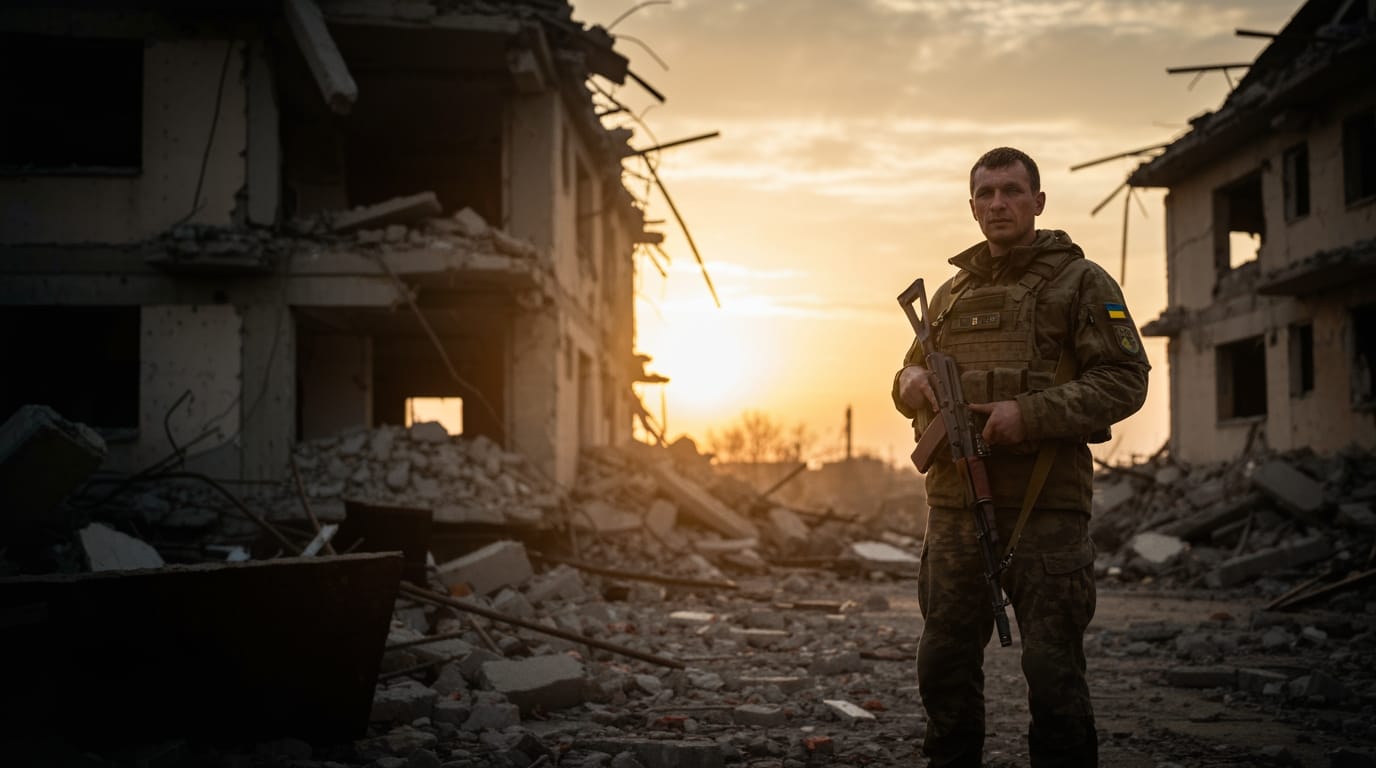
WASHINGTON D.C. — In a significant pivot for American foreign policy, former President Donald Trump has signaled a new approach to Ukraine's long-term security, emphasizing that European nations must assume primary responsibility for guaranteeing the war-torn country's defense. These pronouncements, made amidst high-level diplomatic engagements in late 2025, underscore a growing divergence in strategies for achieving peace and stability in Eastern Europe.
Trump's stance, articulated during meetings with Ukrainian President Volodymyr Zelenskyy and various European leaders, suggests a recalibration of the United States' commitment, potentially reshaping the architecture of future security arrangements for Ukraine. While indicating the U.S. would still "help them out also" and "be involved" in some capacity, the emphasis has markedly shifted towards a European-led framework, drawing both anticipation and apprehension from international allies. The development unfolds as Kyiv intensifies its diplomatic efforts to secure robust, legally binding security guarantees essential for deterring future Russian aggression and paving the way for a lasting peace.
A New Chapter in Diplomacy: Trump's Vision for Ukraine's Future
The contours of this evolving policy became clearer during a pivotal meeting in Washington D.C. on February 28, 2025, where President Trump reportedly informed President Zelenskyy that Ukraine's security guarantees would largely fall under Europe's purview. This sentiment was echoed and expanded upon in mid-August 2025, following Trump's engagement with Russian President Vladimir Putin in Alaska. Speaking to European leaders, Trump reiterated his expectation for Europe to bear a significant portion of the security burden, though he confirmed a U.S. role in assisting these efforts. He also reportedly suggested that President Putin had agreed to accept security guarantees for Ukraine, a critical but largely undetailed claim.
This diplomatic overture has been intertwined with President Trump's broader peace initiative, which he has publicly framed as a means to halt the ongoing conflict, stabilize European security, and potentially serve his domestic political agenda. A leaked "28-point" peace proposal, reportedly drafted by Trump's envoys, has emerged as a central, albeit controversial, element of this strategy. The draft calls for Ukraine to make substantial concessions, including ceding territory, demobilizing its armed forces, and renouncing its aspirations for NATO membership. In return, the proposal offers "vague Western security guarantees" and economic integration for Russia. This plan has been met with considerable skepticism and outright rejection from several European leaders and Kyiv itself, particularly regarding the territorial concessions and the ambiguity of the proposed security assurances.
European Apprehension and Kyiv's Steadfast Demands
The reaction from European capitals has been complex. While some leaders initially welcomed the U.S. engagement in discussions around Ukraine's security, particularly the prospect of American involvement in guarantees, deeper concerns have arisen regarding the specifics of Trump's proposals. German Chancellor Friedrich Merz, French President Emmanuel Macron, and UK Prime Minister Keir Starmer, among others, have emphasized the imperative of robust security guarantees for a "just and lasting peace" in Ukraine. However, many European officials view Trump's 28-point plan as an "unconscionable capitulation to Vladimir Putin," criticizing its demand for Ukraine to relinquish more land than Russia currently occupies and to effectively rewrite its constitution to prohibit NATO membership in exchange for undefined protections. Concerns have also been voiced about the lack of clarity regarding a potential U.S. military component in any security guarantee, with Trump indicating that while the U.S. would be part of a "coalition of the willing," he did not commit to deploying American troops on the ground in Ukraine.
For Ukrainian President Volodymyr Zelenskyy, the issue of security guarantees remains non-negotiable and paramount. Zelenskyy has consistently maintained that any peace agreement must be underpinned by strong, legally binding security assurances that are truly effective in deterring future aggression. Kyiv has been actively working on a three-pronged approach to peace, encompassing a framework peace agreement, comprehensive security guarantees, and plans for reconstruction. Ukraine's negotiating team has emphasized that these guarantees must be robust enough to truly function, and they seek the active involvement of the United States, along with European partners, in their formulation and enforcement. Furthermore, Zelenskyy has stressed the critical role of these guarantees even in practical matters, such as holding national elections during wartime, stating that a "security component" is necessary for such democratic processes to occur.
The Broader Landscape of Ukraine's Security
Beyond the recent developments surrounding President Trump's statements, the discussion of Ukraine's security guarantees has been a central theme since the full-scale Russian invasion in February 2022, and even following Russia's annexation of Crimea in 2014. In July 2023, the Group of Seven (G7) nations took a significant step by issuing a Joint Declaration of Support for Ukraine. This declaration committed G7 members to working with Kyiv on specific, long-term bilateral security agreements designed to bolster Ukraine's defense capabilities and deter future Russian aggression. These agreements, often referred to as "deterrence by denial," aim to ensure Ukraine possesses a powerful, modern, and interoperable military capable of defending itself.
Numerous countries, including the United Kingdom, the United States, Germany, and Poland, have either concluded or are in the process of negotiating such bilateral security pacts with Ukraine. These arrangements are explicitly designed as a bridge or temporary assurance until Ukraine achieves its strategic goal of NATO membership, which Kyiv views as the ultimate and most genuine security guarantee. NATO itself has consistently affirmed its full support for Ukraine's inherent right to self-defense and its freedom to choose its own security arrangements, stating clearly that "Ukraine's future is in NATO." The Alliance has provided unprecedented levels of military and financial assistance to Ukraine, coordinating the delivery of equipment, training, and other critical support from its member states.
However, the path to a universally accepted security framework for Ukraine remains fraught with challenges. The issue of territorial concessions, particularly in the Donbas region and Crimea, continues to be a major point of contention between Ukraine and Russia, and a significant obstacle to any comprehensive peace settlement. Russia, for its part, insists on a "strong, sustainable, and long-term peace with security guarantees for all parties involved," while simultaneously rejecting calls for a ceasefire and maintaining its core demands.
Conclusion: A Precarious Path Forward
As the discussions intensify, the international community faces a complex balancing act: supporting Ukraine's sovereignty and territorial integrity while navigating disparate visions for a lasting peace. President Trump's recent statements and proposed peace plan introduce a significant new dynamic, challenging existing frameworks and placing increased pressure on European allies to define and commit to a more substantial role in Ukraine's defense.
The outcome of these ongoing negotiations and the nature of the security guarantees ultimately extended to Ukraine will profoundly shape the geopolitical landscape of Europe for decades to come. Ukraine's resolve to maintain its territorial integrity and secure ironclad protections against future aggression stands in contrast to proposals demanding significant concessions. The delicate interplay between U.S. leadership, European commitment, and Ukraine's existential needs will determine whether a sustainable peace can be forged, or if the region is destined for continued instability.


