Trump Taps Housing Chief Bill Pulte as Acting Intelligence Head, Sparking Debate
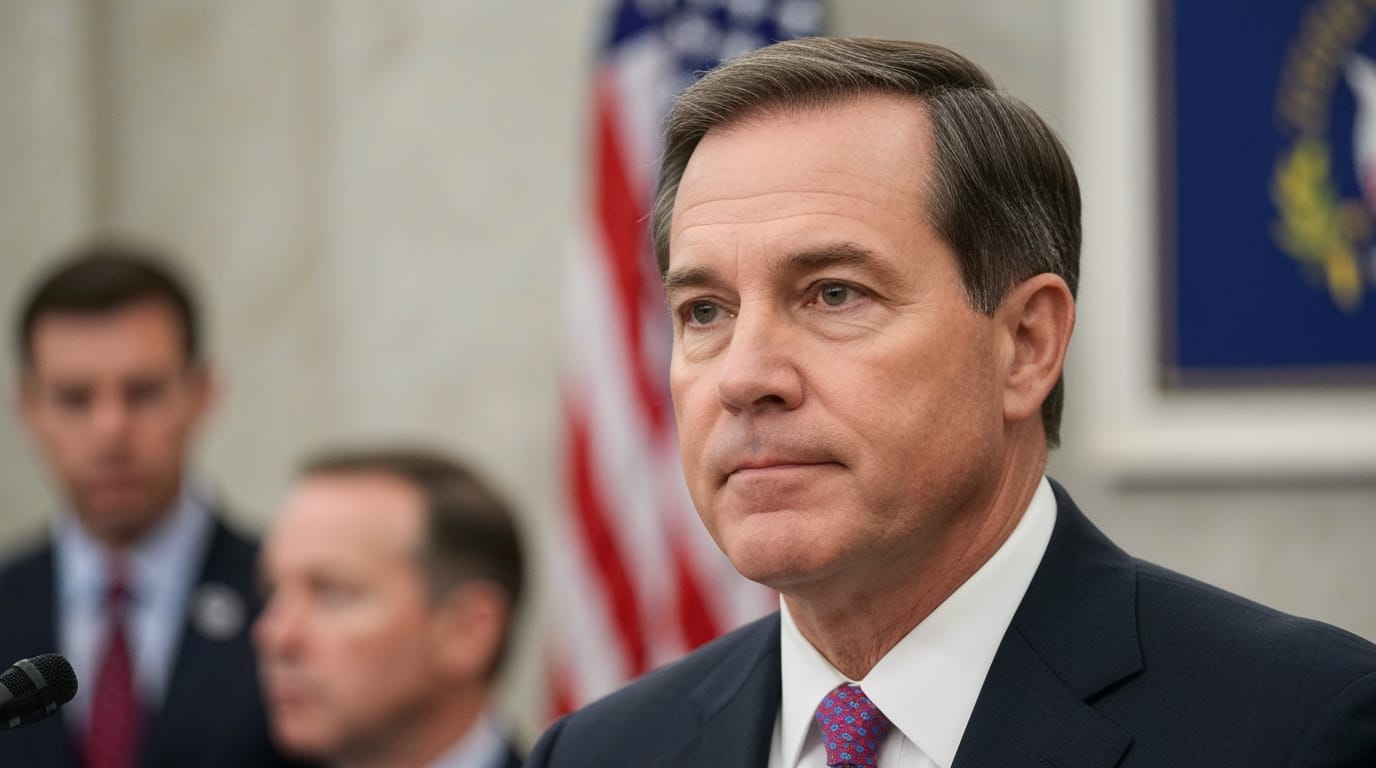
WASHINGTON – President Donald Trump has named Bill Pulte, currently the Director of the Federal Housing Finance Agency (FHFA), as the acting Director of National Intelligence (DNI), a move that immediately ignited discussion given Pulte's lack of traditional intelligence background and his controversial tenure in the housing sector. The appointment sees Pulte taking on the critical role of overseeing the nation's 18 intelligence agencies, a position central to national security and strategic decision-making, while simultaneously retaining his leadership of the FHFA and chairmanship of Fannie Mae and Freddie Mac. This dual role and the appointment of an official known for his aggressive pursuit of the administration's political adversaries mark a significant shift in the leadership of the intelligence community.
Pulte's appointment follows the departure of Tulsi Gabbard, who is stepping down from the DNI post at the end of the month. Gabbard had overseen a major restructuring of the Office of the Director of National Intelligence (ODNI) through her "ODNI 2.0" initiative, which aimed to streamline operations by reducing staff and consolidating various offices and analytical functions. While administration officials lauded these changes as efforts to curb bureaucratic bloat, critics expressed concerns that such moves could weaken the ODNI's institutional capacity and shift greater influence back to standalone agencies like the CIA. Now, Pulte, a figure with a distinct professional history outside of national security, steps into an office already undergoing significant transformation.
A Controversial Figure Steps into National Security
Bill Pulte, 38, is a grandson of the founder of homebuilding giant PulteGroup and was confirmed as director of the FHFA in March 2025. His time at the helm of the FHFA has been marked by strong alignment with President Trump's agenda and several contentious actions. Within months of assuming his housing finance role, Pulte initiated sweeping leadership changes at Fannie Mae and Freddie Mac. He moved to terminate Special Purpose Credit Programs (SPCPs), cut diversity, equity, and inclusion (DEI) budgets, and rescinded various fair lending and climate-risk advisory bulletins, signaling a significant ideological shift in federal housing policy.
More notably, Pulte gained widespread attention for sending criminal referrals to the Justice Department. These referrals alleged mortgage fraud by individuals whom the administration perceived as political foes of President Trump. Among those targeted were New York Attorney General Letitia James, Senator Adam Schiff, Federal Reserve Governor Lisa Cook, and former Representative Eric Swalwell. While all individuals denied wrongdoing, and a case against James that resulted in charges was eventually dismissed, these actions drew sharp criticism from congressional Democrats. Democrats on Capitol Hill formally requested the nonpartisan Government Accountability Office (GAO) to investigate whether Pulte potentially misused federal authority and resources to publicly accuse prominent Democrats and perceived political enemies of mortgage fraud. The GAO confirmed in December that it was investigating these claims, though its findings have yet to be released. This history paints a picture of an official unafraid to leverage his position to pursue politically charged investigations, a characteristic that now raises questions as he assumes a leadership role in the ostensibly apolitical intelligence community.
Navigating the Intelligence Landscape with Dual Roles
President Trump announced Pulte's appointment via a post on Truth Social, praising his qualifications. The President stated that Pulte "has deep experience managing the most sensitive matters in America, the safety and soundness of the Markets, and over 10 Trillion Dollars at Fannie Mae/Freddie Mac, a substantial increase from where it was just 12 months ago." However, this emphasis on financial management experience stands in stark contrast to the traditional qualifications for the DNI role, which typically include extensive backgrounds in military, intelligence, or diplomatic service. Pulte's appointment is notable precisely because he lacks prior national security experience.
The DNI serves as the principal advisor to the President, the National Security Council, and the Homeland Security Council on intelligence matters related to national security. The position is responsible for integrating foreign, military, and domestic intelligence in order to counter threats such as terrorism, espionage, cyberattacks, and foreign government activities. Managing this vast and complex network of agencies and information traditionally requires a nuanced understanding of intelligence gathering, analysis, and operations, as well as a deep appreciation for the delicate balance between intelligence imperatives and civil liberties. The decision for Pulte to maintain his roles at the FHFA and as chairman of Fannie Mae and Freddie Mac further complicates his new responsibilities. This unprecedented arrangement, where a key intelligence chief also manages multi-trillion-dollar housing finance entities, raises concerns about potential conflicts of interest, divided attention, and the sheer logistical demands placed upon one individual. The statute allows acting officials to serve for 210 days from the start of a vacancy, providing a temporary window for this arrangement.
Implications for the Intelligence Community and Beyond
Pulte's appointment as acting DNI signals a continuation of the administration's pattern of placing loyalists in critical government positions, often with mandates to shake up existing structures and challenge established norms. His past actions at the FHFA suggest a willingness to engage in aggressive tactics and pursue individuals deemed adversarial to the President, characteristics that could have profound implications for the intelligence community. The intelligence community relies heavily on objective analysis, non-partisanship, and a clear separation from domestic political maneuvering to maintain its credibility both domestically and internationally. Critics suggest that an acting DNI with a history of politicized referrals could undermine these core tenets, potentially affecting intelligence collection, analysis, and dissemination.
The transition from Tulsi Gabbard's "ODNI 2.0" initiative to Pulte's leadership also creates an environment of uncertainty within the intelligence apparatus. While Gabbard's restructuring was framed as an efficiency measure, it already generated internal and external debate about the strength of the ODNI. Pulte's arrival, with his distinct professional background and potentially different priorities, could introduce further upheaval or a new direction for the agency. The question remains whether his management philosophy, honed in the housing finance sector, can be effectively translated to the unique demands of the intelligence world.
Should President Trump decide to nominate Pulte for the full-time DNI position, he would require confirmation by the U.S. Senate. Given his controversial record at the FHFA and the concerns over his lack of intelligence experience, such a confirmation process would likely be contentious, triggering intense scrutiny from lawmakers on both sides of the aisle. The debates would center not only on Pulte's qualifications for the role but also on the broader implications for the independence and effectiveness of the U.S. intelligence community under his leadership.
Conclusion
The appointment of Bill Pulte as acting Director of National Intelligence marks a significant and potentially transformative moment for the U.S. intelligence apparatus. His rapid ascent from the housing finance sector to a critical national security role, coupled with his controversial track record and the unusual decision to retain his previous positions, positions him as a central figure in a unfolding political and institutional drama. As the intelligence community grapples with ongoing global threats and internal transformations, all eyes will be on how this unconventional leader, known for his political loyalty and confrontational style, navigates the complexities of America's intelligence landscape. The coming months will undoubtedly reveal the full implications of this unexpected choice for the nation's security posture and the integrity of its intelligence operations.


