Trump Threatens Insurrection Act Deployment in Minnesota Amid Escalating Clashes
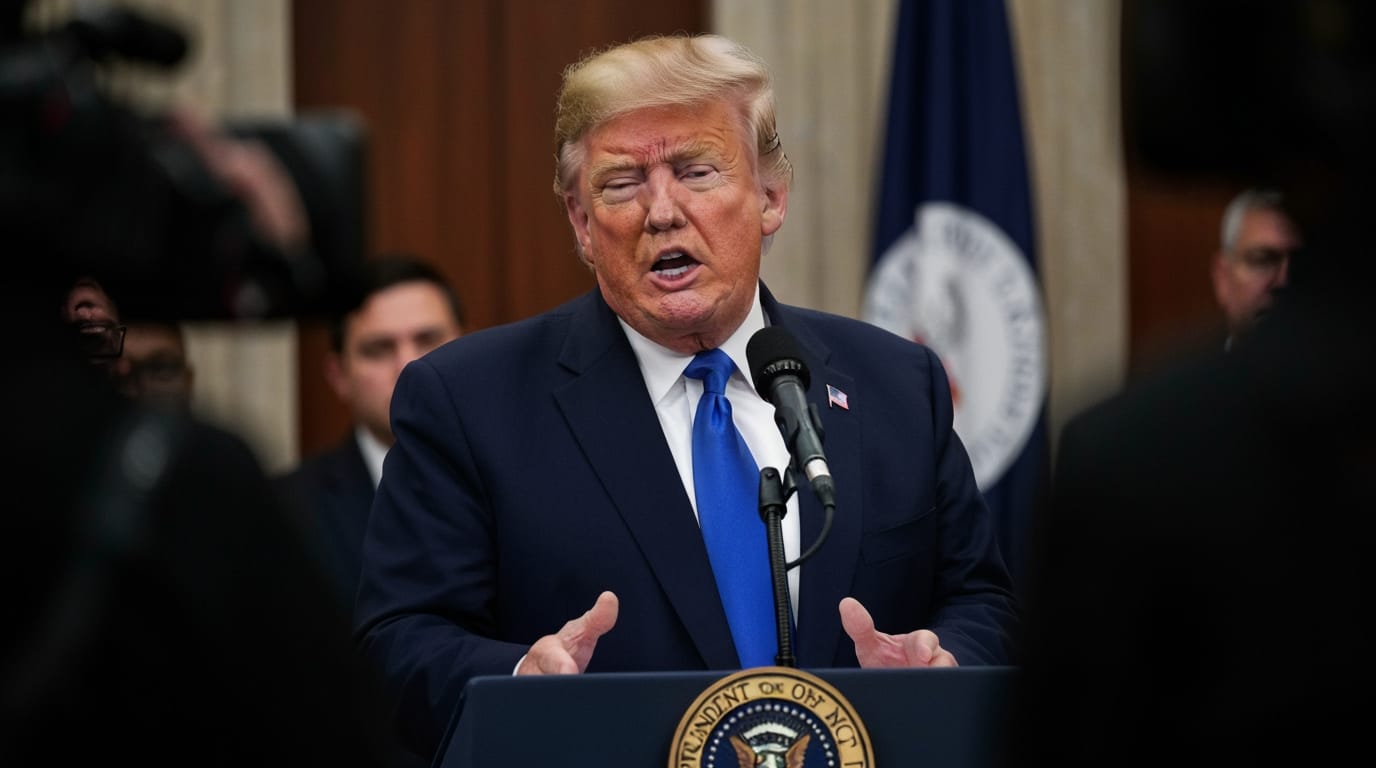
Minneapolis, MN – President Donald Trump on Thursday issued a stark warning to Minnesota authorities, threatening to invoke the Insurrection Act to deploy federal troops to the state if local officials failed to quell ongoing protests against federal immigration agents. The pronouncement, made via social media, follows a week of intense clashes in Minneapolis, marked by two separate shootings involving Immigration and Customs Enforcement (ICE) officers and community members. The escalating situation has ignited a fierce debate over executive power, federal-state relations, and the appropriate use of military force on domestic soil.
The President's threat surfaced amidst a volatile environment in Minneapolis, where community anger and demonstrations have grown in response to recent actions by federal law enforcement. One week prior to Trump's statement, an ICE officer fatally shot Renee Good, a 37-year-old individual, in Minneapolis. Tensions further escalated on Wednesday evening when another ICE agent shot a Venezuelan man in the leg during an attempted arrest. According to the Department of Homeland Security (DHS), the Wednesday incident occurred when the officer was ambushed and attacked by multiple individuals, including the Venezuelan man, with a shovel or broomstick, prompting the officer to fire a defensive shot. Local reports, however, indicate that the officer was attempting to arrest the man when a struggle ensued. These events have fueled widespread protests, with demonstrators clashing with law enforcement, resulting in projectiles being thrown and the deployment of tear gas and rubber bullets.
The President's Direct Ultimatum
In a post on his Truth Social platform on Thursday morning, President Trump delivered his explicit threat. He stated, "If the corrupt politicians of Minnesota don't obey the law and stop the professional agitators and insurrectionists from attacking the Patriots of I.C.E., who are only trying to do their job, I will institute the INSURRECTION ACT, which many Presidents have done before me, and quickly put an end to the travesty that is taking place in that once great State." This ultimatum underscores a willingness to bypass state authority and directly deploy federal military forces into Minnesota. Such a move would allow federal troops to perform civilian law enforcement actions, including making arrests and detaining individuals. The President's statement portrays the protestors as "professional agitators and insurrectionists" and ICE agents as "Patriots" simply attempting to carry out their duties.
The threat is not without precedent for the Trump administration, which had previously considered invoking the Insurrection Act during the widespread George Floyd protests in 2020. At that time, federal officials reportedly talked Trump out of invoking the Act. More recently, in early October 2025, Trump also floated the possibility of deploying the Act in other Democratic-led cities and states, including Portland, Oregon, and Chicago, Illinois, despite strong opposition from local mayors and governors.
Understanding the Insurrection Act of 1807
The Insurrection Act of 1807 is a federal statute granting the U.S. President the authority to deploy the U.S. military and federalize National Guard units within individual states under specific circumstances. These circumstances include suppressing civil disorder, insurrections, or armed rebellion against the federal government, or when states are unable, fail, or refuse to protect constitutionally secured rights. The Act serves as a statutory exception to the Posse Comitatus Act of 1878, which generally prohibits the use of the U.S. military for domestic law enforcement purposes.
Throughout American history, the Insurrection Act has been invoked approximately 30 times. Its uses have varied, from President Abraham Lincoln deploying troops during the Civil War to suppress secession and President Ulysses S. Grant utilizing it to combat the Ku Klux Klan in the 1870s. In the 20th century, Presidents Dwight D. Eisenhower and John F. Kennedy invoked the Act to enforce desegregation in Southern states against the will of local authorities. The most recent invocation occurred in 1992, when President George H.W. Bush deployed federal troops to Los Angeles to quell civil unrest following the Rodney King verdict, acting at the request of California's governor. Historically, presidential invocation often involved a request or agreement from state leadership, though the Act also provides for federal intervention without state consent in cases of constitutional rights violations or when federal law enforcement is impracticable.
Minnesota's Mounting Unrest
The current unrest in Minneapolis is rooted in a series of highly charged incidents involving federal immigration enforcement. The fatal shooting of Renee Good by an ICE agent initiated a period of heightened protest and scrutiny. The subsequent shooting of a Venezuelan man by another ICE officer on January 14, 2026, further inflamed public sentiment. Minneapolis Police Chief Brian O'Hara described the Wednesday incident as following a "struggle" in front of the man's home. Demonstrations that began peacefully quickly escalated, leading to confrontations with law enforcement. Reports indicate that smoke filled the streets, with federal officers deploying tear gas in response to rocks and fireworks thrown by protesters. These events have prompted Minneapolis Mayor Jacob Frey and Minnesota Governor Tim Walz to grapple with the rapidly evolving situation.
It is important to distinguish these January 2026 events from the widespread civil disorder that occurred in Minneapolis-Saint Paul in May and June 2020 following the murder of George Floyd. The 2020 unrest, characterized by extensive protests and significant property damage, saw Minnesota Governor Tim Walz activate the state's National Guard to help restore order. While both periods involved civil unrest in Minneapolis, the immediate catalysts and the federal response narratives differ.
Reactions and Legal Ramifications
President Trump's threat to invoke the Insurrection Act has drawn strong reactions from various quarters. Democratic leaders in Minnesota have previously expressed concerns that the President was seeking a pretext to deploy federal forces, particularly following increased immigration operations in the state. The city of Minneapolis and the state of Minnesota have already filed a lawsuit against federal officials, challenging the tactics employed by ICE agents and alleging excessive force. A U.S. District Judge has given the Department of Justice a deadline to respond to a request for a temporary restraining order in this legal battle.
Legal experts and civil liberties organizations have long voiced concerns about the broad and vaguely worded nature of the Insurrection Act. The Brennan Center for Justice notes that the law has not been "meaningfully updated in over 150 years" and is "dangerously overbroad and ripe for abuse." Critics highlight that key terms like "insurrection" and "rebellion" remain undefined, giving presidents significant discretion in its interpretation and application. There is a perceived absence of checks and balances, as courts have often interpreted the Act to grant the President "exclusive and unreviewable authority" in determining when conditions for deployment are met.
Opponents of such deployments also raise alarms about the implications of militarizing domestic law enforcement and the potential for federal forces to operate without traditional accountability to local authorities. The Posse Comitatus Act was specifically enacted to prevent the federal military from engaging in civilian law enforcement, underscoring a long-standing American tradition of separating military and civilian functions. Deploying troops under the Insurrection Act could override this separation, allowing federal military personnel to conduct searches and arrests, which are typically responsibilities of civilian law enforcement.
Conclusion: A Test of Federal Power and State Autonomy
President Trump's explicit threat to invoke the Insurrection Act in Minnesota represents a significant assertion of federal power and a potential flashpoint in the ongoing tensions between the executive branch and individual states. The immediate context of violent clashes between ICE agents and protesters in Minneapolis underscores a volatile situation. However, the broader implications extend to fundamental questions about the limits of presidential authority, the role of the military in domestic affairs, and the delicate balance of federalism.
As Minnesota officials pursue legal challenges against federal tactics and community protests continue, the prospect of federal troop deployment looms. The Insurrection Act, a relic of a bygone era, provides presidents with immense and largely unchecked power. How this situation unfolds in Minnesota could set crucial precedents for future federal responses to domestic unrest, reshaping the dynamics of law enforcement and civil liberties across the nation. The debate highlights the urgent need for clarity and potential reform regarding a powerful, yet ambiguously defined, presidential tool.


