Trump Urges Expanded Abraham Accords as Region Grapples with Iran Diplomacy
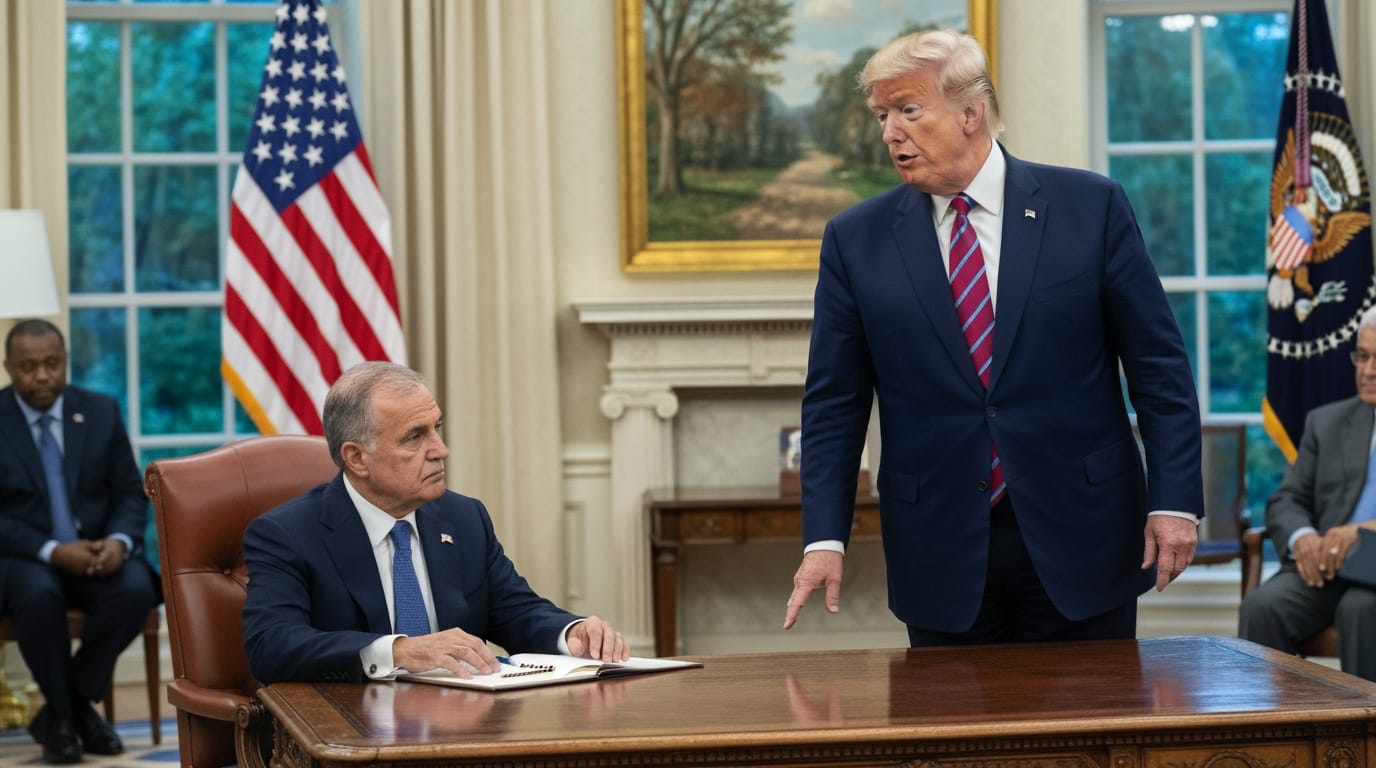
Washington, D.C. — Former President Donald Trump has issued a forceful call for an expanded Abraham Accords, urging a wide array of Middle Eastern and Muslim-majority nations to normalize relations with Israel. This diplomatic push, articulated recently, comes amidst ongoing, delicate negotiations for a potential peace framework between the United States and Iran, which Trump indicates are progressing. The former president's statement suggests that broader regional normalization could be a mandatory condition tied to any future agreement with Tehran, signaling an ambitious attempt to reshape the Middle East's geopolitical landscape.
The Urgent Call for Expansion
In his recent pronouncements, Trump explicitly named Saudi Arabia, Qatar, Pakistan, Egypt, Turkey, and Jordan as countries that "should be mandatory" to "simultaneously" sign onto the Abraham Accords. This directive was reportedly conveyed during high-level telephonic conferences with leaders from these nations, during which discussions also focused on a potential U.S.-Iran peace framework. Trump affirmed that negotiations with Iran were "proceeding nicely" and that he had instructed his representatives, reportedly Steve Witkoff and Jared Kushner, to "immediately begin, and successfully complete," the process of bringing these nations into the Accords. He further suggested that even Iran might "perhaps" join the Accords if a deal is reached, a striking proposition given Iran's long-standing adversarial stance toward Israel. This move positions an expansion of the Abraham Accords not merely as an aspiration but as a critical component of a broader regional realignment, interwoven with efforts to stabilize the volatile relationship between the U.S. and Iran.
The Genesis and Impact of the Abraham Accords
The Abraham Accords, initially brokered under the Trump administration in 2020, marked a significant diplomatic breakthrough by establishing formal normalization of relations between Israel and several Arab states. The United Arab Emirates and Bahrain were the first to sign the agreements in September 2020, followed by Sudan and Morocco later that year. In early 2026, Kazakhstan also formalized its entry into the Accords, extending their reach into Central Asia. Named after the biblical patriarch revered by Jews, Christians, and Muslims, the Accords were designed to foster diplomatic, economic, and security cooperation, driven in large part by shared concerns over regional threats, particularly from Iran.
These agreements broke with decades of conventional Arab policy, which had largely conditioned normalization with Israel on the resolution of the Israeli-Palestinian conflict and the establishment of a Palestinian state. By establishing direct ties, the Accords facilitated new bilateral business partnerships, leading to increased investment and economic opportunities for signatory nations. Proponents have hailed them as a "financial, economic, and social boom" for the participating countries, asserting that these ties have deepened economic and defense cooperation, even amidst ongoing regional tensions.
Geopolitical Crosscurrents and Hurdles
Despite the perceived successes and the enthusiastic push for expansion, significant geopolitical hurdles and reservations persist among potential new signatories. While countries like Egypt, Jordan, and Turkey already maintain diplomatic relations with Israel, Trump's call for them to formally "sign onto the Abraham Accords" suggests a desire for their integration into the specific framework and spirit of these newer normalization agreements. However, the primary targets for new normalization, such as Saudi Arabia and Qatar, have consistently maintained that full diplomatic ties with Israel are conditional upon tangible progress toward Palestinian statehood. A Saudi source recently reiterated the necessity of an "irreversible pathway" to a Palestinian state, indicating a foundational difference in approach.
The broader regional context, particularly the 2023-2025 Israel-Hamas conflict, has further complicated normalization efforts. This conflict has strained relationships, drawing criticism from Arab nations regarding Israeli actions and creating an environment less conducive to overt diplomatic overtures with Israel. Reports suggest that Trump's proposal for expanding the Accords caught some leaders off guard, with one U.S. official describing a "silence" during a phone call with leaders who currently lack diplomatic ties with Israel, highlighting the sensitive nature of the issue across the Muslim world. The Palestinian Authority has also historically criticized the Abraham Accords for sidelining the Palestinian issue and not prioritizing a two-state solution.
The Vision for a 'United, Powerful, and Economically Strong' Middle East
Trump's vision extends beyond mere normalization, aiming for a fundamentally reshaped Middle East that is "United, Powerful, and Economically Strong." He suggests that the expansion of the Abraham Accords, potentially even including Iran, would forge an "unparalleled World Coalition." This ambitious objective intertwines regional peace with economic prosperity and a unified front, primarily against what is often perceived as Iranian destabilizing influence in the region. The original Accords were indeed driven by shared concerns about Iran, leading to closer security and intelligence cooperation between Israel and some Sunni Arab states.
The ongoing negotiations for an Iran deal are central to this latest push, with Trump effectively linking the two diplomatic tracks. By positioning expanded Abraham Accords membership as a "mandatory" component of any agreement with Tehran, the former president seeks to leverage one significant diplomatic endeavor to advance another, creating a comprehensive framework for regional order. This strategy underscores a belief that a unified economic and security bloc, anchored by Israel and its Arab partners, is essential for long-term stability and prosperity in the Middle East.
Conclusion
Donald Trump's renewed and assertive call for the expansion of the Abraham Accords marks a critical juncture in Middle Eastern diplomacy, linking regional normalization directly to the outcome of ongoing U.S.-Iran negotiations. The ambition to bring nations like Saudi Arabia, Qatar, and Pakistan into formal relations with Israel, alongside a possible Iran deal, represents a far-reaching attempt to create a new geopolitical architecture. While the original Accords have demonstrated the potential for economic and strategic benefits, the deep-seated concerns surrounding the Israeli-Palestinian conflict and the complexities of regional rivalries present formidable challenges to this grand vision. The coming months will likely reveal the extent to which these powerful diplomatic pressures can overcome historical grievances and current political realities, ultimately determining the future trajectory of peace and cooperation in a highly volatile region.


