Trump-Xi Summit Reveals Limits on US Power Amid Iran War and Taiwan Tensions
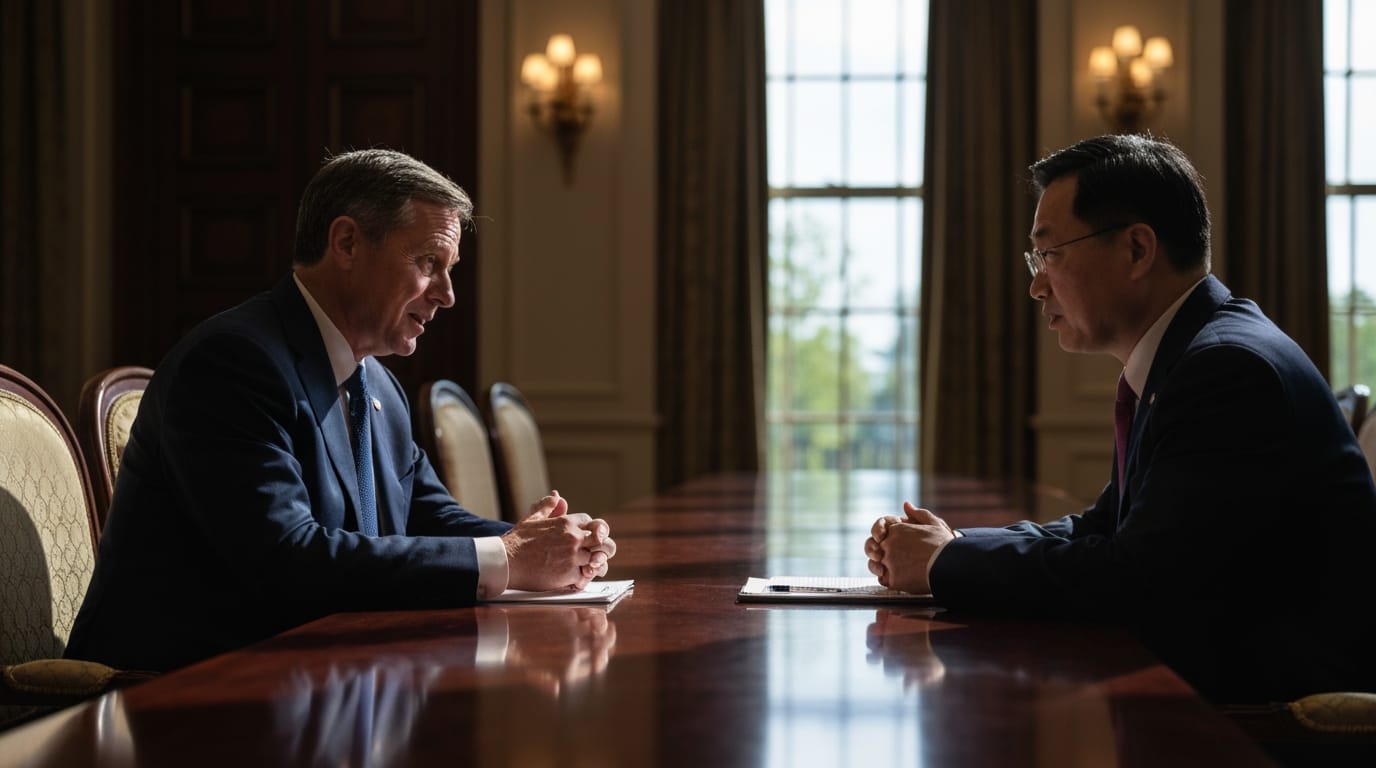
BEIJING – A high-stakes summit between US President Donald Trump and Chinese President Xi Jinping concluded in Beijing this week, underscoring significant limitations on American foreign policy, particularly concerning the protracted conflict in Iran and the escalating tensions over Taiwan. Despite extensive pageantry and claims of progress, the two-day talks yielded minimal tangible breakthroughs on these critical geopolitical issues, instead highlighting the diminished leverage of a US administration grappling with a costly war and a desire for stability ahead of upcoming elections.
The meticulously orchestrated meeting, which brought together leaders and prominent business figures from both nations, was intended to stabilize the fraught US-China relationship amidst a backdrop of global economic uncertainties and a severe energy crisis triggered by the ongoing Middle East conflict. However, rather than showcasing American strength, the summit served to expose the strategic constraints on Washington, as Beijing skillfully used the discussions to press its own core interests and underscore the deepening complexities of the bilateral relationship.
The Shadow of the Iran War
President Trump arrived in Beijing notably weakened by a prolonged war in Iran, a conflict that has exacted a heavy toll on American resources and economic stability. The Strait of Hormuz, a crucial global energy chokepoint, has remained largely disrupted, contributing to soaring oil prices and unsettling international markets. With midterm elections looming, the Trump administration faces increasing domestic pressure to find an "exit strategy" from the Middle East entanglement, making resolution of the Strait of Hormuz blockade a top priority.
China, a major global energy consumer and the largest buyer of Iranian oil, has a vested interest in the reopening of the Strait. However, Beijing's approach to the Iran crisis is shaped by its broader strategic objectives. China views Iran as an important geopolitical partner, serving as a counterbalance to American influence in the Middle East, and has consistently helped Tehran circumvent international sanctions through continued oil purchases.
During the summit, while both leaders publicly agreed that Iran should not develop nuclear weapons and that the Strait of Hormuz must remain open, the nuances of their positions revealed a significant divergence. Chinese officials reportedly avoided publicly endorsing Washington's hardline stance on Iran and made it clear that any Chinese assistance in de-escalating the crisis would be on Beijing's terms, not as a concession to Washington. Experts noted that China is unlikely to aggressively pressure Tehran, seeing little benefit in solving problems the US has, in Beijing's view, created for itself in the Middle East. This strategic calculus effectively limits Washington's ability to dictate terms or secure unilateral concessions from Tehran, demonstrating how the Iran conflict has become a significant constraint on US foreign policy.
Taiwan: A Non-Negotiable Red Line
Perhaps the most contentious issue at the summit was Taiwan, which Beijing emphatically reiterated is "the most important issue in US-China relations." Chinese President Xi Jinping delivered an unusually stark warning to President Trump, cautioning that mishandling the Taiwan question could lead to "clashes and even conflicts" between the two global powers.
Beijing's primary demand remains a reduction in US support for the self-governing island, including an end to arms sales and a shift in Washington's long-standing policy of "strategic ambiguity" towards an explicit statement opposing Taiwan independence. Ahead of the summit, the Trump administration reportedly stalled a major $14 billion arms package for Taiwan, a move widely interpreted as an attempt to appease Beijing and facilitate discussions. President Trump himself fueled speculation about wavering US commitment, stating he had not yet determined whether to approve the arms sale and adding, "I don't think there's a conflict on Taiwan."
The White House readout of the bilateral talks conspicuously omitted any mention of Taiwan, a glaring absence that drew immediate attention and concern, particularly in Taipei. This omission, coupled with Trump's public pivot to trade and energy issues when questioned about Taiwan, suggested a deliberate sidelining of the island amid broader geopolitical crises. Critics and analysts expressed concern that the US might be willing to make strategic concessions on Taiwan in exchange for short-term economic gains or Chinese cooperation on Iran. For Taiwan, which views China as the "sole major source of risk" to regional peace, the summit's outcome highlighted the vulnerabilities of its position and the potential limits of US resolve.
China's Assertive Diplomacy
The summit notably showcased China's increasingly assertive diplomatic posture. Beijing used the occasion not only to reinforce its core priorities but also to subtly leverage American vulnerabilities. Chinese officials conveyed their frustration over the Iran war and critically assessed its impact on global energy markets, while simultaneously emphasizing China's own economic stability and its strategic partnership with Iran.
On Taiwan, Xi's forceful rhetoric, delivered against the backdrop of Trump's preoccupation with the Iran conflict, positioned China as a confident player unwilling to compromise on what it considers a core national interest. Beijing's willingness to link potential cooperation on the Iran crisis to concessions on Taiwan signaled a shrewd strategic maneuver, exploiting the US administration's immediate needs. This dynamic underscores that the US-China relationship is increasingly defined by strategic rivalry, where cooperation, even on urgent global issues, is often conditional and serves each nation's distinct long-term goals.
Conclusion: A Precarious Balance
The Trump-Xi summit, while framed with diplomatic cordiality, ultimately revealed a precarious balance in global power dynamics. The prolonged war in Iran has undeniably weakened the US position on the international stage, limiting its capacity to act unilaterally or demand unconditional support from major powers like China. This weakening was palpable in Beijing, where the US president appeared constrained in his ability to push back forcefully on China's assertions regarding Taiwan.
The outcome suggests that future US foreign policy, especially under an administration grappling with domestic pressures and international conflicts, will face significant constraints in managing complex geopolitical challenges. China, meanwhile, has demonstrated a growing capacity to leverage its economic and strategic influence, pushing its agenda on critical issues like Taiwan while offering only calibrated cooperation on shared concerns such as regional stability and energy security. The "limits" exposed at this summit serve as a stark reminder of the evolving global order, where even a superpower like the United States must navigate a landscape of shared interests and deepening rivalries with increasing strategic humility.


