Trump's Dual-Edged Sword: U.S. Threats and Their Complex Impact on Iranian Protests
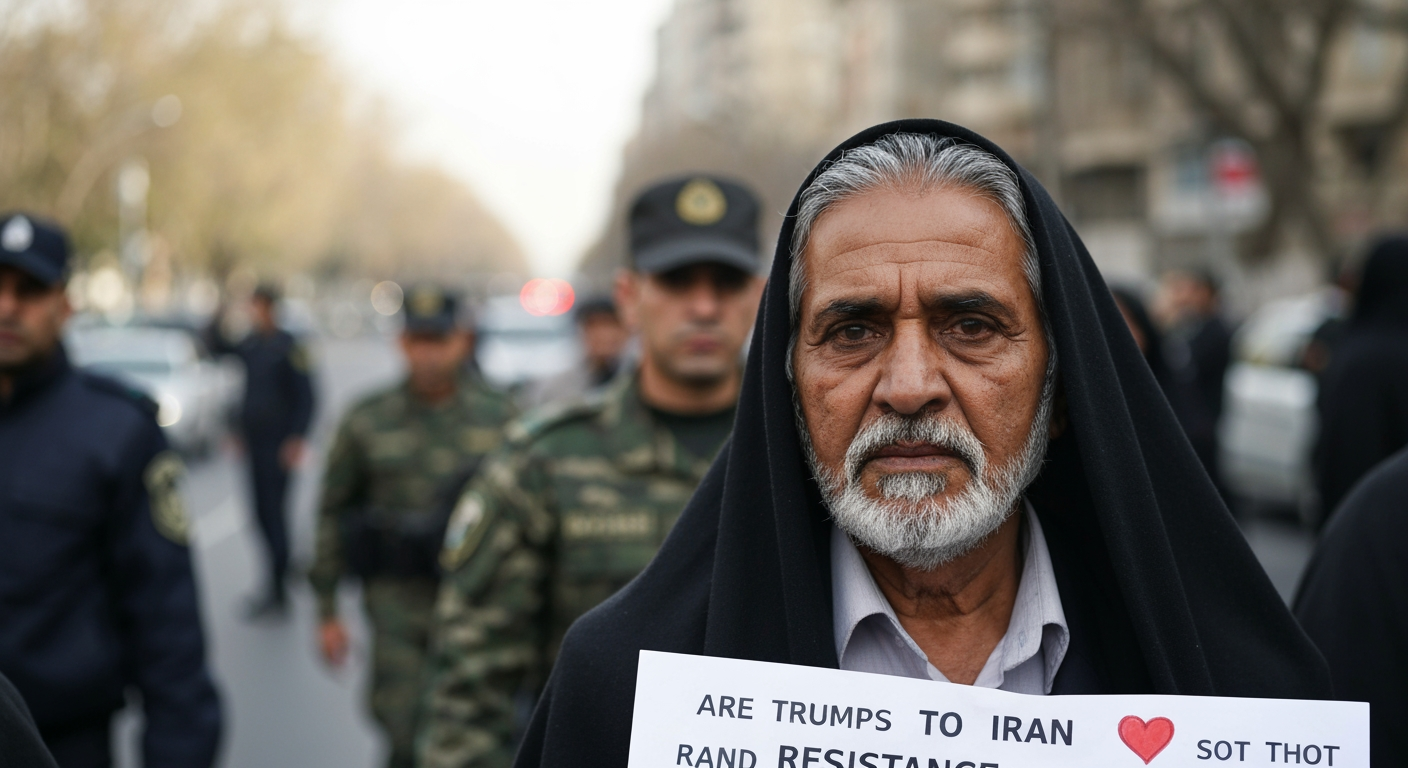
The landscape of Iranian domestic dissent is a volatile terrain, intricately shaped by internal grievances and external pressures. As protests against the Islamic Republic's economic policies and social restrictions continue to surface, the role of U.S. rhetoric, particularly former President Donald Trump's "maximum pressure" campaign and direct threats, has ignited a fierce debate among analysts and observers: do these pronouncements aid or undermine the cause of Iranian protesters? The answer, it appears, is far from straightforward, revealing a complex interplay of empowerment, delegitimization, and unintended consequences within Iran's politically charged environment.
The Economic Crucible of Dissent
A primary catalyst for the enduring waves of protests across Iran has been the nation's ailing economy, a condition significantly exacerbated by international sanctions, spearheaded by the U.S. "maximum pressure" campaign initiated under the Trump administration. The unilateral withdrawal from the 2015 Joint Comprehensive Plan of Action (JCPOA) in 2018 and the subsequent reimposition of stringent sanctions severely impacted Iran's oil exports and financial system. This economic strain has led to a record-breaking plunge of the Iranian rial, soaring inflation, and the systematic hollowing out of the middle class, pushing millions into poverty. These harsh economic realities have served as a fertile ground for public discontent, with demonstrations often initially sparked by grievances over high prices and a collapsing currency, quickly evolving into broader anti-government sentiments.
Research using synthetic control methods found that between 2012 and 2019, sanctions contributed to an average annual reduction of 17 percentage points in the size of Iran's middle class, effectively acting as a "structural demolition" of this vital societal segment. While Western policymakers often assume that intense economic pressure will lead to a clean "regime change," empirical evidence suggests a more polarized and insecure society, rather than a direct path to a new government. This economic hardship undoubtedly fuels the desire for change among the populace, providing a continuous undercurrent to the protest movements.
The Double-Edged Sword of External Rhetoric
Donald Trump's direct and often forceful statements, including warnings that the U.S. would "come to their rescue" if Iranian authorities violently suppressed peaceful protesters, have injected a potent external factor into the domestic unrest. Such rhetoric can be perceived in contradictory ways within Iran. For some protesters, these threats may offer a glimmer of hope and encouragement, suggesting that their struggle for change has international recognition and potential backing. The explicit mention of being "locked and loaded and ready to go" by Trump can embolden those on the streets who seek to challenge the existing power structure.
However, this external support carries significant risks and can be a double-edged sword. Analysts suggest that such messages might foster "false hope" among some activists, while making others apprehensive that their movement could be manipulated or become a proxy battleground for U.S. geopolitical interests. Furthermore, Iranian officials have predictably condemned these remarks as blatant interference in domestic affairs. The Iranian regime frequently seizes upon such foreign pronouncements to delegitimize protests, framing them as foreign-orchestrated plots rather than genuine expressions of internal dissent. This narrative allows the government to justify harsher crackdowns and to rally nationalist sentiments against a perceived external enemy, potentially strengthening its own position through a "rally-around-the-flag" effect.
The Regime's Narrative and Unintended Consequences
The Iranian government has a history of leveraging external threats to consolidate power and suppress dissent. When foreign powers, particularly the U.S., openly declare support for protesters or threaten intervention, the regime can skillfully reframe the internal uprising as a battle against foreign manipulation. This tactic aims to erode the legitimacy of the protests in the eyes of some Iranians and the international community, making it easier for security forces to brutally quell demonstrations.
Research indicates that high-intensity sanctions and external pressure, rather than leading to a seamless "regime change," can inadvertently foster a "security-first" posture within the targeted state, increase polarization, and even reduce the risk of organized civil war due to a nationalist backlash against foreign interference. This "paradox of instability" suggests that while sanctions can certainly create internal disorder and economic hardship that fuel protests, they do not necessarily lead to the desired outcome of a more amenable or democratic government. Instead, they can lead to a society where the opportunity cost of rebellion drops to near zero for citizens witnessing rapid currency devaluation and systemic corruption, yet the regime remains entrenched.
Recent U.S. actions, such as the capture of Venezuelan President Nicolás Maduro, have further complicated the perception of Trump's threats. Iranian officials and state media have highlighted this event, suggesting it as a precedent for potential U.S. intervention and reinforcing the Iranian government's claims that street protests are not organic but part of a broader external geopolitical agenda aimed at regime change. This narrative, whether accurate or not, provides the Iranian regime with additional justification for its security crackdowns.
Beyond Rhetoric: Calls for Tangible Support
Amidst the debate over the effectiveness of rhetorical threats, there are calls for more tangible forms of support for Iranian protesters. While economic sanctions contribute to the environment of dissent, some argue that they are insufficient on their own and should be augmented by practical assistance. This includes providing technical tools to circumvent internet censorship, such as Psiphon and satellite connectivity kits like Starlink. Such technologies enable protesters to communicate, organize, document abuses, and sustain momentum, directly countering the regime's ability to isolate and control the narrative. The Biden administration, for instance, has been credited with providing some degree of internet access support during past protests, allowing demonstrators to overcome some state-imposed communication blackouts.
The focus on practical, non-military support acknowledges the intricate balance required when engaging with Iranian internal affairs. It aims to empower citizens directly without providing the regime with easy excuses for repression or inadvertently fueling nationalist sentiments against foreign meddling.
Conclusion
The impact of Donald Trump's threats and the broader "maximum pressure" campaign on Iranian protesters presents a multifaceted and often contradictory picture. While the severe economic hardship imposed by sanctions undeniably fuels public anger and drives citizens to the streets, the accompanying direct threats of intervention often serve as a double-edged sword. They may offer moral support and embolden some who yearn for change, but they also provide the Iranian regime with a powerful propaganda tool to delegitimize the protests as foreign-backed. This allows the government to deflect blame, consolidate internal support against a common enemy, and justify brutal crackdowns. The debate over whether external pressures ultimately help or harm the cause of Iranian protesters underscores the profound complexities of international diplomacy and the unpredictable nature of internal dissent in an authoritarian state. The future trajectory of Iran's protest movements will continue to be a delicate balance between internal dynamics and the nuanced, often unintended, consequences of foreign policy decisions.
Related Articles


Mounting Frustration Grips Russia as Economic Hardship and War's Toll Deepen
Moscow, Russia – A palpable shift in public sentiment is emerging across Russia, with growing frustration among citizens fueled by a confluence of economic pressures, increasing internet restrictions, and the undeniable...

Germany's Strategic Calculus: Ukraine Aid is an Investment in European Security, Not Charity
Berlin – The ongoing provision of substantial aid to Ukraine by Germany and its allies is increasingly being framed not as an act of altruism, but as a crucial investment in European security and stability. This...