Trump's Third Term Ambitions: Exploring the Constitutional Boundaries
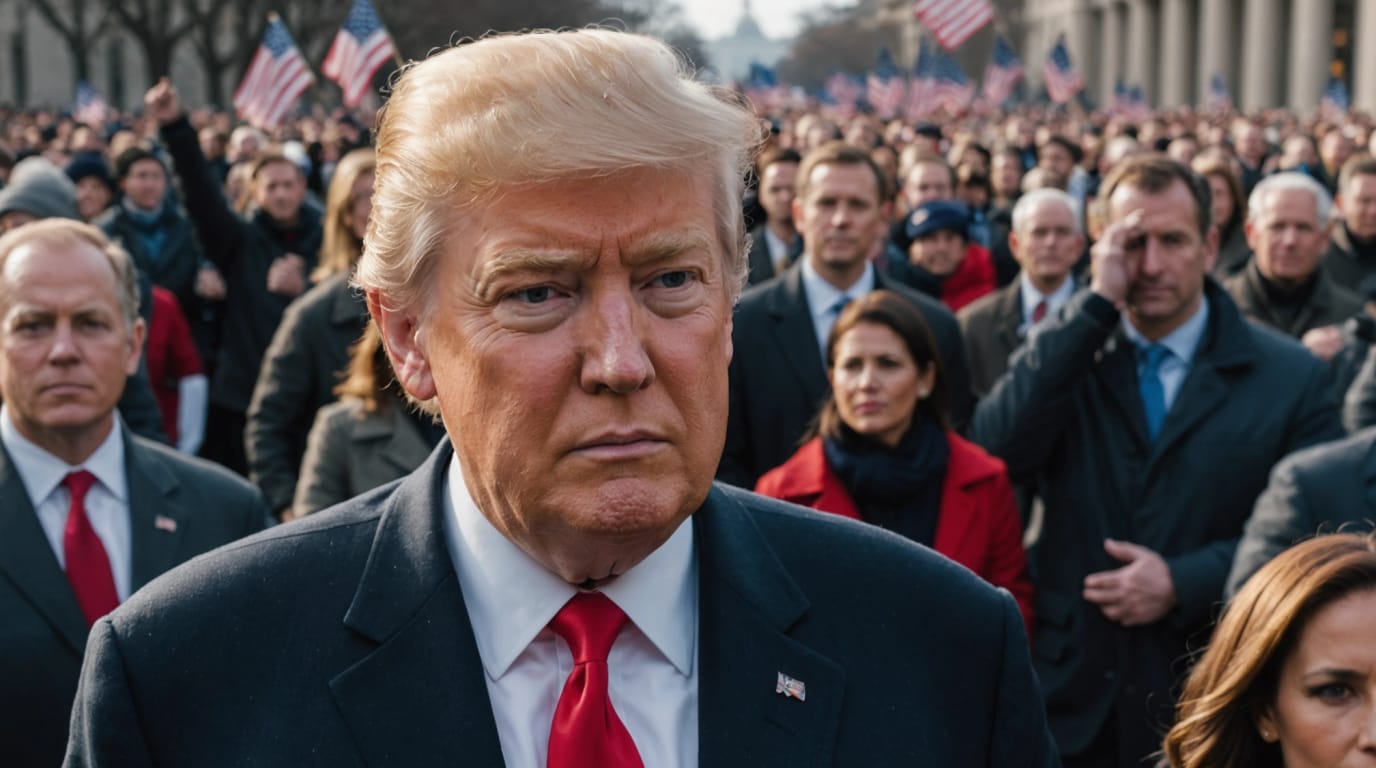
Donald Trump's recent remarks about potentially seeking a third term as president in 2028 have ignited a fresh debate over the constitutional limits of presidential power. While the 22nd Amendment appears to unequivocally bar him from being elected again, Trump's hints at "methods" to circumvent this restriction have fueled speculation and legal analysis. This article examines the constitutional constraints, potential loopholes, and the broader implications of a former president seeking to return to office after serving two terms.
The 22nd Amendment: A Clear Barrier?
The 22nd Amendment to the U.S. Constitution, ratified in 1951, states that "no person shall be elected to the office of the President more than twice." This amendment was a direct response to Franklin D. Roosevelt's unprecedented four terms in office, solidifying a two-term tradition that had been established by George Washington. The amendment's language seems straightforward, capping the number of presidential elections a person can win at two.
However, some Trump allies and legal scholars have suggested that the amendment's wording leaves room for interpretation. They argue that while a person cannot be elected more than twice, it might be possible to become president through succession rather than election. This interpretation forms the basis for several potential, albeit controversial, scenarios.
Loopholes and Legal Theories
Several potential loopholes have been floated, each with its own set of legal and political challenges:
- The Vice Presidential Path: One commonly discussed scenario involves Trump running as vice president in 2028. If the Republican ticket wins and the elected president subsequently resigns, dies, or is removed from office, Trump could theoretically succeed to the presidency. Proponents of this theory argue that the 22nd Amendment only bars a person from being elected more than twice, not from serving more than two terms. However, this strategy faces a significant legal hurdle. The 12th Amendment states that "no person constitutionally ineligible to the office of President shall be eligible to that of Vice-President of the United States." Legal scholars are divided on whether this clause would prevent a two-term president from serving as vice president.
- House Speaker Succession: Another hypothetical scenario involves Trump becoming Speaker of the House. Should the president and vice president be unable to fulfill their duties, the Speaker of the House is next in line for succession.
- Amending the Constitution: The most direct, but also the most difficult, route would be to repeal the 22nd Amendment altogether. This would require a constitutional amendment, needing two-thirds support in both the House and Senate, followed by ratification from three-fourths of state legislatures (38 out of 50 states). Given the current political polarization, achieving such widespread consensus is highly improbable.
- Non-consecutive Terms Amendment: Another proposed amendment, introduced by Representative Andy Ogles, would allow a president to serve a third term, provided that their first two terms were non-consecutive. While this would directly benefit Trump, its prospects for passage remain slim.
Historical Context and the Intent of Term Limits
The debate over presidential term limits dates back to the founding of the United States. While some framers of the Constitution, like Alexander Hamilton, favored lifetime tenure for presidents, others, like George Mason, feared the potential for "elective monarchy." George Washington's decision to step down after two terms established a tradition that lasted for over 150 years.
The 22nd Amendment was ultimately a response to concerns about the concentration of power in the hands of one individual, particularly after Roosevelt's unprecedented tenure. The amendment aimed to prevent any future president from accumulating excessive influence and to ensure a regular transfer of power.
Potential Republican Candidates in 2028
Regardless of Trump's future plans, the Republican Party is already looking ahead to the 2028 election. Potential candidates include:
- Vice President J.D. Vance: As Trump's current vice president, Vance is considered a frontrunner.
- Governors: Several Republican governors, including Greg Abbott of Texas, Ron DeSantis of Florida, Glenn Youngkin of Virginia, and Sarah Huckabee Sanders of Arkansas, are seen as potential contenders.
- Senators: Senators such as Ted Cruz of Texas, Marco Rubio of Florida, and Tim Scott of South Carolina could also vie for the nomination.
- Other Figures: Steve Bannon, a former advisor to Trump, has also been mentioned as a possible candidate. Donald Trump Jr., while never having held public office, also has significant support among Republicans.
Implications and the Future of Presidential Power
Trump's flirtation with a third term raises fundamental questions about the strength of American democratic norms and the potential for future challenges to constitutional limits. While legal experts are skeptical of any attempts to circumvent the 22nd Amendment, the very discussion of such scenarios underscores the enduring appeal of strongman politics and the willingness of some to test the boundaries of established rules.
Ultimately, the question of whether Trump or any other president can serve more than two terms rests on the interpretation of the Constitution and the willingness of the American public and political system to uphold its principles. The debate serves as a reminder of the importance of vigilance in safeguarding democratic institutions and ensuring that power remains accountable to the people.


