Trump's Venezuela Stance: A Complex Calculus of Democracy, Geopolitics, and Legacy
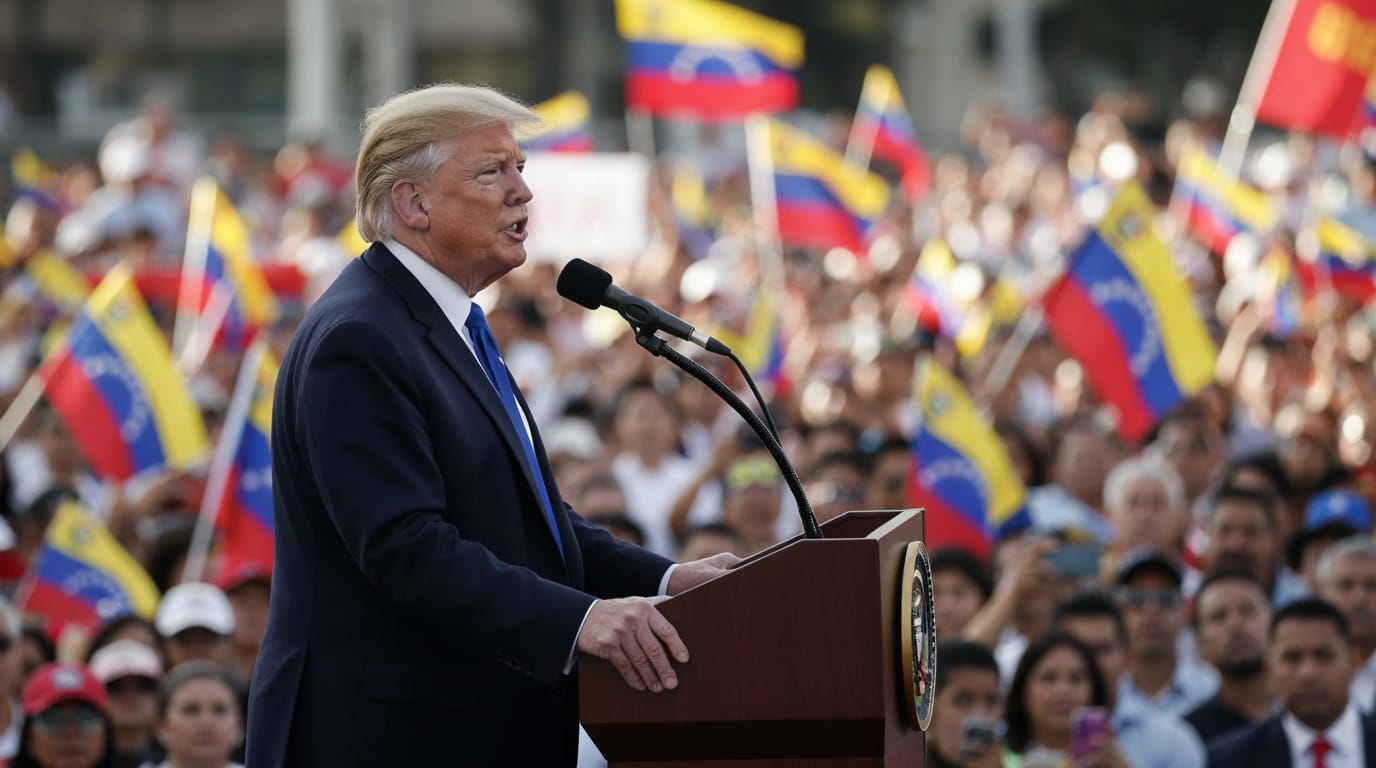
The aggressive posture adopted by the United States under former President Donald Trump against Venezuelan leader Nicolás Maduro has been characterized by an overt commitment to restoring democracy in the South American nation. However, beneath the stated objectives, a complex interplay of geopolitical strategy, domestic political considerations, and the pursuit of a foreign policy legacy suggests a more nuanced set of motivations. This multifaceted approach has subjected Venezuela to unprecedented pressure while fueling a persistent debate over the true aims and long-term efficacy of the U.S. strategy.
The "Maximum Pressure" Campaign Against Maduro
The Trump administration initiated a comprehensive "maximum pressure" campaign aimed at dislodging Nicolás Maduro from power. This strategy included a broad array of economic sanctions targeting Venezuela's financial markets, its state-owned oil company PDVSA, and key individuals within Maduro's government. In August 2017, the U.S. prohibited Venezuela's access to U.S. financial markets, expanding these restrictions in May 2018 to block the purchase of Venezuelan debt. Further sanctions in January 2019 targeted individuals and companies in the petroleum, gold, mining, and banking sectors, including freezing $7 billion of PDVSA's U.S. assets. By April 2019, the U.S. had sanctioned more than 150 companies, vessels, and individuals, in addition to revoking visas for 718 individuals.
Beyond economic measures, the administration exerted significant diplomatic pressure. The U.S. recognized opposition leader Juan Guaidó as Venezuela's interim president in January 2019, signaling a direct challenge to Maduro's legitimacy. Public ultimatums were reportedly delivered to Maduro, demanding his resignation, and a $50 million bounty was placed on his head. Military escalations also marked this period, with an increased U.S. naval presence in the Caribbean and the deployment of assets such as nuclear-capable B-52 bombers. The administration further designated Maduro's government as a "Foreign Terrorist Organization" and charged Maduro himself with narcotics trafficking and narco-terrorism, accusing him of heading the "Cartel de los Soles." Recent actions have included a "total and complete blockade" of all sanctioned oil tankers entering and leaving Venezuela, a move aimed at crippling the regime's primary source of income.
The Stated Goal: Restoring Democracy and Human Rights
Publicly, the Trump administration consistently framed its actions as a moral imperative to restore democracy and alleviate the humanitarian crisis in Venezuela. Officials repeatedly stated that Maduro was an illegitimate leader who had stolen elections, repressed his people, and presided over a collapsed economy. The narrative emphasized Maduro's alleged human rights abuses, the degradation of the rule of law, and widespread corruption within his government. For instance, the administration highlighted Maduro's 2024 re-election as fraudulent, arguing that opposition leader Edmundo González had easily won.
This democratic narrative aligned with a broader U.S. foreign policy tradition of advocating for democratic transitions and opposing authoritarian regimes. Secretary of State Marco Rubio, in particular, was a vocal proponent of this hawkish stance, emphasizing the need to bring down the socialist government. The stated objective was to enable the Venezuelan people to freely elect their leaders and rebuild their country's institutions.
Beyond Democracy: Geopolitical Ambitions and Domestic Drivers
Despite the emphasis on democracy, various analyses suggest that the Trump administration's motivations extended beyond a purely altruistic push for democratic ideals. A significant interpretation points to geopolitical aims, particularly the assertion of U.S. dominance in the Western Hemisphere. The administration's National Security Strategy (NSS) elevated the Western Hemisphere as America's "immediate security perimeter," positioning crises like Venezuela's collapse as central to countering foreign influence from Russia, China, Iran, and Cuba in the region. Some observers noted that Trump's "America First" foreign policy, while seemingly isolationist, was perfectly compatible with a long-standing U.S. focus on controlling its immediate neighborhood.
Domestic political considerations also appeared to play a role. The aggressive stance against Maduro resonated with certain voter bases, particularly Cuban-Americans in Florida, a key swing state. Furthermore, some critics suggested that Trump's actions were partly driven by a desire to bolster his own foreign policy image or to overcome the perceived failure to remove Maduro during his first term. There were arguments that Trump might not have been genuinely committed to actual regime change but rather to creating the appearance of action to satisfy influential groups.
While oil interests are often cited as a motive for U.S. involvement in resource-rich nations, the administration's actions complicated this narrative. Trump's policies included imposing sanctions on Venezuelan oil, which limited rather than facilitated its access to the market. Maduro explicitly offered Trump access to the country's oil riches, an offer Trump declined. However, some interpretations suggest the focus on oil could be related to collecting on behalf of U.S. companies for past nationalizations or securing future access under a different regime. Others argued that powerful figures within the administration, such as Secretary of State Marco Rubio, successfully shifted Trump's focus from potential oil deals to the "narco-terrorist" narrative. The administration's persistent emphasis on Maduro's alleged involvement in drug trafficking served as a public justification for many of its actions. However, some assessments questioned the extent of Venezuela's role in U.S.-bound drug trade compared to other countries, suggesting this might be an overstated concern.
The Humanitarian Toll and Unanswered Questions
Regardless of the motivations, the U.S. "maximum pressure" strategy has had significant, and often devastating, consequences for Venezuela. The crippling sanctions contributed to an already severe humanitarian crisis, exacerbating economic decline and leading to mass migration. Over 4 million Venezuelans have fled the country, with approximately 700,000 seeking refuge in the United States. Critics point to a contradiction in the Trump administration's policy: imposing severe economic pain while simultaneously curtailing assistance to the region for absorbing refugees.
Furthermore, the strategy has been criticized for its lack of a clear post-Maduro plan. Analysts have raised concerns that simply removing Maduro, without a robust institutional framework for democratic transition and reconstruction, could plunge Venezuela into further instability or even civil war. There is also the lingering question of consistency, given Trump's often-expressed admiration for other authoritarian leaders, leading some to question the sincerity of his democratic objectives in Venezuela. The expanded military presence and rhetoric have led to warnings from some Democrats about the risk of "sleepwalking into a war," with potentially disastrous and unpredictable outcomes.
Conclusion
The Trump administration's campaign against Nicolás Maduro represented one of its most assertive foreign policy endeavors. While publicly articulated as a fight for Venezuelan democracy and against an illegitimate, repressive regime, the underlying motivations were likely a blend of genuine concern for human rights, strategic geopolitical objectives to reassert U.S. influence in the Western Hemisphere, and domestic political calculations. The debate over whether the primary driver was a desire for democratic restoration or a pursuit of legacy and regional control remains a subject of ongoing analysis. What is clear is that the aggressive strategy inflicted immense pressure on Venezuela, contributing to a profound humanitarian crisis, and leaving behind a complex legacy of international relations and unresolved questions about the efficacy and true intent of such interventions.


