Turkey Grapples With Mass Protests, Journalist Arrests Amidst Political Turmoil
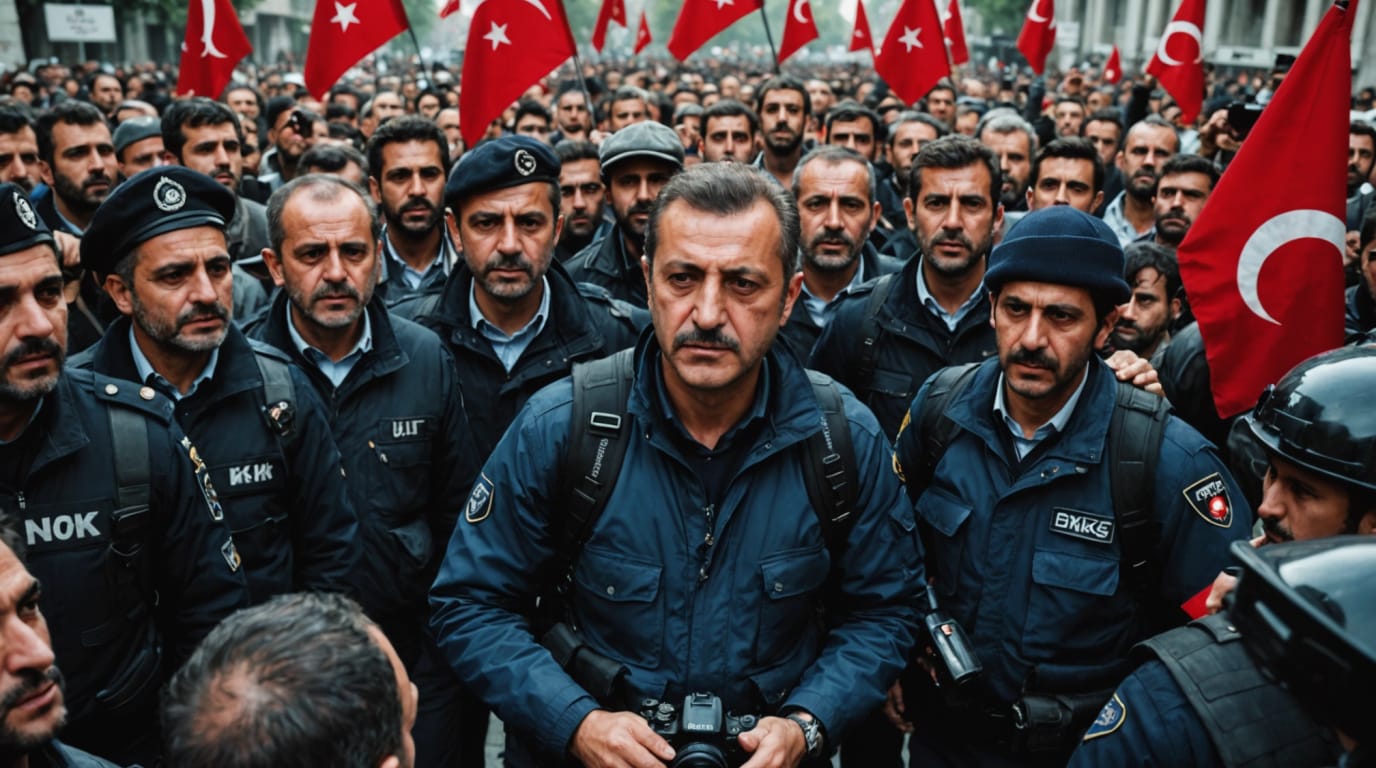
Turkey is currently facing a period of intense political and social upheaval, marked by widespread protests and a crackdown on journalists. The unrest was triggered by the arrest of Istanbul Mayor Ekrem İmamoğlu, a prominent opposition figure and potential challenger to President Recep Tayyip Erdoğan in the 2028 elections. The government's response has drawn condemnation from international organizations and raised concerns about the state of democracy and freedom of expression in the country.
İmamoğlu's Arrest Sparks Nationwide Protests
Ekrem İmamoğlu, who rattled Erdoğan's ruling party by winning the Istanbul mayoral election in 2019, was arrested on March 23, 2025, on charges of corruption. These charges include running a criminal organization, accepting bribes, extortion, illegally recording personal data, and bid-rigging. He has vehemently denied these accusations, claiming they are politically motivated. Simultaneously, İmamoğlu was relieved of his duties as mayor. Despite his imprisonment, İmamoğlu was adopted by his party as their presidential candidate.
The arrest ignited a wave of protests across Turkey, with demonstrators taking to the streets in Istanbul, Ankara, İzmir, and other cities. These protests represent the largest challenge to Erdoğan's rule in over a decade. Protesters view İmamoğlu's arrest as a politically motivated attempt to sideline a key rival and suppress dissent. The demonstrations have been met with a forceful response from Turkish authorities, including the use of tear gas, water cannons, and rubber bullets.
Crackdown on Journalists
Amidst the protests, Turkish authorities have intensified their crackdown on the media. In the days following İmamoğlu's arrest, police detained numerous journalists, including Yasin Akgül (AFP), Ali Onur Tosun (Now TV News), and Bülent Kılıç (freelance). These journalists were covering the protests and were likely detained for alleged violations of Law No. 2911 on Meetings and Demonstrations. As of March 25, 2025, Turkish courts ordered the arrest of seven of these journalists.
The detentions have sparked outrage from press freedom organizations, which have condemned the Turkish government's actions as an attack on freedom of the press and the public's right to know. The International Press Institute (IPI) and other groups have called on Turkish authorities to end the arbitrary detention of journalists, lift restrictive measures on media, and uphold press freedoms.
Government Response and Justification
President Erdoğan has dismissed the protests as "street terrorism" and accused the main opposition party, the CHP, of inciting the unrest. Interior Minister Ali Yerlikaya stated that over 1,100 people have been detained since İmamoğlu's arrest, alleging that some of those detained have ties to terrorist organizations and prior criminal records. Yerlikaya defended the government's actions, stating that authorities were acting to maintain public order and prevent the disruption of public life.
The Turkish government denies that İmamoğlu's arrest was politically motivated, asserting that the country's courts are independent. However, critics argue that the judiciary is under increasing government influence and that the charges against İmamoğlu are designed to remove him from the political arena.
Deteriorating Press Freedom in Turkey
The recent events are part of a broader trend of declining press freedom in Turkey. In 2024, Turkey was ranked 158th out of 180 countries in the World Press Freedom Index by Reporters Without Borders. Journalist associations have described 2024 as "a lost year" for press freedom in Turkey, citing increasing legal and political pressure, detentions, police violence, and censorship.
The government has been accused of weaponizing its control over state regulatory bodies, such as the Radio and Television Supreme Council (RTÜK), to silence critical reporting. RTÜK has imposed heavy fines and broadcast bans on media outlets critical of the government. The Turkish government continues to wield the "disinformation law" as a tool to silence dissent.
International Response and Concerns
The situation in Turkey has drawn strong condemnation from international organizations and governments. Human Rights Watch has described İmamoğlu's arrest as a "blatantly lawless move to weaponize the justice system to cancel the democratic process." The European Green Party has condemned Erdoğan's "brutal crackdown on peaceful protest" and called on the EU to take a firm stance against the repression.
The EU has expressed serious concerns about the deterioration of democratic standards, the rule of law, and respect for fundamental rights in Turkey. Accession negotiations between Turkey and the EU have been at a standstill since 2018 due to these concerns. However, Turkey remains a key partner for the EU in areas such as trade, security, and migration.
Implications for Turkey's Future
The current political turmoil in Turkey has significant implications for the country's future. The crackdown on dissent and the erosion of democratic institutions raise concerns about the long-term stability and prosperity of Turkey. The outcome of İmamoğlu's trial and the government's response to the protests will be crucial in determining the direction of the country.
The events in Turkey also have implications for the country's relationship with the international community. The EU and other countries may face increasing pressure to take a stronger stance against the Turkish government's human rights record. The future of Turkey's relationship with the West will depend on its commitment to democratic values and the rule of law.
Conclusion
Turkey is at a crossroads. The mass protests and the government's response highlight the deep divisions within Turkish society and the challenges facing the country's democracy. The coming months will be critical in determining whether Turkey can reverse its slide towards authoritarianism and uphold the fundamental rights and freedoms of its citizens. The international community will be watching closely, and its response will play a significant role in shaping Turkey's future.


