Typhoon Dolphin Lashes Japan's Southern Islands, Eastern China Braces for Imminent Landfall

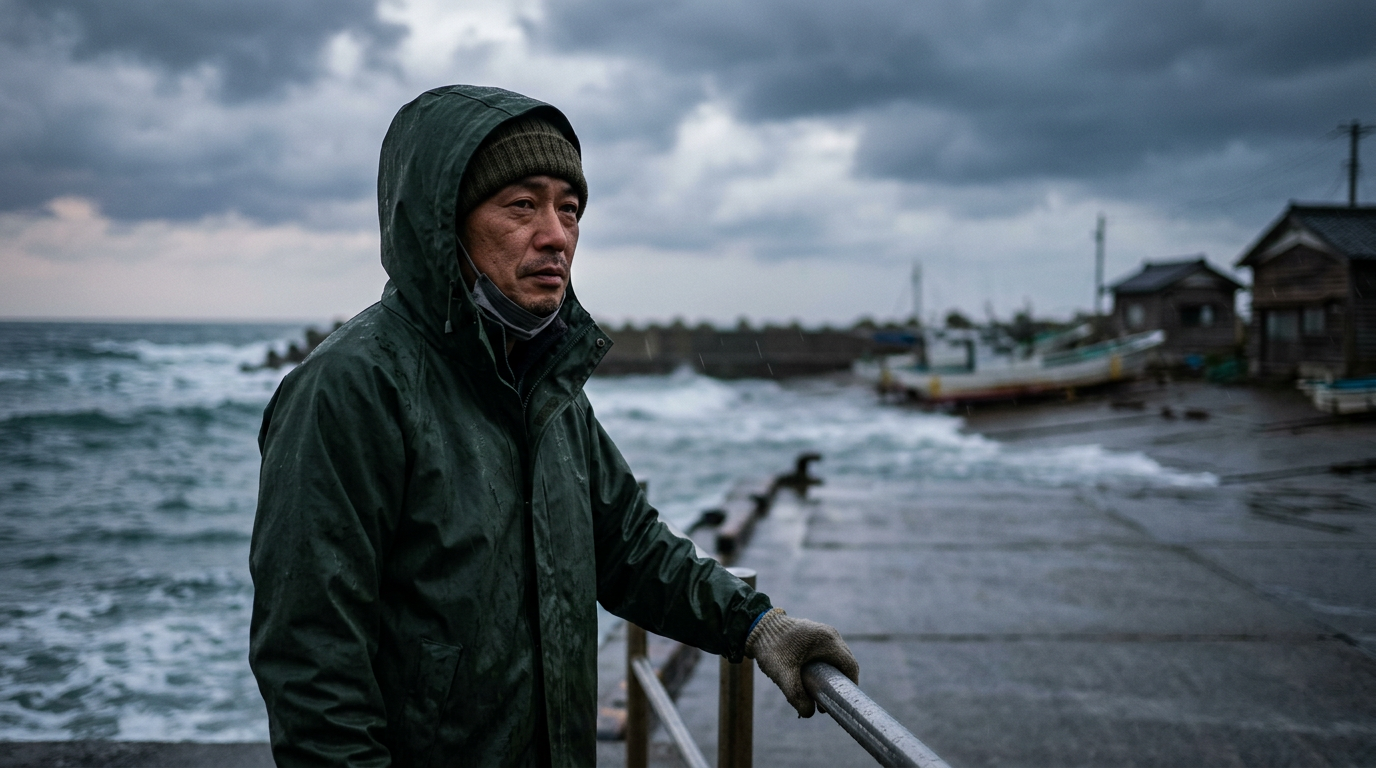
Shanghai/Tokyo – A formidable Typhoon Dolphin, the 13th named storm of 2026, has churned through Japan's southern islands, inflicting widespread disruption, and is now on a direct trajectory toward China's eastern coastline. Millions across the densely populated coastal provinces of China are bracing for its anticipated landfall, with authorities enacting sweeping emergency measures as the powerful storm approaches.
Dolphin's Destructive Passage Through Japan
Typhoon Dolphin, categorized as a severe typhoon, commenced its impactful journey across the western Pacific in late July, steadily intensifying as it tracked westward. By early August, the storm began to significantly affect Japan's remote southern island chains. Okinawa, a key prefecture, bore the brunt of Dolphin's initial fury. The main airport in Okinawa was forced to close, leading to the grounding of all flights and stranding numerous travelers. Reports from Friday, August 7, indicated that vacationers, including many from China, were caught in the travel disruptions, with parts of Okinawa initiating evacuations to shelters.
As the typhoon passed near Yoron Island in Okinawa Prefecture on Friday, the Japan Meteorological Agency (JMA) issued urgent warnings for violent winds and torrential rainfall across the Okinawa and Amami regions. Sustained winds reached speeds of 75 knots (approximately 139 km/h or 86 mph) with gusts up to 105 knots (195 km/h or 121 mph), strong enough to cause structural damage and even partially collapse buildings. The JMA urged residents to seek sturdy shelters and maintain high vigilance against the gale-force winds, advising against venturing near windows. Atmospheric conditions were expected to remain highly unstable through Saturday, August 8, bringing heavy to extremely heavy rainfall and potential torrential downpours to the affected Japanese islands.
China on High Alert as Typhoon Approaches
Following its destructive sweep through Japan, Typhoon Dolphin is now forecast to make landfall along China's eastern coast between Sunday afternoon and Monday morning. The precise impact zone is projected to be between Zhejiang Province and northern Fujian Province, though areas north of Shanghai could also experience significant effects. China's National Meteorological Center (NMC) has issued a yellow alert for the typhoon, later upgrading the typhoon warning to orange, as it continued to track the storm's approach. Meteorological authorities have classified Dolphin as a severe typhoon with maximum sustained winds of 48 meters per second (Level 15) and a minimum central pressure of 940 hectopascals as of Friday evening, August 7. While some weakening is anticipated as it nears the Chinese mainland, Dolphin is still expected to strike with considerable force, maintaining typhoon to severe typhoon intensity upon landfall.
The impending typhoon threatens to unleash strong wind gusts, potentially reaching 70 mph (113 km/h), with even higher speeds of 107 mph (172 km/h) near its center. Coastal areas and inland regions, particularly in Zhejiang and Fujian, are bracing for heavy to torrential rainfall. Forecasts indicate that some areas could receive over 20 inches of rain within a 24-hour period, dramatically increasing the risk of widespread flooding in major river basins and smaller tributaries, as well as dangerous mountain torrents. Sea conditions are also expected to deteriorate rapidly, with waves of 7 to 13 meters forecast for the East China Sea and storm surges of 50 to 120 centimeters projected along the coastline from the Yangtze River estuary to Fuzhou.
Unprecedented Preparedness and Economic Disruptions
In anticipation of Typhoon Dolphin's arrival, Chinese national and local authorities have activated a multi-tiered emergency response. The China Meteorological Administration upgraded its emergency response to Level III, while the Ministry of Water Resources initiated a Level IV emergency flood response for Shanghai and the provinces of Jiangsu, Zhejiang, Anhui, Fujian, and Jiangxi. Zhejiang and Fujian provinces, directly in the typhoon's path, have independently elevated their emergency responses to Level III.
These extensive preparations aim to minimize loss of life and property across the vulnerable coastal regions. Maritime operations have been severely impacted, with China's largest ports suspending activities and advising ships to return to sea for safety. Fueling operations for vessels have ceased, over 160 ferry routes have been suspended, and fishing boats have been ordered to evacuate to safe harbors. Furthermore, navigation on the Yangtze River and its delta has been restricted. The closure of major port complexes, such as those in Zhoushan and Ningbo outside Shanghai, is expected to create significant backlogs and economic disruptions. To mitigate the impact of anticipated flooding, more than 2,000 personnel have been deployed to provide assistance.
Uncertain Path and Broader Context
Adding to the complexity of the situation, the exact landfall location and the typhoon's subsequent path remain subject to some uncertainty. Forecasters note that Dolphin's track is influenced by a complex interplay of the subtropical high, westerly troughs and ridges, and other tropical systems. This uncertainty means the storm could either move westward and linger over southern China for several days, or potentially turn north, interacting with other weather systems to bring prolonged and widespread wind and rain to northern and northeastern China between August 12 and 14. Chief forecaster Dong Lin of China's National Meteorological Center remarked on the rare nature of Dolphin's long track toward China at such an intensity.
The arrival of Typhoon Dolphin underscores an active tropical cyclone season in the western Pacific. This typhoon is the 13th named storm of the year, following a July that saw five tropical cyclones form, three of which made landfall in China. As millions across China's eastern provinces await the full impact of Typhoon Dolphin, the extensive preparations highlight the critical need for vigilance and coordinated response in the face of such powerful natural phenomena.
Related Articles


Ratko Mladić, "Butcher of Bosnia" and Convicted War Criminal, Dies at 84
THE HAGUE, Netherlands – Ratko Mladić, the former Bosnian Serb military commander known as the "Butcher of Bosnia" and convicted of genocide, war crimes, and crimes against humanity, has died at the age of 84. Serbian...


Long-Awaited 9/11 Mastermind Trial Set for 2028, Decades After Attacks
GUANTANAMO BAY, Cuba – Nearly a quarter-century after the devastating terror attacks of September 11, 2001, a military judge has finally set a trial date for Khalid Sheikh Mohammed, the alleged mastermind behind the...