U.S. Administration Actively Explores Acquisition of Greenland, Igniting International Diplomatic Dispute
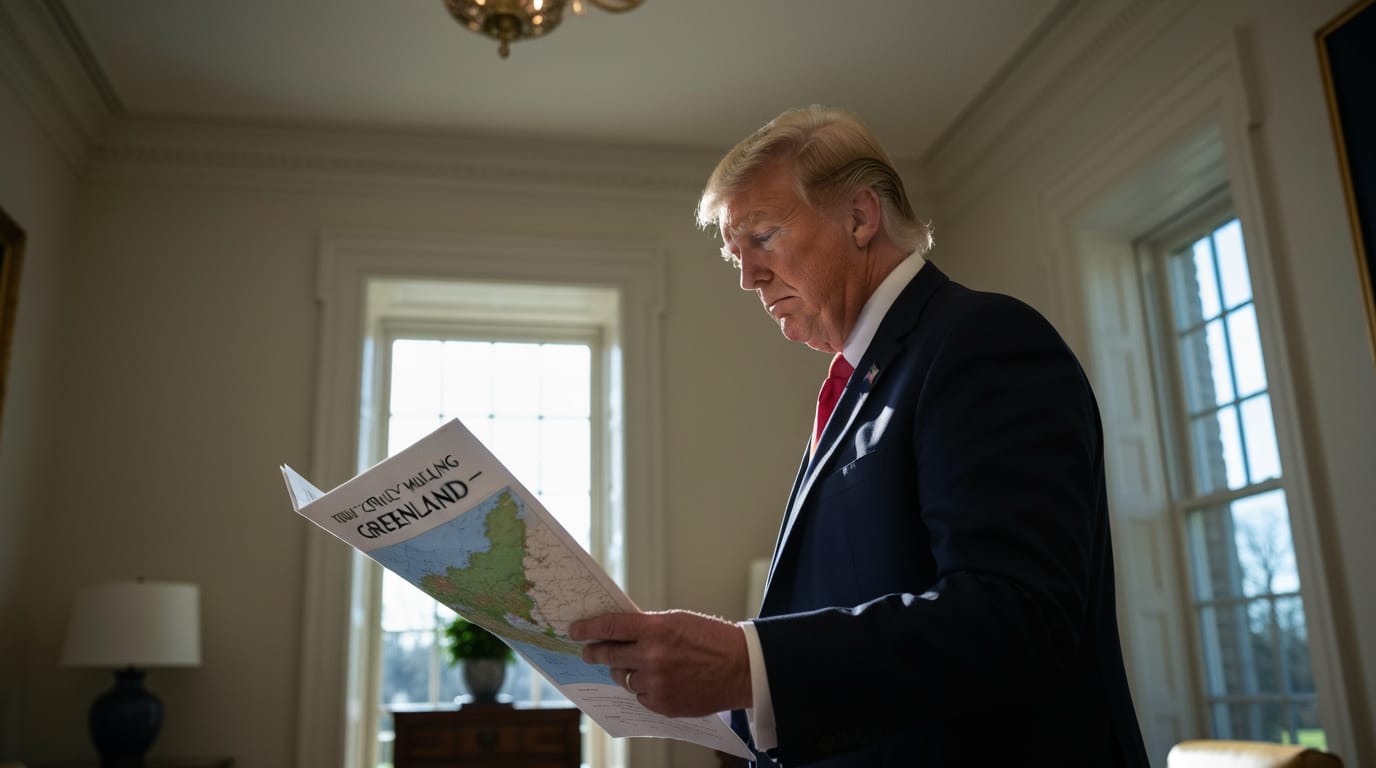
In a move that has sent ripples across international diplomacy, the U.S. administration has actively discussed the potential purchase of Greenland, an autonomous territory within the Kingdom of Denmark. White House officials confirmed that the prospect of acquiring the vast Arctic island has been a subject of internal deliberations, driven by perceived strategic national security interests and the island's untapped natural resources. This renewed American ambition, however, has been met with categorical rejections from both Greenland and Denmark, underscoring the complexities of territorial sovereignty and igniting a robust debate over the future of the Arctic region.
The White House Confirms Aspiration for Arctic Acquisition
Reports surfaced in mid-2019 indicating U.S. interest in purchasing Greenland, with White House officials later confirming that President Donald Trump was "actively discussing" the idea with his national security team. The concept was reportedly viewed by the U.S. President as a "large real estate deal," reflecting a transactional approach to international relations. More recently, toward the end of 2024 and into early 2025, the U.S. administration intensified its focus on Greenland, reiterating that its acquisition remains a "national security priority." White House Press Secretary Karoline Leavitt stated that discussions included exploring what a potential purchase would entail, emphasizing the administration's belief that such an acquisition would serve U.S. interests in deterring "Russian and Chinese aggression in the Arctic region." The rhetoric surrounding this renewed push even saw officials not ruling out the use of military force as an option, a stance that has drawn sharp criticism from European allies.
Resounding Rejection from Copenhagen and Nuuk
The American overtures have consistently encountered firm opposition from both the government of Greenland in Nuuk and the Danish government in Copenhagen. Greenlandic and Danish authorities have unequivocally stated that the island is "not for sale." Danish Prime Minister Mette Frederiksen publicly dismissed the initial proposal as "absurd," highlighting that Greenland's future is a matter for its inhabitants to decide. Similarly, Greenland's Prime Minister Múte Egede has adamantly asserted, "Greenland is ours. We are not for sale and will never be for sale," emphasizing the populace's right to self-determination. These statements underscore a shared sentiment across the Danish Realm that views Greenland's sovereignty and territorial integrity as non-negotiable. The diplomatic fallout from the initial discussions in 2019 was significant, leading to the cancellation of a planned U.S. presidential visit to Denmark. The renewed pressure in late 2024 and early 2025 has similarly prompted strong rebukes from Danish and other European leaders, who have warned against any threats to a NATO ally's territory and stressed the importance of respecting sovereignty.
Strategic Imperatives and Economic Allure
The motivations behind the U.S. administration's interest in Greenland are deeply rooted in geopolitical strategy and the island's considerable, albeit largely undeveloped, natural resources. Strategically, Greenland occupies a critical position in the Arctic, a region gaining increasing global importance due to climate change and the opening of new shipping routes. Its location is deemed vital for military security and monitoring movements across the North Atlantic, particularly within the GIUK Gap (Greenland, Iceland, United Kingdom), which is crucial for tracking Russian naval activities. The longstanding U.S. military presence at Thule Air Base, now Pituffik Space Base, serves as a key asset for missile warning and space surveillance, reinforcing Greenland's role in North American defense.
Economically, Greenland is rich in untapped mineral deposits, including rare earth elements like neodymium and dysprosium, which are essential for high-tech industries, renewable energy technologies, and defense systems. Western nations, including the U.S., are seeking to reduce their dependence on dominant producers like China and Russia for these critical materials. The island also holds potential oil and gas reserves. Despite these vast natural endowments, Greenland's economy remains heavily reliant on fishing and substantial annual subsidies from Denmark, making the prospect of exploiting these resources attractive to those seeking economic independence for the territory.
A Recurring American Ambition: Historical Precedents
The U.S. interest in acquiring Greenland is not a new phenomenon; it is a recurring theme in American history that spans over a century. The first known discussions about purchasing Greenland emerged in the late 19th century, following the U.S. acquisition of Alaska from Russia in 1867. Secretary of State William Seward reportedly considered Greenland and Iceland as potential territories, citing their fisheries, animal life, and "mineral wealth." Subsequent attempts include a proposed land swap under President William Howard Taft in 1910 and, most notably, a formal offer by President Harry S. Truman in 1946 to buy Greenland for $100 million in gold. This post-World War II offer was driven by military and geopolitical considerations as the Cold War began to emerge, but it was rejected by Denmark. The consistent American interest over decades underscores the perceived strategic value of Greenland as a vital asset for U.S. security and influence in the Arctic.
Broader Geopolitical Implications and Local Sentiment
The U.S. administration's pursuit of Greenland has significant geopolitical implications, particularly for the transatlantic alliance and the stability of the Arctic. Threats of military action by U.S. officials have provoked strong condemnations from Denmark, with its Prime Minister asserting that such a move would undermine the North Atlantic Treaty Organization (NATO) alliance. European leaders, including those from France, Germany, and the United Kingdom, have largely rallied in support of Denmark and Greenland, issuing joint statements affirming that Greenland's future is a matter for its people and Denmark alone.
Within Greenland itself, there is a recognized desire among some for greater independence from Denmark. However, public opinion polls indicate strong opposition among Greenlanders to becoming part of the United States, even if they favor independence from Denmark. A significant majority of Greenland residents surveyed reportedly do not want to be part of the U.S. This sentiment highlights a complex identity rooted in Greenlandic culture and self-determination, distinct from the broader geopolitical calculations of major powers. The discussion around acquisition inadvertently thrusts the remote Arctic territory and its approximately 56,000 inhabitants into the center of a global geopolitical struggle, raising questions about self-governance, national identity, and the evolving dynamics of international power.
The U.S. administration's persistent interest in acquiring Greenland reflects a long-standing strategic assessment of the island's critical importance in the Arctic. While American officials emphasize national security, resource acquisition, and deterring rival powers, Denmark and Greenland remain steadfast in their rejection, prioritizing sovereignty and self-determination. This diplomatic standoff highlights the delicate balance between geopolitical ambitions and the principles of national autonomy, ensuring that the future of the world's largest non-continental island remains a focal point on the international stage.


