U.S. Envoy Arrives in Caracas, Signaling New Era After Maduro's Ouster
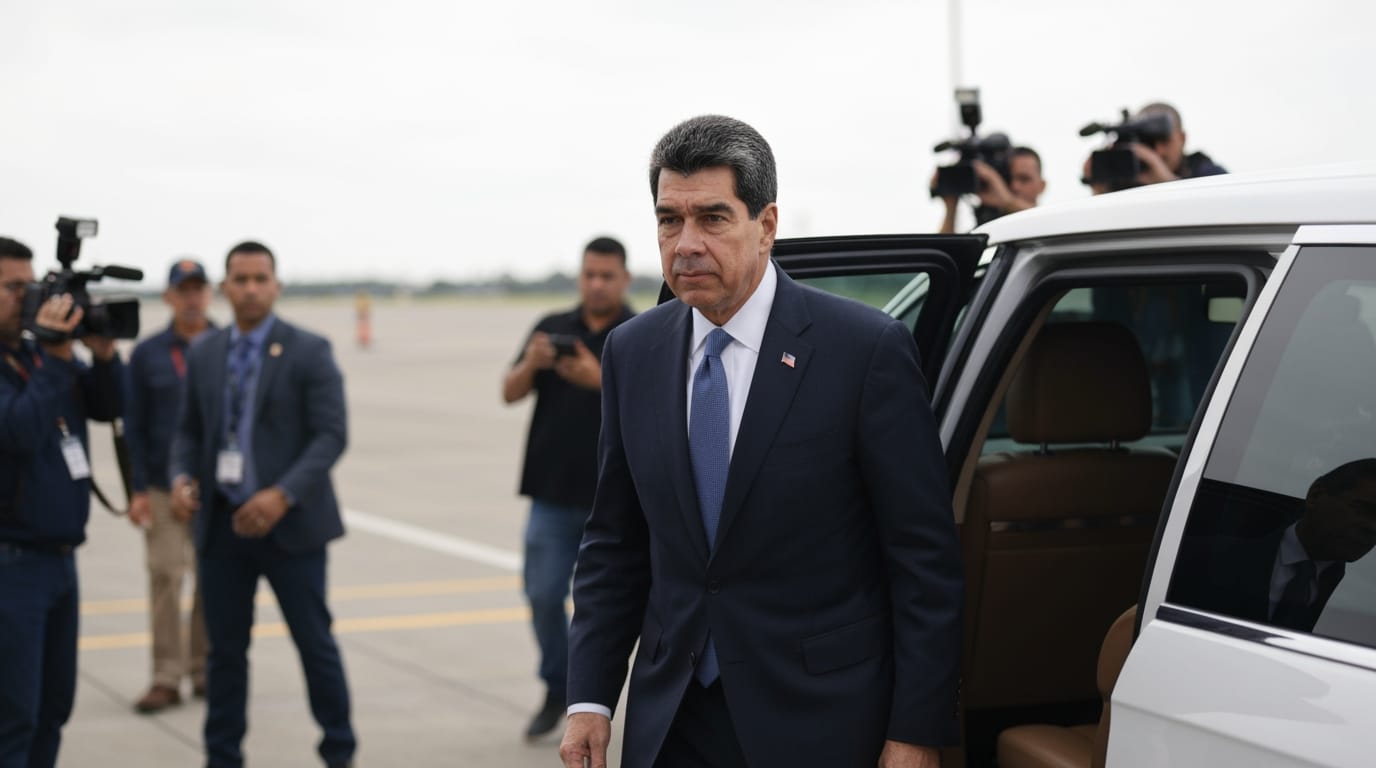
CARACAS, Venezuela – In a dramatic reshaping of U.S.-Venezuelan relations, U.S. Ambassador Laura Dogu arrived in Caracas on Saturday, January 31, 2026, to reopen the American diplomatic mission after seven years of severed ties. Her arrival marks a pivotal moment, coming less than a month after a U.S. military operation led to the removal and capture of Nicolás Maduro, Venezuela's former leader. The swift regime change, orchestrated by U.S. President Donald Trump, has fundamentally altered the political landscape of the South American nation and paved the way for a cautious re-engagement between Washington and Caracas.
Dogu, designated as the chargé d'affaires, landed at Maiquetia airport, expressing her team's readiness to work, a sentiment echoed in social media posts by the U.S. Embassy in Venezuela. Venezuelan Foreign Minister Yván Gil Pinto welcomed Dogu, indicating a willingness to establish a working agenda for bilateral interests and resolve existing differences through diplomatic dialogue and mutual respect. This diplomatic overture follows a tumultuous period characterized by severe political tensions, economic sanctions, and a prolonged diplomatic freeze that saw the closure of embassies in 2019.
The January Intervention and a New Political Order
The backdrop to this diplomatic re-establishment is the significant military action undertaken by the United States earlier in January 2026. On January 3, U.S. forces launched an operation in Venezuela, resulting in the capture of Nicolás Maduro and his wife, Cilia Flores. The couple was subsequently transported to New York, where they face trial on drug trafficking charges. This decisive intervention marked the culmination of years of U.S. pressure aimed at ousting Maduro, whom Washington had long deemed an illegitimate leader.
Following Maduro's removal, President Donald Trump declared the U.S. was now "running Venezuela" and appointed Delcy Rodriguez, formerly Maduro's vice president, as interim leader. This appointment, however, comes with strict conditions, primarily granting the United States access to Venezuela's vast oil reserves. The move underscores the strategic importance of Venezuela's energy resources in the eyes of the U.S. administration and signals a direct, hands-on approach to the nation's governance in the immediate aftermath of the regime change.
Decades of Strained Relations and the Guaidó Chapter
The recent events represent a dramatic departure from the previous U.S. strategy towards Venezuela, which had been characterized by diplomatic isolation and support for the opposition. Diplomatic ties between the two nations officially fractured in February 2019, when the Maduro government severed relations after then-President Trump publicly endorsed Juan Guaidó, the head of Venezuela's National Assembly, as the country's interim president.
For several years, the U.S. and many international allies recognized Guaidó as Venezuela's legitimate leader, viewing Maduro's 2018 re-election as illegitimate. During this period, the U.S. maintained a "Venezuela Affairs Unit" in Bogotá, Colombia, serving as an interim diplomatic office. However, the U.S. eventually ceased recognizing Guaidó's presidential claim in 2023 when the opposition National Assembly voted to dissolve his interim government, although Washington continued to recognize the 2015-elected National Assembly. This shift indicated a growing acknowledgment of the complexities on the ground, even as calls for Maduro's departure remained firm. The strategy of sanctions and diplomatic pressure, while significant, ultimately did not lead to Maduro's direct removal from power until the recent military action.
Implications and the Path Forward
The arrival of Ambassador Dogu and the reopening of the U.S. diplomatic mission signify a new chapter, albeit one fraught with challenges and uncertainties. The State Department has indicated Dogu will work with various sectors in Venezuela to advance a "three-phased plan" for the nation, though specific details of this plan remain largely undisclosed. The CIA is also reportedly working to establish a permanent U.S. presence in Venezuela, further indicating the depth of renewed U.S. engagement.
For Venezuela, the implications are profound. The capture of Maduro and the installation of an interim leader under U.S. guidance mark a significant shift in its sovereignty and political autonomy. The terms set by President Trump regarding oil access will likely dominate economic discussions and future policy decisions. The move also raises questions about the future of Venezuela's democratic institutions, human rights, and the potential for long-term stability in a country plagued by years of political and economic crisis. The welcoming stance of Foreign Minister Gil Pinto suggests an immediate effort by the new interim administration to engage constructively with Washington, reflecting the new power dynamics.
Regionally, the direct military intervention by the U.S. in Venezuela could set a precedent for future international relations in Latin America. The long-standing debate over interventionism versus non-interference is once again brought to the forefront. The world watches to see how this dramatic shift will impact the delicate balance of power and alliances within the continent.
A Complex Horizon
The return of U.S. diplomatic presence to Caracas after seven years, following the dramatic military ouster of Nicolás Maduro, represents an unprecedented moment in the complex relationship between the United States and Venezuela. Ambassador Laura Dogu's mission is not merely to reopen an embassy but to navigate a new political reality in a nation now under significant U.S. influence. The promise of diplomatic engagement, coupled with the stark realities of a forced regime change and conditional leadership, paints a picture of a future for Venezuela that is both uncertain and profoundly transformed. The international community, observers, and the Venezuelan people will be closely watching the unfolding developments as this new chapter begins.


