U.S. Envoys Witkoff and Kushner Engage Ukrainian Officials in Florida Amidst Complex Peace Negotiations
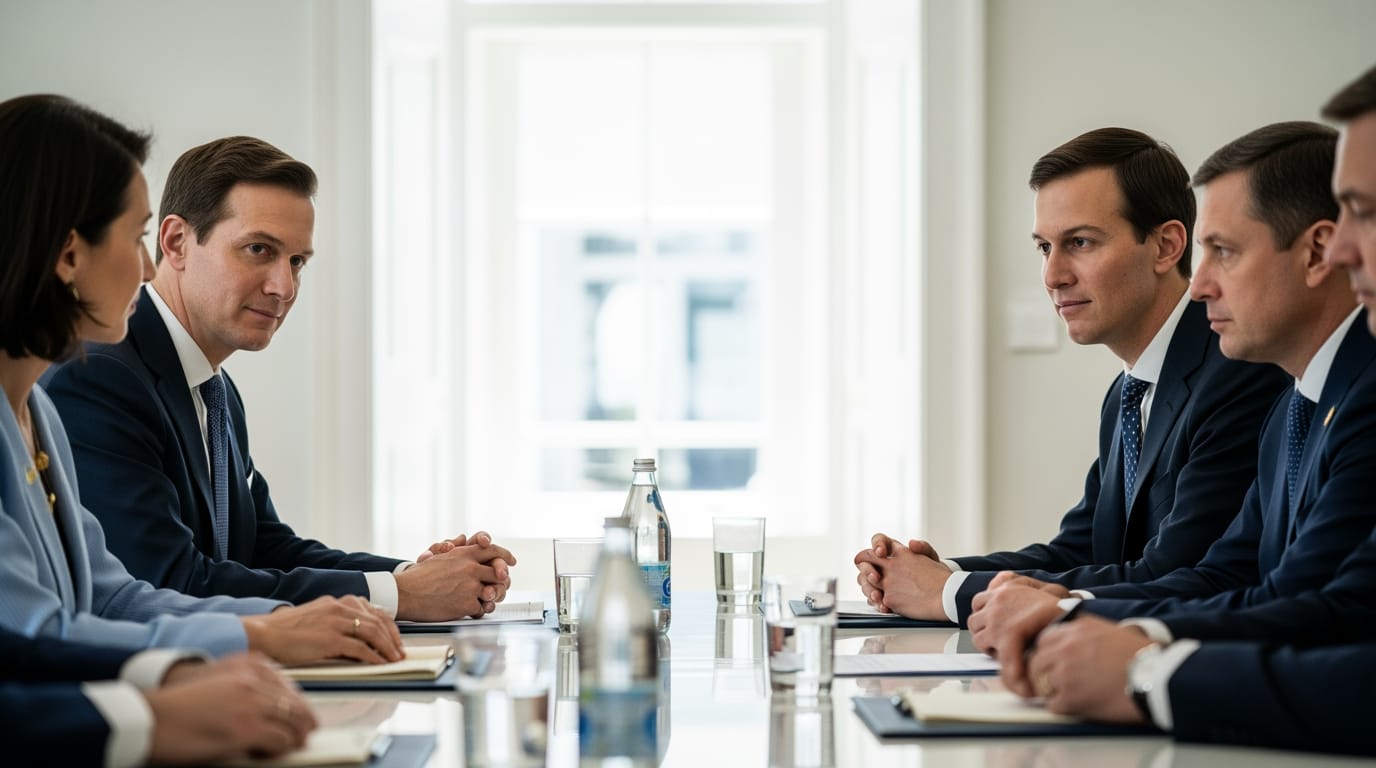
MIAMI, Fla. – High-stakes diplomatic discussions unfolded in Florida this week as U.S. Special Envoy Steve Witkoff and Jared Kushner, son-in-law of U.S. President Donald Trump, met with top Ukrainian officials, including Rustem Umerov, the Secretary of Ukraine's National Security and Defense Council. The meetings, held in Miami and Hallandale Beach, were part of a broader, intensified push for a peace settlement in the protracted conflict with Russia, following Witkoff and Kushner's recent talks with Russian President Vladimir Putin in Moscow that reportedly yielded no immediate breakthrough. These engagements highlight a complex and often controversial diplomatic track alongside traditional state-to-state relations, aiming to navigate the intricate path to ending hostilities and planning for Ukraine's eventual reconstruction.
Diplomatic Initiatives and Key Players
The series of meetings began on Sunday, November 30, 2025, when U.S. Secretary of State Marco Rubio, Special Envoy Steve Witkoff, and Jared Kushner engaged a Ukrainian delegation in Hallandale Beach, Florida, at the Shell Bay Club, a property developed by Witkoff's real estate business. This initial discussion aimed to refine a proposed peace framework, setting the stage for subsequent critical talks. Ukrainian President Volodymyr Zelensky confirmed that his country's representatives, including Rustem Umerov and Andrii Hnatov, Chief of Staff of Ukraine's Armed Forces, were involved in these discussions. The Florida consultations continued on Thursday, December 4, with Witkoff and Kushner again meeting with Umerov, shortly after their five-hour encounter with President Putin in the Kremlin.
Both U.S. and Ukrainian officials described the talks in Florida as productive, despite the immense challenges of brokering a lasting peace deal. Ukrainian officials, while expressing appreciation for U.S. efforts, have consistently underscored that any peace must uphold Ukraine's sovereignty and territorial integrity. President Zelensky emphasized that Ukraine's voice was "heard and listened to" during these meetings in Geneva and Florida.
The Contested Peace Plan and Moscow's Influence
At the heart of these diplomatic maneuvers is a U.S.-backed peace proposal, initially a 28-point plan, which has undergone significant revisions. The initial draft, reportedly developed with input from Kirill Dmitriev, a top economic advisor to President Putin, drew criticism for being heavily weighted in Russia's favor. Components of this early plan allegedly included calls for Ukraine to cede territory, limit the size of its armed forces, and renounce NATO membership, points that largely align with longstanding Russian demands.
Following strong objections from Kyiv and European partners, the plan was reportedly pared down to around 20 points, aiming to make it more palatable to Ukraine. However, the specifics of the latest proposals remain undisclosed. The sensitivity surrounding territorial concessions, the disposition of frozen Russian assets, and security guarantees for Ukraine remain key sticking points in the ongoing negotiations. The meetings in Florida were intended, in part, to brief Ukrainian officials on the outcomes of the Moscow talks and Russia's demands for a deal to end the conflict.
Witkoff and Kushner's Unconventional Diplomatic Role
The involvement of Steve Witkoff and Jared Kushner in such high-level international diplomacy has drawn considerable attention and, in some quarters, skepticism. Witkoff, a prominent real estate developer with an estimated net worth of $2 billion, has no prior diplomatic experience but has served as the U.S. special envoy to the Middle East and for peace missions since 2025. He has also acted as a de facto envoy to President Putin. Jared Kushner, known for his role as a senior advisor in the first Trump administration and his efforts in Middle East peace processes, also comes from a real estate background.
Critics have questioned the suitability of individuals with extensive real estate and business interests engaging in sensitive international negotiations, particularly when an initial peace plan was seen as favoring Russian interests. Leaked reports and analyses have suggested that the discussions could be intertwined with potential financial opportunities related to Ukraine's reconstruction and the handling of frozen Russian assets. Concerns have been raised by some European leaders about potentially being sidelined and the possibility of Ukraine being pressured into disadvantageous concessions.
The Road Ahead: Reconstruction and International Investment
Beyond immediate peace terms, the long-term reconstruction of Ukraine remains a monumental task, with damage estimated at over $524 billion over the next decade. The U.S.-led diplomatic efforts, involving figures with significant real estate and investment backgrounds, suggest that reconstruction and economic recovery are likely integral parts of any proposed peace framework. Ukraine is actively seeking to attract foreign investment for rebuilding its infrastructure, energy sector, healthcare, and other essential services.
International bodies like the World Bank, European Investment Bank (EIB), and the European Bank for Reconstruction and Development (EBRD) are already engaged in initiatives like "Ukraine FIRST" and "PREPARE Ukraine" to facilitate large-scale infrastructure projects and attract private capital. While the private sector is seen as crucial for covering a significant portion of reconstruction needs, the risks associated with investing in a conflict zone necessitate robust financial frameworks and international collaboration. The ongoing discussions in Florida and elsewhere underscore the intricate balance between diplomatic efforts for peace and the critical need to secure a viable future for Ukraine, both politically and economically.


