U.S. Intensifies Retaliatory Strikes Against Islamic State in Syria Following Deadly Ambush
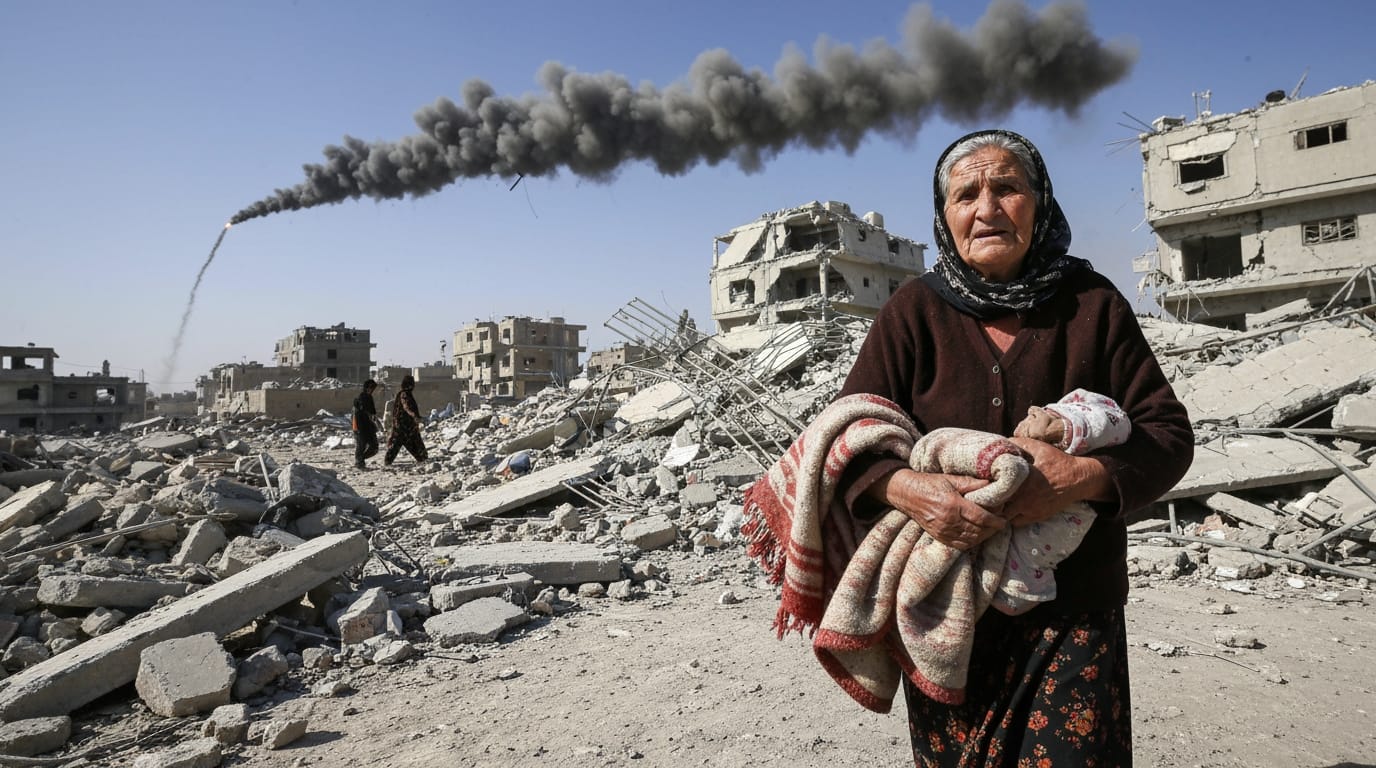
WASHINGTON – The United States military launched another round of significant retaliatory strikes against Islamic State targets across Syria on Saturday, January 10, 2026, marking a continued response to a deadly ambush last month that claimed the lives of two U.S. service members and an American civilian interpreter. The latest actions, part of the broader "Operation Hawkeye Strike," underscore Washington's unwavering commitment to counterterrorism efforts in the region and to hold responsible those who target American personnel.
The Palmyra Ambush: A Catalyst for Renewed Action
The current surge in military activity stems from a brutal attack on December 13, 2025, near Palmyra, Syria. In that incident, Sgt. William Nathaniel Howard, 29, and Sgt. Edgar Brian Torres-Tovar, 25, both of the Iowa National Guard, were killed alongside American civilian interpreter Ayad Mansoor Sakat. The three were ambushed by a lone assailant, suspected of affiliation with the Islamic State, while supporting a key leader in the central Syrian town. Three other U.S. service members were wounded in the attack. This incident marked the first U.S. military casualties in Syria since the fall of the former Assad regime in December 2024 and occurred just a month after the new Syrian President, Ahmed al-Sharaa, visited the White House and signed a political cooperation agreement with the U.S.-led coalition against the Islamic State. President Donald Trump and Defense Secretary Pete Hegseth immediately vowed "very serious retaliation" for the attack.
Operation Hawkeye Strike: A Declaration of Vengeance
The initial large-scale retaliatory phase, dubbed "Operation Hawkeye Strike" in honor of the fallen Iowa National Guard soldiers, commenced on December 19, 2025. U.S. Central Command reported that the operation struck more than 70 targets across central Syria, utilizing over 100 precision-guided munitions. Military assets deployed included F-15 Eagle fighter jets, A-10 attack jets, Apache attack helicopters, and M142 High Mobility Artillery Rocket Systems (HIMARS). Jordanian forces also participated, with their F-16 fighter jets supporting the strikes. Defense Secretary Hegseth characterized the operation not as the beginning of a war, but as "a declaration of vengeance," asserting that anyone targeting Americans "will spend the rest of your brief, anxious life" evading justice. President Trump affirmed full support from the Syrian government, stating the U.S. was inflicting "very serious retaliation" on the group responsible.
Sustained Pressure and Ongoing Operations
Since the launch of Operation Hawkeye Strike, U.S. and partner forces have maintained relentless pressure on the Islamic State. Between December 20 and December 29, 2025, targeted operations resulted in the killing of at least seven ISIS fighters and the capture of more than a dozen operatives. The sustained campaign reflects a broader strategy to degrade ISIS capabilities and prevent its resurgence. The latest strikes on January 10, 2026, involved over 20 aircraft, including F-15Es, A-10s, AC-130Js, MQ-9s, and Jordanian F-16s, targeting at least 35 locations throughout Syria with more than 90 precision munitions. U.S. Central Command reiterated its firm stance: "Our message remains strong: if you harm our warfighters, we will find you and kill you anywhere in the world, no matter how hard you try to evade justice."
The Enduring Fight Against a Persistent Threat
The United States has maintained a military presence in Syria since September 2014 as part of Operation Inherent Resolve, the international war against the Islamic State. Despite the territorial defeat of ISIS in Syria in March 2019, the group continues to pose a significant threat, operating as an insurgent force capable of orchestrating attacks. A July 2025 United Nations Security Council assessment estimated that more than 5,000 terrorist fighters remained at large in Syria. Approximately 1,000 U.S. troops are currently deployed in Syria, primarily focused on advising, assisting, and enabling partner forces, including the Syrian Democratic Forces and, more recently, the new Syrian government's security forces. The Syrian government, now under President Ahmed al-Sharaa after the toppling of the Assad regime in December 2024, has expressed strong commitment to fighting the Islamic State and has joined the global coalition against ISIS, marking a significant shift in regional dynamics and U.S. coordination efforts.
Conclusion: A Resolve Undeterred
The retaliatory strikes in Syria, collectively known as Operation Hawkeye Strike, underscore the United States' resolve to protect its personnel and prevent the resurgence of the Islamic State. The coordinated efforts with Jordanian and Syrian partner forces highlight the multinational commitment to eradicating the terrorist group. While ISIS no longer controls vast territories, its continued capacity for deadly attacks, as demonstrated by the Palmyra ambush, ensures that the mission to dismantle its networks and eliminate its operatives remains an ongoing and critical priority for regional and international security. The recent actions serve as a stark reminder that the fight against global terrorism is far from over.


