U.S. Intercepts Iranian Missiles, Shattering Fragile Calm in Middle East Conflict

WASHINGTON D.C. — U.S. forces in the Middle East successfully intercepted multiple ballistic missiles launched by Iran on Tuesday, July 28, 2026, marking a significant escalation that abruptly ended a brief period of de-escalation in the protracted conflict between the two nations. The U.S. military confirmed the successful interception, underscoring its vigilance even as diplomatic efforts aimed at brokering a lasting peace were underway. This latest incident reignites fears of a broader conflagration in an already volatile region, where months of hostilities have taken a heavy toll and strained international relations.
The Attack and Immediate Response
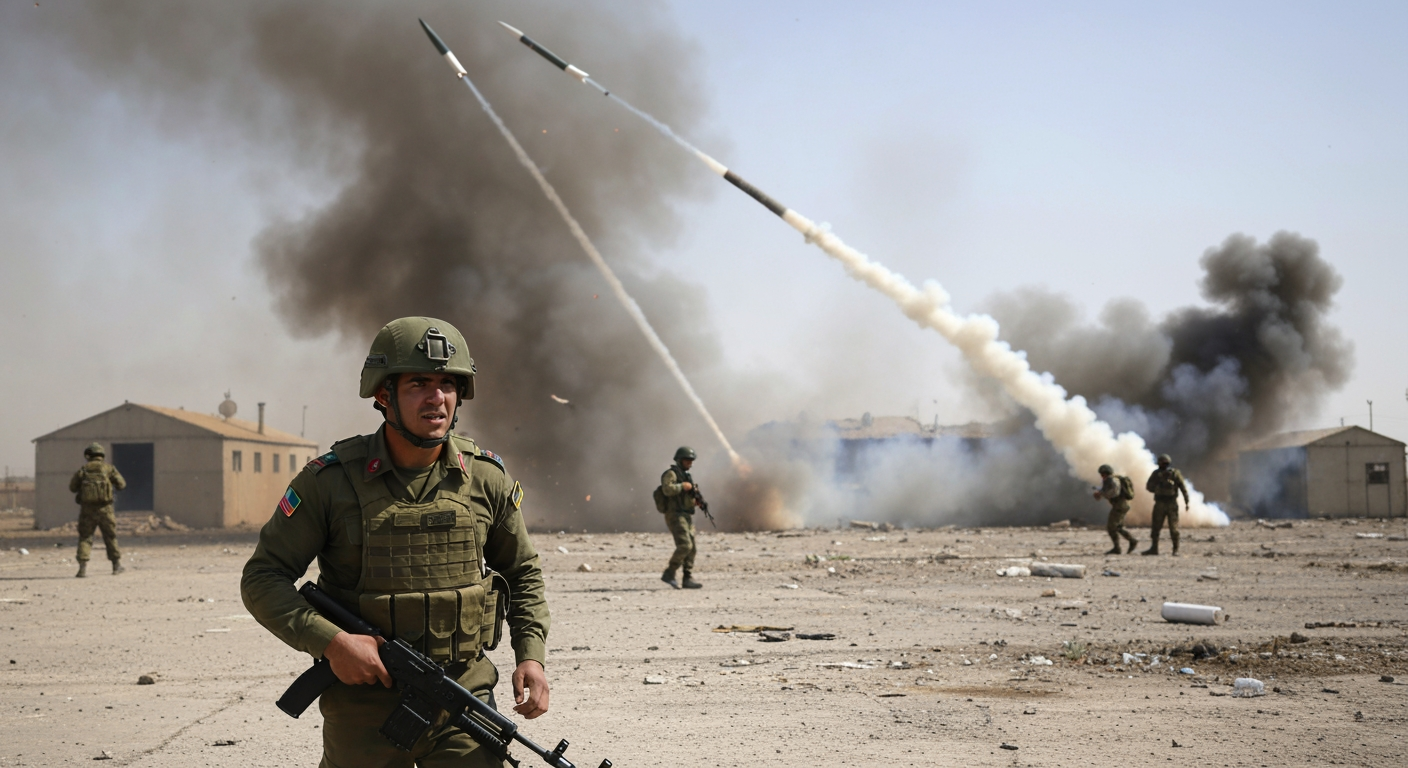
The barrages, attributed to Iran's Islamic Revolutionary Guard Corps (IRGC), were launched on Tuesday evening, targeting American personnel and installations across the Middle East. U.S. Central Command (CENTCOM) swiftly confirmed that all incoming missiles were successfully neutralized, preventing any reported casualties or significant damage to U.S. assets. While specific targeted locations were not immediately disclosed, U.S. forces have a substantial presence in key areas, including military installations in Bahrain and Kuwait, and near the U.S. consulate in Erbil, Iraq, which has recently faced drone attacks. CENTCOM reiterated that U.S. forces "remain vigilant and at a high state of readiness" following the attempted surprise attack. The incident highlights the robust capabilities of U.S. missile defense systems deployed across the region, which include advanced Patriot and Terminal High Altitude Area Defense (THAAD) batteries.
A Ceasefire Interrupted
This missile attack comes after what had been a precarious, albeit short-lived, period of calm in the escalating "Iran war," also referred to as the "2026 Iran war." For days leading up to the Tuesday strikes, both Washington and Tehran had refrained from announcing direct military actions, allowing a small window for renewed diplomatic engagements. This pause was reportedly an attempt by President Donald Trump's administration to foster peace negotiations following weeks of intense escalation, particularly centered around control of the vital Strait of Hormuz.
The broader conflict began on February 28, 2026, with "Operation Epic Fury," a joint U.S.-Israeli military operation that included nearly 900 strikes in the first 12 hours, targeting Iranian military infrastructure and leadership, including Supreme Leader Ali Khamenei. This initial phase resulted in extensive damage, thousands of fatalities in Iran, Lebanon, Israel, and Gulf Arab states, and millions displaced. An interim ceasefire deal, mediated in June, sought to reopen the Strait of Hormuz, a critical chokepoint through which 20% of the world's oil normally flows, but hostilities fully resumed on July 7. Beyond the direct confrontation, the region remains a hotbed of proxy conflicts, with Saudi Arabia reporting interceptions of drones fired by Iran-backed militias from Iraq, and Houthi rebels in Yemen claiming attacks on Saudi oil tankers.
Iran's Expanding Missile Capabilities
Iran's ballistic missile program, considered the largest and most diverse in the Middle East, plays a central role in its military and defense strategy. Tehran views its substantial arsenal, which includes thousands of ballistic and cruise missiles capable of reaching targets as far as Israel and Eastern Europe, as a crucial deterrent, allowing for "deterrence through retaliation." The program has also become a tool for projecting regional power and bolstering the capabilities of its non-state allies.
Following the "Twelve-Day War" in 2025 and subsequent conflicts, Iran has intensified efforts to rebuild and enhance its missile capabilities, replenishing stockpiles and making significant advancements in precision and lethality. Reports from October 2025, although denied at earlier dates, even indicated that Iranian Supreme Leader Ali Khamenei had authorized the development of miniaturized nuclear warheads for ballistic missiles, raising serious international concerns about the program's potential connection to nuclear ambitions. Crucially, Iran's missile production ambitions are reportedly supported by critical assistance from countries like China and North Korea.
Strained Defenses and Escalation Risks
The successful interception of Iranian missiles underscores the effectiveness of U.S. missile defense systems, which experts assess to have a success rate of 90-92% against Iranian projectiles. However, the ongoing five-month conflict has placed a considerable strain on U.S. air defense stockpiles. Defense Secretary Pete Hegseth recently requested billions in supplemental war funding from lawmakers to maintain operations and replenish munitions.
In a strategy aimed at conserving interceptor missiles, U.S. forces have reportedly been selectively intercepting incoming Iranian ballistic missiles and drones. This involves military commanders choosing not to expend expensive interceptors if they assess that a projectile will not strike U.S. forces, cause significant damage to critical facilities, or pose a threat to regional allies. While this approach is common in warfare, it has gained particular importance given the duration of the conflict. President Trump, for his part, has issued stern warnings, indicating that if diplomatic efforts fail, the U.S. would "go back to doing what we were doing" and even threatened to target Iran's power plants and bridges. Meanwhile, Israeli Prime Minister Benjamin Netanyahu met with President Trump, with Israel having previously allowed American warplanes to use its bases for strikes on Iran.
A Precarious Path Forward
The latest missile interception serves as a stark reminder of the deep-seated tensions and the fragile nature of peace in the Middle East. While diplomatic channels remain open, with mediating countries reportedly urging Washington to prioritize diplomacy, the military confrontation continues to simmer, risking further escalation. The incident puts immense pressure on ongoing peace negotiations, threatening to unravel any progress made and pushing the region closer to an unpredictable future. The international community watches closely as the U.S. and Iran navigate this perilous path, with the stakes for regional stability and global energy security remaining exceptionally high.
Related Articles


Ratko Mladić, "Butcher of Bosnia" and Convicted War Criminal, Dies at 84
THE HAGUE, Netherlands – Ratko Mladić, the former Bosnian Serb military commander known as the "Butcher of Bosnia" and convicted of genocide, war crimes, and crimes against humanity, has died at the age of 84. Serbian...


Long-Awaited 9/11 Mastermind Trial Set for 2028, Decades After Attacks
GUANTANAMO BAY, Cuba – Nearly a quarter-century after the devastating terror attacks of September 11, 2001, a military judge has finally set a trial date for Khalid Sheikh Mohammed, the alleged mastermind behind the...