Uganda at a Crossroads as Museveni Extends Decades-Long Rule
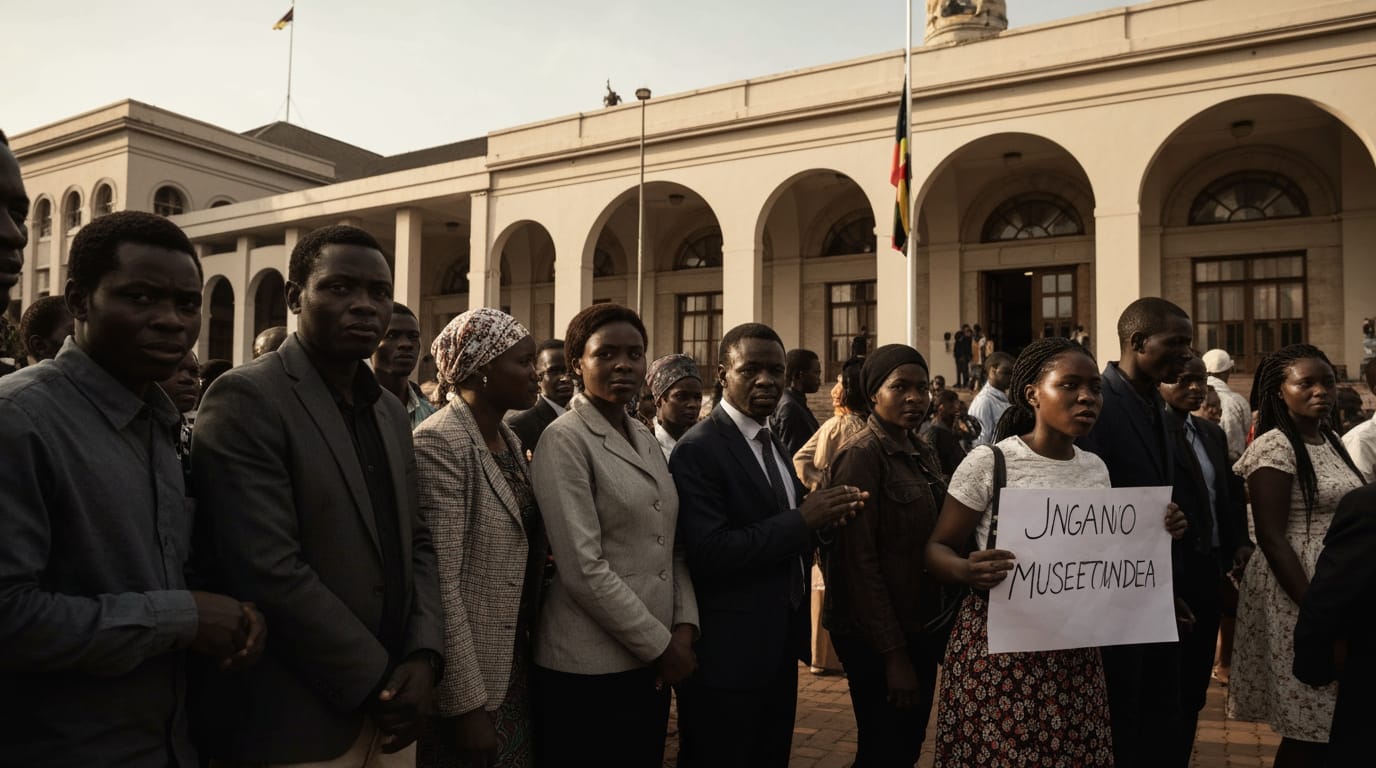
KAMPALA, Uganda – President Yoweri Museveni, a figure synonymous with Ugandan leadership for nearly four decades, has embarked on yet another five-year term, extending his tenure into an unprecedented era for the East African nation. The 81-year-old leader was sworn in on May 12, 2026, at the Kololo Ceremonial Grounds in Kampala, following a presidential election that highlighted both the nation's aspirations and its persistent challenges. His re-election comes at a pivotal moment, with Uganda navigating complex political dynamics, a burgeoning youth population facing economic hurdles, and mounting scrutiny over human rights.
The Enduring Leader and a New Term
President Museveni's inauguration for the 2026-2031 term marks his continued dominance in Ugandan politics, a reign that began when he seized power in 1986. The elaborate ceremony drew thousands of Ugandan citizens, along with numerous dignitaries, regional leaders, and diplomats, underscoring Uganda's strategic position in East Africa. Museveni secured his latest victory in the January 2026 presidential election, garnering 71.65% of the vote, according to official results. This follows a previous re-election in 2021, where he won with 58.6% of the votes. His longevity in office has been facilitated by constitutional amendments, including the removal of presidential term limits in 2005 and the age limit for presidential candidates in 2017. In his inaugural address, Museveni reiterated his government's commitment to wealth creation programs, regional cooperation, and economic growth, while calling for greater focus on productivity and national transformation.
Political Contestation and Narrowing Civic Space
The path to Museveni's extended term was characterized by a contentious electoral process that attracted significant domestic and international attention. The January 2026 election, much like its 2021 predecessor, was accompanied by allegations of widespread fraud, post-election violence, and a systematic crackdown on opposition figures and their supporters. Robert Kyagulanyi Ssentamu, popularly known as Bobi Wine, emerged as the leading opposition candidate in 2026, securing 24.72% of the vote. Wine and his National Unity Platform (NUP) party consistently rejected the election results, citing "massive ballot stuffing" and intimidation tactics.
Reports from the election period detailed instances of security forces surrounding opposition leaders' homes, including Bobi Wine's, and the disruption of opposition rallies. The political environment has seen a progressive shrinking of civic space, with non-governmental organizations reportedly facing politically motivated charges and public protests frequently met with force. Concerns have also been raised about the potential for dynastic succession, with President Museveni's son, Muhoozi Kainerugaba, who serves as Chief of Defense Forces, widely perceived as being groomed for the presidency. Kainerugaba has also reportedly used social media to issue threats against opposition leaders. These developments signal a deepening crisis of democratic governance, with a systematic escalation of authoritarian tactics.
Economic Challenges Amidst Growth Aspirations
Despite the political tensions, Uganda's economy has demonstrated resilience, with an average annual growth rate of 6-6.5% in recent years. President Museveni's vision for his new term includes an ambitious economic agenda centered on industrialization, value addition, skills development, commercial agriculture, information and communication technology (ICT), and services. He has actively promoted African self-reliance and advocated for an end to the export of raw materials, urging African nations to focus on value addition to boost their economies.
However, this economic growth has not translated proportionally into formal employment opportunities, particularly for the country's large youth population. Youth unemployment remains a significant challenge, with the overall unemployment rate at 12.4% and youth unemployment at 16.1% in 2024. Recent data from the Uganda Bureau of Statistics (UBOS) in April 2026 further indicated a rise in youth unemployment to 17.9%, with notable regional disparities. A substantial portion of employed youth, approximately 90%, works in the informal sector, often in low-paying and unstable jobs. Alarmingly, 41% of Ugandans aged 18-30 are neither employed, in education, nor in training.
Adding to these economic pressures is Uganda's escalating public debt. As of December 2024, the nation's total public debt stood at Shs106 trillion, equivalent to approximately $28 billion. By fiscal year 2024/25, the public debt reached 52.4% of the Gross Domestic Product (GDP), surpassing the 50% ceiling deemed sustainable by the Charter of Fiscal Responsibility. A substantial portion of the 2026/27 national budget, approximately 40% or Shs33.6 trillion, is allocated to debt repayment. Economists have warned that Uganda is increasingly caught in a "debt trap," diverting crucial resources from essential sectors like health, education, and infrastructure to service existing debts. This fiscal strain is expected to constrain the government's ability to deliver on its wealth-creation promises.
Human Rights Under Scrutiny
Amidst the political and economic landscape, Uganda's human rights record continues to face scrutiny. The Uganda Human Rights Commission (UHRC), while congratulating President Museveni on his new term, urged his administration to prioritize respect for human rights, accountability, and inclusive economic empowerment, emphasizing that true national progress is reflected in the daily experiences of citizens.
However, reports indicate a deteriorating human rights situation. Concerns include the use of torture, ill-treatment, enforced disappearances, and arbitrary arrests and detentions targeting perceived government opponents. The practice of trying civilians in military courts has also been highlighted, despite a Supreme Court ruling deeming it unconstitutional. A significant area of international concern is the 2023 Anti-Homosexuality Act, which imposes harsh penalties and contributes to discrimination and violence against LGBTQ+ individuals in Uganda. These issues contribute to ongoing international concern from various organizations and countries regarding the state of human rights and fair political processes in Uganda.
Charting Uganda's Future
As President Museveni embarks on another term, Uganda stands at a critical juncture. His administration faces the dual challenge of sustaining economic growth while addressing widespread youth unemployment and a ballooning national debt. Simultaneously, calls for democratic reforms, respect for human rights, and greater political inclusivity resonate both within the country and from the international community. The coming years will reveal whether the government can navigate these complex challenges effectively, fostering a future that balances stability with the aspirations of its diverse population. The interplay of these forces will ultimately shape Uganda's trajectory in the decades to come.


