Uganda Grapples with Deepening Debt Crisis Ahead of Critical 2026 Elections
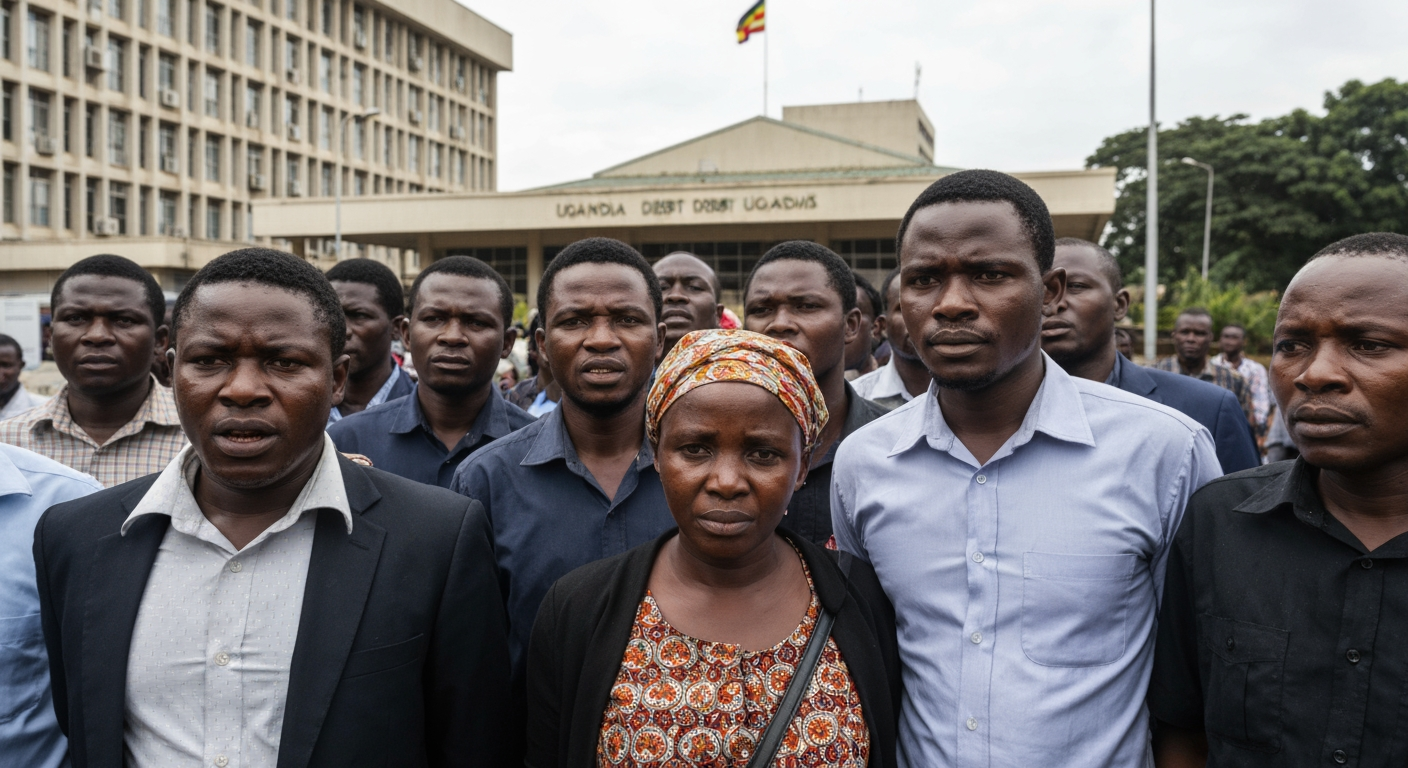
Kampala, Uganda – Uganda finds itself at a perilous economic crossroads as its national debt continues to surge, casting a long shadow over the upcoming 2026 general elections. With public borrowing reaching unprecedented levels, concerns are mounting among economists, international lenders, and ordinary citizens about the nation's fiscal stability and its capacity to fund essential public services. The escalating debt burden, now exceeding critical international thresholds, threatens to dominate the political discourse and shape the country's trajectory in the coming years.
The Alarming Trajectory of Uganda's Debt
Uganda's public debt has witnessed a dramatic increase, reaching UGX 96.1 trillion (approximately $25.3 billion) by June 2023, representing 52% of its Gross Domestic Product (GDP). This figure is projected to climb further to UGX 116.2 trillion (around $32.3 billion) by June 2025, marking a sharp 26.2% increase from the previous year. Such rapid accumulation has pushed the debt-to-GDP ratio beyond the International Monetary Fund's (IMF) recommended 50% threshold for low-income countries, with projections indicating it will peak at 53.0% in the 2025/2026 fiscal year. This translates to a staggering personal burden, with each of Uganda's 45 million citizens effectively owing an estimated UGX 2.5 million (approximately $830 USD).
A significant shift in the composition of this debt has also been noted, with domestic borrowing now slightly surpassing external debt, standing at UGX 60.3 trillion compared to UGX 55.9 trillion by June 2025. While multilateral institutions like the International Development Association (IDA), African Development Fund, and IMF remain major external creditors, China's Exim Bank holds a dominant share of bilateral loans.
Roots of the Accumulation: Infrastructure, Pandemics, and Policy
Several factors have converged to fuel Uganda's growing indebtedness. A primary driver has been the government's ambitious infrastructure development agenda, encompassing roads, energy projects, and burgeoning oil infrastructure. While essential for long-term growth, these projects have often necessitated substantial borrowing, sometimes through non-concessional loans.
The global economic shocks, notably the COVID-19 pandemic, exacerbated the situation, forcing the government to increase spending while simultaneously facing revenue shortfalls. Compounding these challenges, a decline in budget support and development assistance from some international partners, partly linked to the passage of contentious legislation, has further compelled the government to seek alternative financing.
However, beyond these macro-economic pressures, concerns about the efficiency and transparency of borrowed funds persist. Citizens and analysts alike frequently question the impact of corruption and poor utilization of loans, citing unbuilt roads, stalled projects, and inflated costs. Instances of projects failing to start years after loan approvals, yet incurring commitment fees, highlight inefficiencies in public financial management. This has led to a growing erosion of public trust in the government's handling of borrowed resources.
The Cost to Citizens: Diverted Resources and Stifled Development
The most immediate and critical implication of the deepening debt crisis is the enormous strain it places on the national budget. A significant portion of Uganda's collected revenue is now dedicated to debt servicing, with approximately UGX 32 out of every UGX 100 collected going towards repaying loans. External debt servicing alone is projected to consume 35% of GDP in the 2024/2025 fiscal year. In the 2022/23 fiscal year, interest payments accounted for UGX 4.6 trillion, or 11.8% of the total budget, dwarfing allocations to crucial social development sectors.
This diversion of funds inevitably shrinks the fiscal space available for essential public services such as healthcare, education, and social protection, directly impacting the well-being of ordinary Ugandans. Furthermore, high debt levels are seen as stifling both public and private investment, thereby hindering economic growth. The World Bank and IMF have both assessed Uganda as being at a moderate risk of debt distress, with limited capacity to absorb further economic shocks.
Uganda's ability to generate sufficient domestic revenue also remains a persistent challenge. The country's tax-to-GDP ratio has stagnated at around 13-14% over the past decade, significantly below regional averages. Structural weaknesses in tax administration, a large informal sector, and difficulties in taxing wealthy individuals contribute to this shortfall, forcing greater reliance on borrowing to bridge budget deficits.
Elections on the Horizon: A Politicized Debt Burden
As Uganda approaches the 2026 general elections, the national debt crisis has become an undeniable political hot potato. The looming polls are already influencing government spending patterns, with reports of increased expenditure on security and the Electoral Commission. Economists have cautioned against "politically motivated spending" in the run-up to elections, warning that it further undermines fiscal discipline and exacerbates the debt problem.
Opposition political parties and candidates have seized on the issue, framing the spiraling debt as a consequence of mismanagement and lack of accountability by the incumbent government. They argue that the country's weak discipline in planning and borrowing has led to the current predicament. Public sentiment reflects this concern, with many citizens expressing frustration over the lack of visible returns from the borrowed funds. The outcome of these elections is widely expected to have a significant impact on Uganda's economic policies and its approach to debt management.
Navigating the Future: Hopes and Hurdles
The Ugandan government acknowledges the debt challenge and has outlined strategies to address it. These include efforts to reduce domestic debt and prioritize concessional loans, which offer more favorable terms. A key part of the long-term strategy hinges on the commencement of oil production, which is anticipated to boost domestic revenues and lessen the reliance on borrowing. Furthermore, the Domestic Revenue Mobilization Strategy (DRMS) aims to enhance tax collection efficiency and broaden the tax base.
Despite the current difficulties, some analyses suggest Uganda's debt remains sustainable in the medium term, provided sound fiscal policies are implemented and oil revenues are effectively managed. The World Bank projects a cautiously optimistic medium-term outlook post-elections, contingent on moderated spending growth, continued export dynamism, and sustained foreign direct investment.
However, these projections are not without significant caveats. The risk of a "public debt safety trap," where seemingly favorable metrics mask underlying vulnerabilities, remains a concern. Without robust reforms, improved governance, and a steadfast commitment to fiscal prudence, Uganda's deepening debt crisis could continue to undermine its development aspirations and impose a heavy burden on future generations. The 2026 elections, therefore, represent a pivotal moment for the nation to choose a path towards greater fiscal responsibility and sustainable prosperity.
Related Articles


Mounting Frustration Grips Russia as Economic Hardship and War's Toll Deepen
Moscow, Russia – A palpable shift in public sentiment is emerging across Russia, with growing frustration among citizens fueled by a confluence of economic pressures, increasing internet restrictions, and the undeniable...

Germany's Strategic Calculus: Ukraine Aid is an Investment in European Security, Not Charity
Berlin – The ongoing provision of substantial aid to Ukraine by Germany and its allies is increasingly being framed not as an act of altruism, but as a crucial investment in European security and stability. This...