UK High Court Declares Government Ban on Palestine Action Unlawful
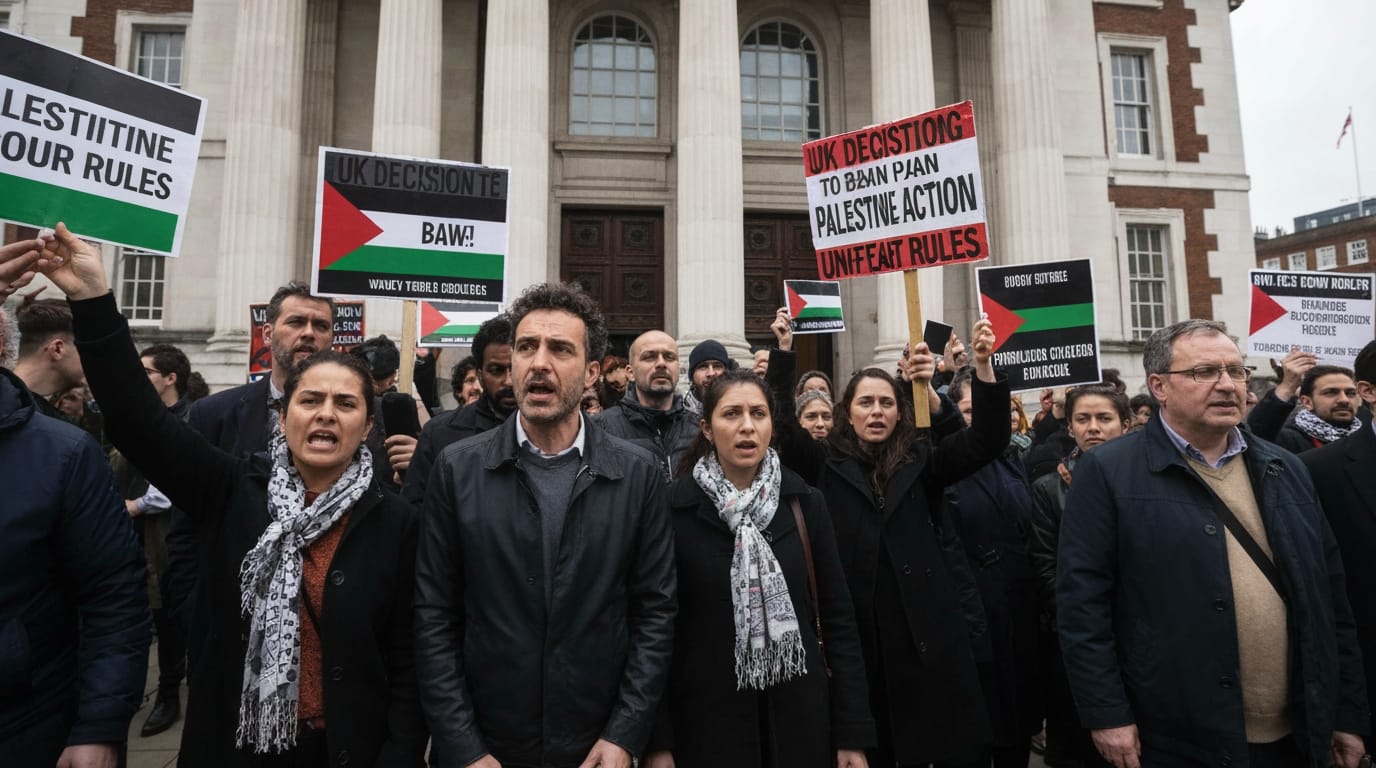
LONDON, UK – In a landmark decision on Friday, the UK High Court ruled that the government's proscription of the direct action group Palestine Action as a "terrorist organisation" was unlawful. The judgment represents a significant blow to the Home Office and has been hailed as a major victory for freedom of expression and assembly in Britain. The ruling effectively overturns a controversial ban initiated in June 2025, which had drawn widespread criticism from human rights organisations and legal experts.
The High Court's verdict found that the Home Secretary failed to comply with her own policy when making the decision to proscribe Palestine Action, and critically, that the ban breached rights to freedom of expression and assembly as protected under Articles 10 and 11 of the European Convention on Human Rights. This judicial review was brought forward by Huda Ammori, co-founder of Palestine Action, challenging the government's move to categorise the protest group alongside internationally recognised terrorist entities like al-Qaeda and Islamic State.
The Controversial Proscription and Its Aftermath
The initial decision to ban Palestine Action was announced in June 2025, with an order pushed through Parliament in July of the same year under the Terrorism Act 2000. This classification placed the direct action group in a legal category typically reserved for armed groups, making it a criminal offence to be a member of or show support for Palestine Action. Such offences carried severe penalties, including potential imprisonment for up to 14 years. The Home Office justified the ban by stating that the UK's defence enterprise was vital to national security and that it would not tolerate those who put it at risk.
Palestine Action, known for its disruptive tactics targeting companies with alleged links to the Israeli defence industry, had already faced considerable legal challenges prior to the proscription. Following the ban, a widespread civil disobedience campaign ensued, during which more than 2,000 people were arrested for defying the prohibition. Some reports indicate over 2,700 arrests were made in connection with showing support for the group. The unprecedented nature of proscribing a direct action protest group under anti-terrorism laws immediately sparked legal battles and garnered significant opposition.
A Legal Challenge Centered on Fundamental Rights
Huda Ammori, represented by a team of prominent legal counsel, challenged the Home Office's proscription order on four primary grounds. The judicial review proceedings, part of which were conducted in secret, culminated in the High Court's decisive judgment. The three-judge panel, led by Dame Victoria Sharp, president of the King's Bench Division, meticulously scrutinised the Home Secretary's decision-making process and its adherence to established legal frameworks and human rights principles.
The court's finding that the Home Secretary failed to adhere to her own policy underscores a critical procedural misstep in the government's attempt to curtail the group's activities. More fundamentally, the ruling reaffirms the robust protections afforded to freedom of expression and assembly under the European Convention on Human Rights, signalling a boundary to the state's power in classifying and restricting protest movements. Interventions in the case by the UN Special Rapporteur on Counter-Terrorism and Human Rights, Amnesty International UK, and Liberty further highlighted the international and domestic concern over the implications of the ban for civil liberties. This decision arrives notably after a jury, just a week prior, decided not to convict six Palestine Action members accused of serious charges, adding another layer of complexity to the legal landscape surrounding the group.
Broader Implications for Protest and Executive Power
The High Court's ruling carries significant implications beyond the immediate case of Palestine Action. It serves as a potent reminder of the judiciary's role in safeguarding fundamental rights and acting as a check on executive power, particularly in matters concerning national security and civil liberties. The decision sets a precedent that could influence how future governments approach the proscription of activist and protest groups, potentially making it more challenging to utilise anti-terrorism legislation against non-violent, albeit disruptive, direct action movements.
For protest rights advocates, the judgment is a substantial affirmation of the space allowed for dissent and activism, even when such activities may be seen as challenging to established interests. It reinforces the principle that legitimate protest, within the bounds of human rights law, should not be conflated with terrorism. Conversely, the ruling presents a considerable setback for the Home Office and the government's strategy in dealing with protest groups deemed to pose a risk to economic or national security interests. It may necessitate a re-evaluation of the criteria and processes for proscription, ensuring they align strictly with legal and human rights obligations.
A Victory for Civil Liberties, a Challenge for Policy
Co-founder Huda Ammori lauded the ruling as a "monumental victory both for our fundamental freedoms here in Britain and in the struggle for freedom for the Palestinian people," characterising the initial ban as "one of the most extreme attacks on free speech in recent British history". This sentiment highlights the perceived overreach of the government's actions and the relief felt by those who argued the ban disproportionately curtailed democratic freedoms.
While the ruling is a clear win for Palestine Action and civil liberties organisations, it also underscores the ongoing tension between national security concerns and the protection of protest rights in a democratic society. The government will now face pressure to review its approach to such groups, potentially leading to clearer guidelines and a more robust adherence to due process and human rights considerations in future proscription decisions. This judgment not only provides relief for the thousands who faced legal repercussions under the unlawful ban but also stands as a significant moment in the ongoing debate about the nature and limits of protest in the United Kingdom.