Ukraine Appoints Renowned Spy Chief Kyrylo Budanov as Presidential Chief of Staff Amidst War and Political Shakeup
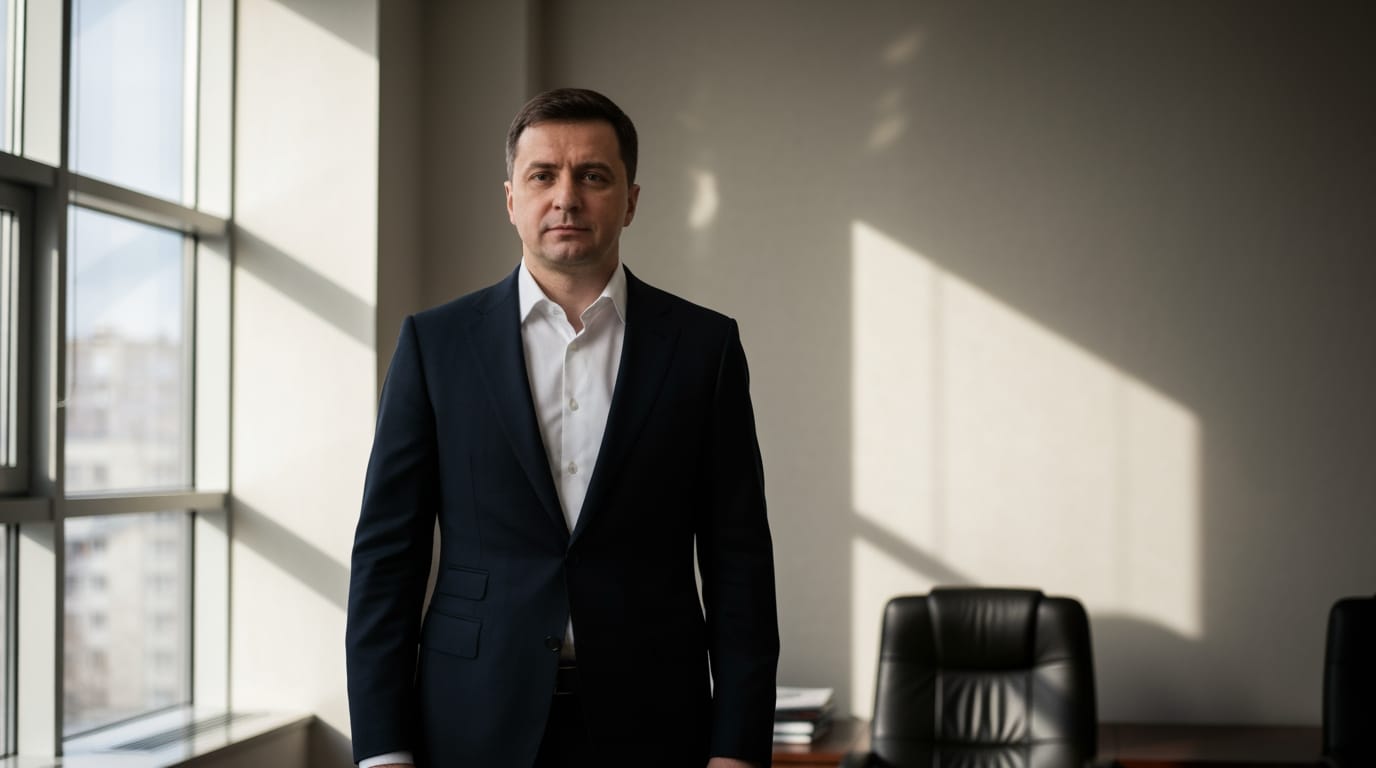
KYIV, Ukraine – In a pivotal shift at the heart of Ukraine's wartime leadership, Lieutenant General Kyrylo Budanov, the charismatic and often enigmatic head of Ukraine's military intelligence, has been appointed as President Volodymyr Zelenskyy’s new Chief of Staff. The appointment, confirmed on January 2, 2026, positions a veteran of clandestine operations and a key architect of Ukraine’s defense against Russian aggression at the pinnacle of the presidential administration. This decisive move follows the resignation of long-serving chief Andrii Yermak amidst a corruption investigation, signaling a strategic reorientation by Kyiv to prioritize security, defense development, and an intensified diplomatic push to end the nearly four-year conflict.
The Architect of Covert Operations: Budanov's Rise Through Military Intelligence
Born in Kyiv in 1986, Kyrylo Budanov's career has been defined by a deep immersion in military intelligence, culminating in his ascent as one of Ukraine's most recognizable and popular wartime figures. After graduating from the Odesa Institute of the Ground Forces in 2007, Budanov immediately joined the special forces of the Main Directorate of Intelligence (HUR) under the Ministry of Defence. His early military career saw him actively participate in the 2014 war in Donbas, where he sustained multiple injuries and engaged in numerous classified special operations.
Budanov's reputation for audacious actions and strategic insight grew significantly over the years. A 2024 report by The New York Times highlighted his involvement in Unit 2245, an elite group that reportedly received training from the CIA. Among his most notable early operations was a 2016 special forces raid in Russian-occupied Crimea, where, as a lieutenant colonel, he led a unit to plant explosives at an airfield, inflicting casualties on Russian commandos during their retreat. He has been credited with directing high-profile intelligence operations deep within Russian-held territories and coordinating strategic strikes against Russian military and logistical targets. His agency is also believed to be responsible for the 2022 explosion on the Russian-built Crimean Bridge. Under his leadership, the GUR expanded its operational footprint, coordinating intelligence, sabotage, and special operations aimed at degrading Russian military capabilities far beyond the front lines. By 2020, President Zelenskyy appointed him as the head of the Main Directorate of Intelligence (GUR), a position he held until his recent promotion to Chief of Staff.
A Strategic Shift in Wartime Leadership
The appointment of Lieutenant General Budanov as Head of the Office of the President of Ukraine, a role equivalent to chief of staff, signifies a profound strategic recalibration within Ukraine's leadership. His predecessor, Andriy Yermak, a longtime confidant of President Zelenskyy, resigned in late November 2025 amidst an anti-corruption investigation into alleged graft in Ukraine's energy sector. This scandal, which targeted Yermak's inner circle, fueled public anger and necessitated a decisive response from the presidency.
President Zelenskyy framed Budanov's appointment as a strategic necessity to strengthen Ukraine's security apparatus and diplomatic posture at a critical juncture in the nearly four-year conflict with Russia. In his announcement, Zelenskyy emphasized Ukraine's need for a greater focus on security issues, the development of the Defense and Security Forces, and the diplomatic track of negotiations. He noted Budanov's specialized experience in these areas and his proven ability to deliver results. This move places a seasoned military strategist and intelligence expert at the center of Ukraine's executive leadership, marking a departure from the traditional civilian-focused role of chief of staff.
A Figure of Courage and Controversy
Budanov's journey from a secretive intelligence officer to a public figure has been marked by both daring feats and persistent threats. He is widely regarded as a hero in Ukraine, earning the title "Hero of Ukraine" in February 2024 for his personal courage and service. Conversely, Russia views him as a criminal and has issued an arrest warrant for him over the 2022 Crimean Bridge attack. He has reportedly been the target of more than ten assassination attempts by Russian security services, including a car bomb in Kyiv in 2019 and a heavy metals poisoning attempt on his wife, Marianna, in November 2023.
Despite his high-stakes role, Budanov maintains a low public profile, described by Ukrainian media as "the man without a smile." However, he has not shied away from public predictions and strategic signaling. Months before Russia’s full-scale invasion in February 2022, he accurately predicted a large-scale attack when much of the world was in denial. Under his leadership, the GUR became a formidable force known for innovative approaches, including developing uncrewed surface vessel warfare and cyber attacks. His occasional public appearances and cryptic commentary have become a distinctive part of Ukraine's psychological warfare against Moscow.
Implications for Ukraine's Future
Budanov's appointment arrives at a crucial moment as the U.S. leads a diplomatic push to end the conflict, with President Zelenskyy stating that a peace deal is "90% ready." His new role will involve focusing on negotiations and stabilizing the internal situation, in addition to coordinating security efforts. Budanov has already participated in talks with the U.S. negotiating team and maintained contact with Russian counterparts on issues like prisoner exchanges, suggesting his existing diplomatic experience will be leveraged.
The shift from a civilian to a military intelligence chief for the presidential office indicates a heightened emphasis on security, defense, and the practicalities of war. Zelenskyy has articulated that this choice will bring battlefield expertise and a strategic security focus directly into the presidential administration. The move is also seen as an attempt to restore public trust in government institutions following the corruption scandal.
With Budanov taking on this central executive role, his former position as head of the GUR will be filled by Oleh Ivashchenko, the current head of the Foreign Intelligence Service. This ensures continuity in Ukraine's intelligence operations while bringing Budanov's unique blend of strategic thinking and operational experience to broader governmental coordination. His journey from an intelligence officer to presidential chief of staff places him at the very center of Ukraine's war strategy, combining battlefield expertise with significant political influence during a defining period for the nation.


