Ukraine Peace Talks Hit Snag as US-Russia Bilateral Meeting Prompts Delay
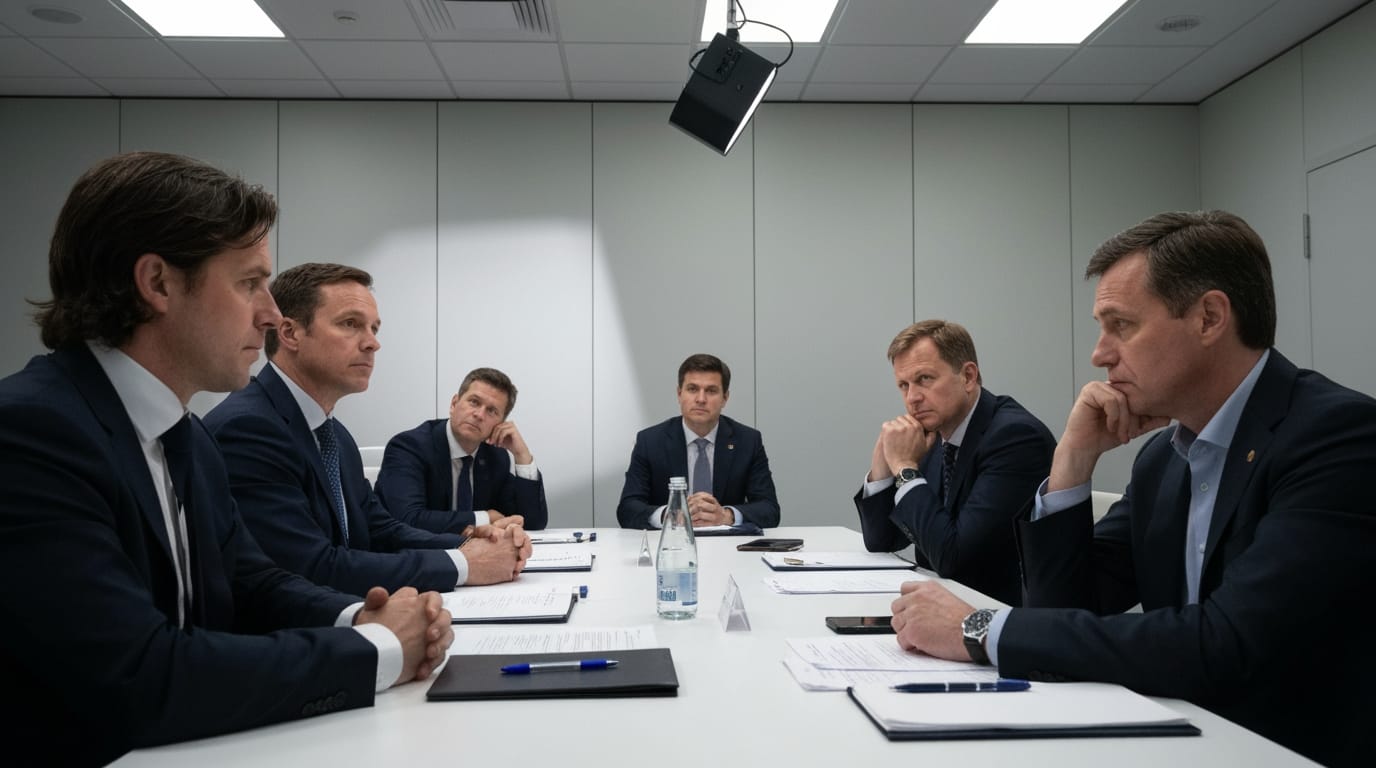
ABU DHABI, UAE – A crucial second round of trilateral peace negotiations aimed at resolving the nearly four-year-old conflict in Ukraine, originally slated for Sunday, February 1, in Abu Dhabi, has been postponed by several days following an unexpected bilateral meeting between United States and Russian envoys in Florida. Ukrainian President Volodymyr Zelenskyy confirmed the delay, announcing that the talks, which include representatives from Ukraine, the U.S., and Russia, are now rescheduled for February 4 and 5, emphasizing Kyiv's readiness for substantive discussions. The sudden shift in diplomatic engagement underscores the complex and often opaque nature of high-stakes peace efforts, injecting both hope and uncertainty into the arduous process of ending hostilities.
Unexpected Turn in Peace Diplomacy
The diplomatic calendar for Ukraine peace efforts saw an unforeseen adjustment over the weekend. A planned second round of trilateral talks in Abu Dhabi, building on a "constructive" initial meeting held in late January, was abruptly moved after U.S. and Russian officials engaged in a separate, unannounced meeting. The first round, held on January 23-24, had been heralded by all three parties—Kyiv, Moscow, and Washington—as a step forward, even as significant territorial and security challenges remained unresolved. The subsequent delay of the trilateral format for several days, as reported by The New York Times, has raised questions about the evolving dynamics of the peace process and the role of direct US-Russia engagement. While the exact reasons for the postponement were not officially specified, the timing directly coincided with the bilateral talks, suggesting a strategic recalculation by the involved powers.
Bilateral Diplomacy Takes Center Stage
The catalyst for the delay was a high-level meeting on January 31, a Saturday, in Florida, involving key envoys from Washington and Moscow. U.S. Special Envoy Steve Witkoff reportedly met with Kirill Dmitriev, the Kremlin's special representative and head of Russia's national wealth fund. The American delegation also included prominent figures such as Treasury Secretary Scott Bessent, Jared Kushner, President Donald Trump's son-in-law, and White House senior adviser Josh Gruenbaum. Both Witkoff and Dmitriev characterized their discussions as "productive and constructive" via social media, though specific details of what transpired behind closed doors were not released. Notably, Ukrainian representatives were not present at this direct engagement between Washington and Moscow, a fact that has drawn attention to the potential for Kyiv to be sidelined in discussions about its own future. This bilateral meeting marks another instance of direct dialogue between the US and Russia on the Ukraine conflict, following previous interactions between Dmitriev, Witkoff, and Kushner in Davos and Miami.
Ukraine's Stance and Unresolved Obstacles
Ukrainian President Volodymyr Zelenskyy, while confirming the new dates for the trilateral talks, reiterated his nation's commitment to finding a resolution. He expressed that Ukraine is "ready for a substantive discussion" and is interested in an outcome that leads to a "real and dignified end to the war." However, the path to peace remains fraught with significant obstacles. A primary sticking point, as identified in the initial round of talks, revolves around territorial issues in eastern Ukraine and comprehensive security guarantees. Russia continues to demand that Ukraine cede control of the entirety of the Donetsk and Luhansk oblasts, including territories not currently occupied by Russian forces, as a precondition for any peace agreement. Kyiv has consistently rejected such demands, viewing them as a violation of its sovereignty and territorial integrity.
The conflict's nearly four-year duration has seen a devastating impact on Ukraine, with ongoing Russian airstrikes ravaging critical energy infrastructure, particularly during the harsh winter months. Reports of civilian casualties continue, with an overnight Russian strike in the Dnipropetrovsk region reportedly killing two people just as diplomatic efforts intensified. These attacks highlight the grim reality on the ground even as diplomatic maneuvering unfolds. President Trump had recently called for a week-long halt to Russian bombardments, with Moscow indicating a pause only for Kyiv, lasting until February 1st. The persistent military pressure juxtaposed with peace talks underscores the immense challenges facing negotiators.
The Path Forward and Geopolitical Stakes
The upcoming trilateral talks are expected to center on a U.S.-backed 20-point peace plan. This comprehensive proposal reportedly outlines potential territorial arrangements, security guarantees for Ukraine, and detailed plans for the country's reconstruction. While the first round of talks was deemed constructive, reaching a compromise on core issues, especially territorial integrity, has proven elusive. U.S. officials suggest that while both sides are close to a deal, the critical issue of territory in a postwar settlement remains unresolved, according to Kyiv.
The involvement of the United States in a direct, bilateral meeting with Russia, preceding the trilateral format, signals a potentially more direct and assertive role for Washington in brokering a resolution. Historically, Ukraine has sought robust international guarantees for its security, and American involvement is seen as crucial. President Zelenskyy has previously underscored the necessity of "American monitoring and control of the process of ending the war and ensuring real security." He also stated that resolving territorial issues would likely require a direct meeting with Russian President Vladimir Putin, suggesting a long and complex road ahead even if immediate diplomatic progress is made. The broader geopolitical context, including potential shifts in global power dynamics and regional stability, lends an added layer of urgency and complexity to these negotiations. Zelenskyy himself had earlier suggested that rising tensions between the U.S. and Iran could potentially disrupt peace talks, illustrating the interconnectedness of global events with the conflict in Ukraine.
The postponement of the trilateral talks, prompted by the US-Russia bilateral meeting, serves as a stark reminder of the intricate and multi-layered nature of international diplomacy surrounding the Ukraine conflict. While the delay introduces an element of uncertainty, the rapid rescheduling of the trilateral discussions for later in the week indicates an ongoing commitment from all parties to maintain momentum toward a peaceful resolution. The success of these renewed talks will depend heavily on the ability of Kyiv, Moscow, and Washington to bridge their fundamental differences, particularly on territorial concessions and long-term security. With President Zelenskyy emphasizing Ukraine's readiness for substantive dialogue, the world watches Abu Dhabi, hopeful that the rescheduled negotiations will yield tangible progress towards ending the devastating war and securing a lasting peace.


