Ukraine Unleashes "Logistics Lockdown," Crippling Russian Supply Lines Deep Behind Front
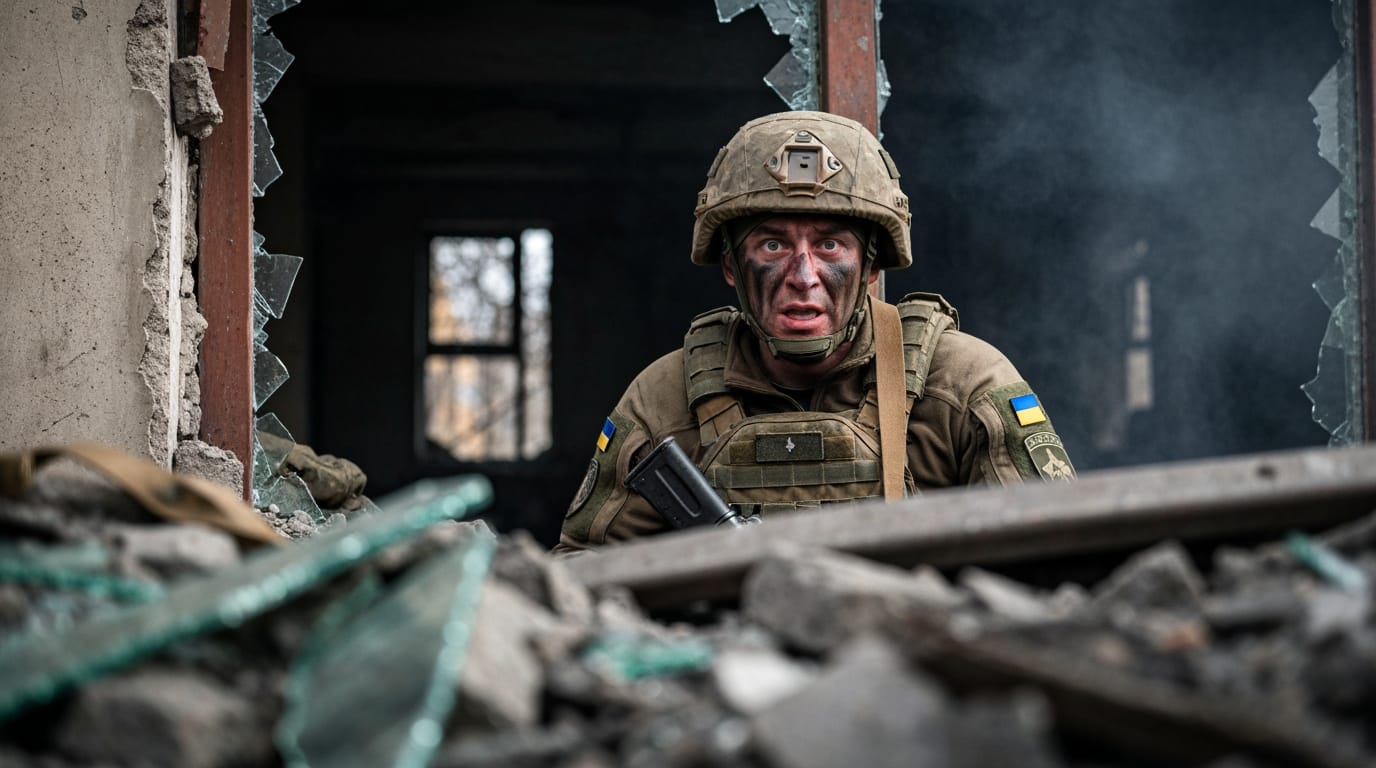
Kyiv has significantly escalated its campaign against critical Russian logistics and supply lines, launching a concerted "Logistics Lockdown" operation that employs an expanded fleet of advanced drones to strike targets across occupied southern Ukraine and deep into Russian territory. This intensified effort, primarily active since spring 2026, aims to systematically degrade Moscow's warfighting capacity by disrupting the flow of fuel, ammunition, and reinforcements, and has already caused demonstrable shortages and operational challenges for Russian forces.
The Escalation of Ukrainian "Middle-Strike" Operations
In a strategic shift, Ukraine has formally introduced what it terms the "Logistics Lockdown" campaign, focusing on "middle-strike" drone operations that target Russian assets roughly 50 to 150 kilometers behind the front lines. This initiative, officially launched in late May 2026, represents a substantial increase in Ukrainian offensive capabilities and intent. The volume of mid-range strike assets contracted by Ukraine in 2026 has seen a fivefold increase compared to the previous year, signaling a major boost in operational capacity. Ukrainian forces have maintained a high tempo of attacks, with an estimated daily average of 90 air strikes against Russian oil production, transport, and processing infrastructure in April 2026, pushing Russian oil processing to its lowest levels since 2009. By mid-May 2026, total unique hits on Russian targets were reportedly reaching over 2,000 strikes each day.
The targets of this expanded drone campaign are diverse and strategically vital to the Russian war effort. They include a wide array of fuel infrastructure, such as refineries, storage sites, pumping stations, and fuel trucks, as well as critical roads, logistics hubs, air defense systems, ammunition depots, command posts, and military vehicles. This tactical shift indicates a move beyond solely targeting deep-seated oil refineries to also disrupting the immediate logistical network supporting Russian forces closer to the front.
Significant Disruptions in Occupied Territories and Beyond
The impact of these sustained strikes has been particularly acute in Russian-occupied Crimea and southern Ukraine. By late May 2026, Crimea began experiencing severe fuel shortages, with gas stations limiting sales to 20 liters per vehicle, and many running out of supply entirely. Russia's Energy Ministry has publicly acknowledged that mounting Ukrainian drone attacks on oil refineries and energy infrastructure are responsible for these difficulties in Crimea and parts of southern Russia.
Key transportation arteries, crucial for supplying Russian forces, have also been heavily targeted. The R-280 "Novorossiya" highway and the M-14 Rostov-Crimea highway, which serve as primary land routes connecting mainland Russia to occupied Crimea and southern Ukrainian territories, have experienced significant disruptions. Robert Brovdi, commander of Ukraine's Unmanned Systems Forces, stated that cargo traffic along one such route, through Mariupol, Berdiansk, and Melitopol, had fallen by 71% within two weeks due to Ukrainian strikes. This disruption led Russian occupation officials to reportedly ban military cargo traffic on these crucial highways starting June 7. The Chonhar Bridge, a critical crossing connecting occupied Crimea with Russian-controlled Kherson Oblast, has been struck multiple times, including on June 7 and June 9, further complicating Russian logistics.
Beyond the occupied territories, Ukrainian forces have also demonstrated an enhanced ability to strike deep inside Russia. On June 10, a Ukrainian drone strike reportedly set ablaze the Kuybyshevskiy oil refinery in Samara, approximately 800 kilometers (500 miles) from the Ukrainian border. Simultaneously, a manufacturing facility in Cheboksary, located about 1,000 kilometers (620 miles) from the border and known for supplying Russia's defense industry with components for drones and missiles, was reportedly hit by missiles. Additionally, the Vtorovo oil pumping station in Russia's Vladimir Oblast has been targeted. These deep strikes underscore Ukraine's expanding reach and its intent to diminish Russia's ability to sustain its war efforts by hitting its military-industrial complex.
The Evolving Arsenal and Strategic Intent
Ukraine's success in these "middle-strike" operations is rooted in an evolving and increasingly sophisticated arsenal, primarily drones. Ukrainian forces are deploying a variety of unmanned aerial vehicles, including FPV drones, Behemoth drones, and the powerful American-made Hornet, often augmented with machine vision AI. The autonomy provided by AI allows these drones to recognize and lock onto Russian vehicles, making them more resistant to jamming and highly effective against mobile targets such as fuel tankers and supply trucks. This expanded drone capability is further bolstered by international cooperation, such as a €248 million ($293 million) Dutch investment announced in April 2026 for joint drone production.
The strategic intent behind this "Logistics Lockdown" is clear: to cripple Russian offensive capabilities and to shape the battlefield for future Ukrainian operations. By systematically destroying Russian air defenses from January to April 2026, Ukraine created a more permissive environment for its drone operations, allowing for an increased tempo of strikes against logistics. Ukrainian President Volodymyr Zelenskyy, in an April 29 statement, emphasized the priority of "middle strikes" to "further increase pressure on the Russians behind the front line and deprive them of the ability to conduct active assault operations". Military analysts have suggested that this interdiction campaign is becoming a defining feature of this phase of the war, potentially setting conditions for a larger breakthrough operation in the south, drawing comparisons to the Kherson campaign in 2022. Looking further ahead, Ukraine is also planning to complete the development and begin serial production of domestically produced ballistic and cruise missiles with ranges up to 2,000 kilometers, which, combined with unmanned systems, would create a balanced long-range strike system.
Russian Challenges and Internal Reactions
The intensified Ukrainian strikes have presented significant challenges for Russian forces and elicited candid admissions from Moscow. Russia's Energy Ministry acknowledged that the drone attacks are indeed responsible for the recent fuel shortages in Crimea and other southern regions, leading to the establishment of an "industry-wide task force" to ensure the stable operation of the energy sector.
In response to the growing threat, Russian forces have reportedly resorted to measures such as rerouting convoys and attempting to disguise military vehicles as civilian transport by changing colors and coverings. There are also indications that Russia may be withdrawing forces from certain vulnerable areas, with reports suggesting the Russian military command is pulling troops from the Kinburn Spit in Mykolaiv Oblast, as Ukrainian intermediate-range strikes have made defenses there increasingly untenable.
Internally, the ongoing success of Ukraine's drone campaign has triggered significant discontent within Russia's pro-war online community, often referred to as "milbloggers." These voices have openly expressed alarm and even "panic" over the disruptions to logistics, with some turning their criticism towards the Kremlin's military leadership for failing to adequately counter Ukrainian tactics. This growing dissent highlights the psychological and operational pressure that Ukraine's "Logistics Lockdown" is exerting on the Russian war machine.
Conclusion
Kyiv's concerted campaign against Russian supply lines represents a significant escalation in its efforts to gain a strategic advantage in the ongoing conflict. By systematically targeting logistics at various depths, from immediate front-line support to distant industrial facilities, Ukraine is aiming to sever the arteries feeding Russia's war machine. This "Logistics Lockdown," driven by an expanding and increasingly sophisticated drone arsenal, seeks to degrade Russian offensive capabilities and shape the battlefield for potential future operations. The acknowledged disruptions, particularly the acute fuel shortages in Crimea, and the growing internal dissent within Russia underscore the mounting pressure these strikes are placing on Moscow's ability to sustain its operations. The coming months will reveal the full extent of this campaign's impact and its ultimate influence on the dynamics of the war.


