Ukraine's Unyielding Resolve: A Nation Enters Fifth Year of War
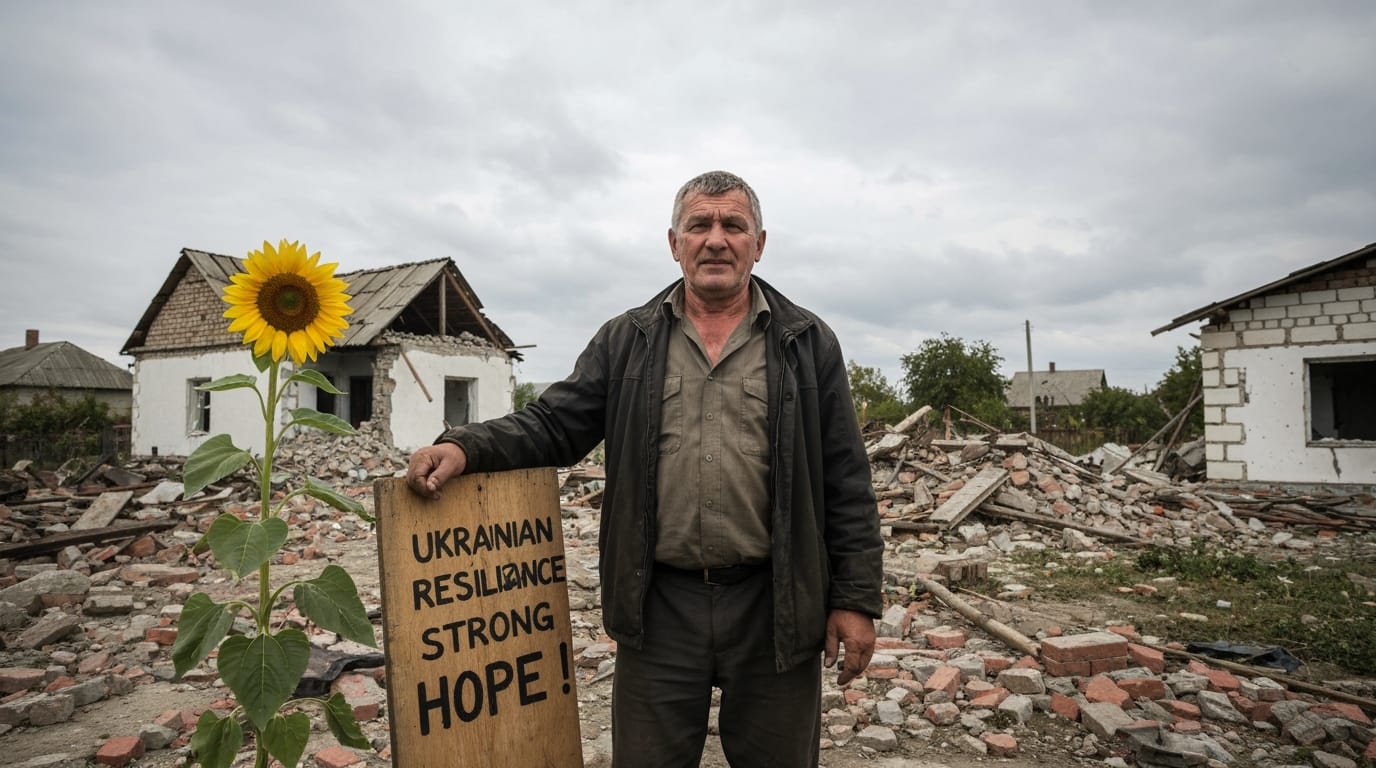
As the full-scale Russian invasion of Ukraine grinds into its fifth year, the nation continues to demonstrate extraordinary resilience across military, civilian, and economic fronts, even as the human and material costs of the prolonged conflict escalate dramatically. The February 24, 2022, invasion shattered a fragile peace, yet Ukraine has defied initial expectations, transforming into a formidable military power and fostering a deep sense of national unity. However, this tenacity comes at an immense price, marked by a deepening humanitarian crisis, significant infrastructure damage, and an uncertain path to a just and lasting peace.
Escalating Human Toll and Humanitarian Crisis
The prolonged conflict has exacted a devastating human toll, with civilian casualties reaching alarming levels. The year 2025 was recorded as the deadliest for civilians since the onset of the full-scale war, with the UN Human Rights Monitoring Mission in Ukraine (HRMMU) reporting 2,514 civilian deaths and 12,142 injuries. These figures represent a 31 percent increase from 2024 and a 70 percent rise compared to 2023. Verified United Nations figures indicate at least 15,000 civilian deaths and over 41,000 injuries since February 2022.
Mass displacement remains a critical issue, with relentless attacks forcing millions from their homes. Approximately 6.9 million refugees from Ukraine have been registered worldwide, and more than 10 million people have been displaced in total, including 3.7 million internally displaced persons. Children bear a disproportionate burden, with nearly 2.6 million displaced, including 1.8 million living as refugees outside the country. Attacks on Ukraine's energy grid have become a brutal tactic, resulting in widespread loss of power, heat, and water, particularly during harsh winter months. Seventy percent of the nation's energy facilities were hit in a twelve-month period, leading to emergency power cuts and raising concerns about hypothermia-related deaths. The health system is under severe strain, with over 2,872 verified attacks on healthcare facilities, and 72% of the population reporting anxiety, depression, or related mental health issues.
Unwavering Defense and Military Innovation
Despite facing a numerically superior adversary, Ukraine's armed forces have demonstrated remarkable resilience and strategic innovation. They have successfully denied Moscow a decisive victory on the battlefield. The Ukrainian military has been described as "the most battle-hardened in Europe" and has transformed into a formidable fighting force, effectively blunting multiple Russian offensives. A key aspect of this evolution is Ukraine's emergence as a world pioneer in drone warfare, operating one of the largest and most diverse drone fleets globally. This technological edge has allowed Ukraine to inflict significant damage, including decimating the Russian Black Sea Fleet and conducting long-range drone and missile strikes deep inside Russian territory.
Initial Russian expectations of a swift victory were thwarted by the unexpected scale of popular resistance and the Ukrainian military's adaptive tactics. While Russia continues to hold approximately 20% of Ukrainian territory, military analysts suggest that at the current pace, conquering the country outright would take decades. However, sustaining this defense requires ongoing international commitment, as Ukraine faces challenges with its shrinking population and limited domestic capacity to produce key weapons, such as air-defense interceptors.
Economic Endurance Amidst Devastation
The economic impact of the war on Ukraine is profound, yet the nation's economy has shown surprising resilience. In 2023, Ukraine's GDP expanded by 11.9%, followed by an additional 5.3% increase in 2024, after an initial decline of nearly 30% in 2022. However, economic growth for 2025 is projected to be below 2%, as the economy settles into a slower growth path with larger fiscal and current account imbalances due to the war.
International financial support remains crucial. The International Monetary Fund (IMF) is reviewing an $8.1 billion lending program designed to help Kyiv maintain economic stability and public spending as the war continues. This new program would replace an existing $15.5 billion IMF facility. Ukraine faces an estimated budget shortfall of nearly $140 billion in the coming years. The cost of reconstruction is staggering, with previous estimates at $524 billion, and experts anticipate a significant increase due to continued attacks on infrastructure.
Meanwhile, Russia's war economy also faces immense structural costs. An estimated 1.2 million Russian casualties have created a generational labor deficit, and an annual military expenditure of €250 billion is cannibalizing the civilian economy. Despite Moscow's efforts to transition to a war economy, sanctions are reportedly biting harder, restricting long-term capital flow and leading to fiscal problems and potential recession.
Global Dynamics and the Search for Peace
Diplomatically, Ukraine has secured strong political, military, and financial backing from most of Europe and North America. However, the picture is more complex beyond the Euro-Atlantic space, where Ukraine has often encountered cautious engagement rather than clear political alignment in parts of Africa, Asia, and Latin America.
Prospects for a negotiated peace settlement are currently described as "frozen" by analysts, largely due to Moscow's unwillingness to reconsider its war aims and engage in good-faith negotiations. Former US diplomats and analysts suggest that meaningful talks would require a fundamental shift in the Kremlin's incentives, such as intensified international pressure or a reduced capacity to sustain military operations. Ukrainian President Volodymyr Zelenskyy has criticized Russia for attempting to delay progress in negotiations and emphasized that any deal must respect Ukraine's sovereignty and internationally recognized borders. The perception among many Ukrainians and observers is that Russia is not ready for a fair and lasting peace, evidenced by militarization, glorification of war, and dehumanization of Ukrainians.
Concerns also linger about the sustainability of Western pledges to support Ukraine "as long as it takes," particularly given Ukraine's demographic challenges and the need for deeper commitments in weapons production. The war also risks becoming normalized in international politics, overshadowed by other global crises, potentially reducing the reputational costs of neutrality for some nations.
The Enduring Spirit of Defiance
Four years into the full-scale invasion, the spirit of the Ukrainian people remains a cornerstone of the nation's resilience. Despite daily attacks, society continues to function, adapting to the harsh realities of war. There is an extraordinary determination among Ukrainians to carry on with life, with people displaying immense courage and mutual support. As one human rights lawyer reflected, Ukrainians have grown accustomed to war not as something that weakens them, but as something that makes them stronger, stripping away illusions and enabling clearer risk management. This collective defiance fuels the belief that Ukraine will not only survive but will emerge stronger, modernized, and firmly integrated into the European family. The ongoing struggle is not merely for territory but for the principles of sovereignty, self-determination, and justice, which many Ukrainians see as central to their future and to the broader international legal order.
The fifth year of the war heralds continued challenges, but also reinforces the narrative of a nation's steadfast determination to defend its independence and rebuild for a future free from aggression.


