Ukrainian Children Forcibly Sent to North Korea for 'Re-education,' Sparking Global Outcry
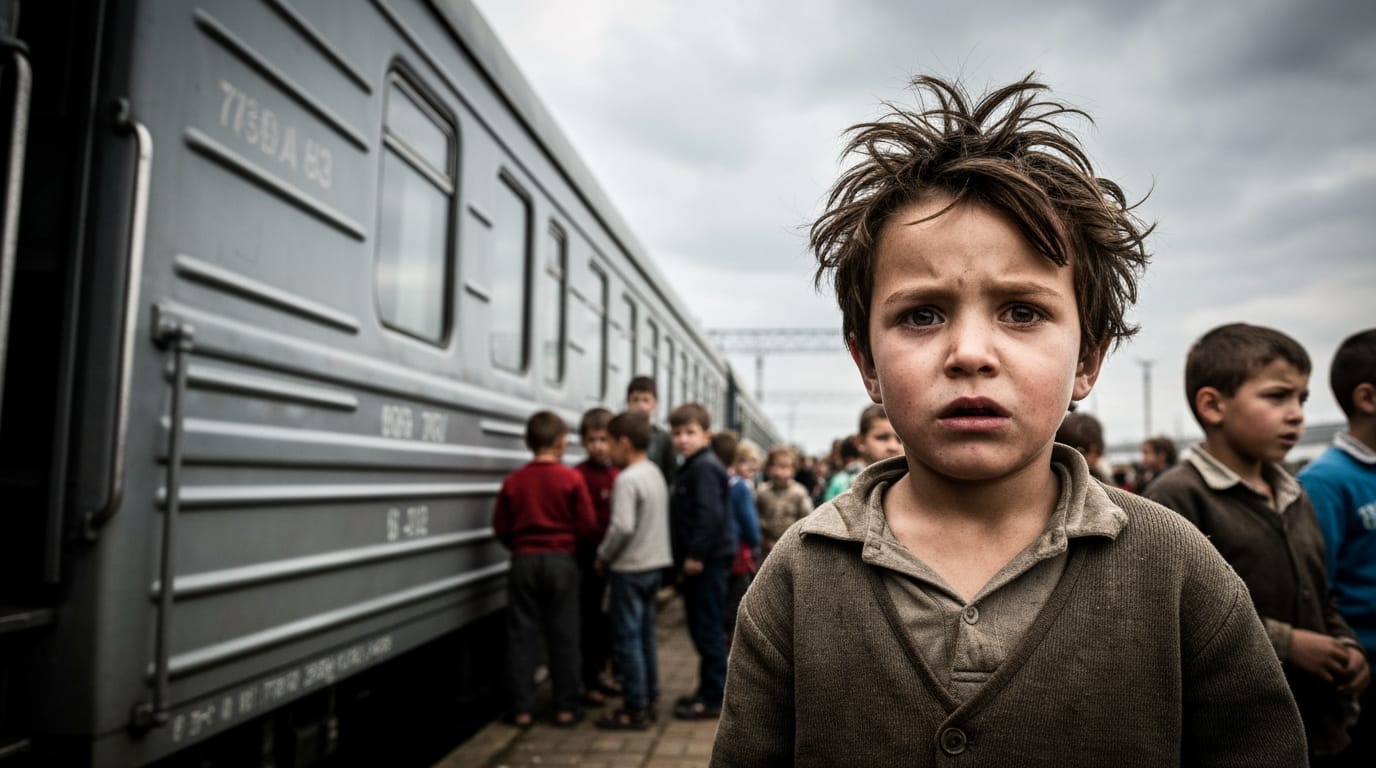
A disturbing new dimension to Russia's war in Ukraine has emerged with credible reports indicating that Ukrainian children, forcibly removed from occupied territories, are now being sent to "re-education" camps in North Korea. This unprecedented development, revealed in testimony before the U.S. Senate, has ignited international outrage and intensified scrutiny on the alleged war crimes committed against Ukrainian minors, further highlighting the deepening alliance between Moscow and Pyongyang.
Unprecedented Transfers to a Secluded Nation
New evidence presented to the U.S. Senate on December 3rd by Kateryna Rashevska, an international justice expert at Ukraine's Regional Center for Human Rights, details the alarming transfer of Ukrainian children thousands of kilometers from their homes to North Korea. Rashevska's testimony specified that at least two children, 12-year-old Mysha from occupied Donetsk and 16-year-old Liza from occupied Simferopol in Crimea, have been identified at the Songdowon camp on North Korea's eastern coast. This camp, near the port city of Wonsan, is reportedly a site where these children are subjected to "militarization and Russification" and indoctrination with anti-American and anti-Japanese ideologies. They are reportedly taught to "destroy Japanese militarists" and introduced to North Korean veterans. The sheer distance and the nature of the alleged indoctrination underscore the extreme measures being employed in these forced relocations.
A Systemic Campaign of Forced Relocation and Indoctrination
The transfers to North Korea appear to be an extension of a broader, well-documented system of forced child relocation orchestrated by Russia since its full-scale invasion of Ukraine in February 2022. The Regional Center for Human Rights has identified 165 facilities where Ukrainian children are reportedly being "militarized and Russified," operating across occupied Ukrainian territories, Russia, Belarus, and now, North Korea. Ukraine's national "Children of War" database currently records at least 19,546 abducted children, although independent experts suggest the true figure could be significantly higher. For instance, the Yale School of Public Health's Humanitarian Research Lab has identified at least 210 facilities within Russia or Russian-held territories that receive Ukrainian children.
Russia maintains that these transfers are humanitarian "evacuations" aimed at ensuring the children's safety and facilitating reunification with their families. However, Ukrainian officials and human rights organizations vehemently reject this assertion, presenting evidence that suggests a deliberate policy of erasing Ukrainian identity and integrating these children into Russian society. Reports indicate that children who resist "Russification" are stigmatized, and they are prohibited from using the Ukrainian language or expressing their ethnic identity. International humanitarian law clearly regulates the evacuation of minors, obligating an occupying power to take all possible steps to reunite children with their families and submit lists of evacuated children to the International Committee of the Red Cross. Russia has reportedly failed to adhere to these fundamental principles.
International Condemnation and Legal Ramifications
The revelations have been met with swift and strong condemnation from the international community, building upon existing concerns regarding Russia's treatment of Ukrainian children. The International Criminal Court (ICC) issued arrest warrants in 2023 for Russian President Vladimir Putin and his children's rights commissioner, Maria Lvova-Belova, specifically for their alleged roles in the unlawful deportation and transfer of Ukrainian children to Russian-controlled territory. Under Article 8 of the Rome Statute, such unlawful population transfers constitute a war crime.
Further solidifying the global response, the UN General Assembly formally demanded the immediate return of all deported Ukrainian children, categorizing these transfers as a "grave violation" of international law. A resolution to this effect passed with 91 votes in favor, though 12 nations, including Russia, Belarus, Cuba, Sudan, North Korea, and Eritrea, voted against the measure, and 57 abstained. This overwhelming support for the resolution underscores the widespread international concern and the perceived violation of fundamental human rights and international legal norms. The UN resolution calls for an end to further deportations, family separations, changes in citizenship, adoptions, fostering, and ideological indoctrination.
A Consequence of Deepening Moscow-Pyongyang Alliance
The transfer of Ukrainian children to North Korea signals an increasingly concerning level of cooperation between Moscow and Pyongyang. This development is viewed by human rights experts as evidence of deeper coordination between the two nations. The relationship between Russia and North Korea has seen significant strengthening since the start of the full-scale invasion, extending beyond the humanitarian sphere. In June 2024, North Korea and Russia signed a mutual defense pact, formalizing their growing alignment. Pyongyang has also reportedly supplied weapons to Moscow and deployed North Korean troops to support Russia's war efforts in Ukraine in late 2024. Russian teenagers have reportedly been visiting the Songdowon camp since July of last year, suggesting a pre-existing connection to the facility now housing Ukrainian children. This expansion of cooperation into the forced relocation and indoctrination of children highlights a troubling convergence of strategic interests and disregard for international law between the two regimes.
The alleged transfers to North Korea represent a new and alarming chapter in the ongoing humanitarian crisis stemming from the conflict in Ukraine. The documented cases of children being sent thousands of miles away for re-education underline the scale of the human rights abuses and the profound ethical and legal questions they raise. As international bodies continue to investigate and condemn these actions, the fate of thousands of Ukrainian children remains a critical and urgent concern, demanding sustained global attention and concerted efforts to ensure their safe return and preserve their cultural identity. The complex geopolitical landscape, marked by the deepening alliance between Russia and North Korea, presents significant challenges to accountability and resolution, yet the moral imperative to protect vulnerable minors endures.


