UN Security Council Rebukes Israel Over Escalating West Bank Measures, Citing Annexation Fears

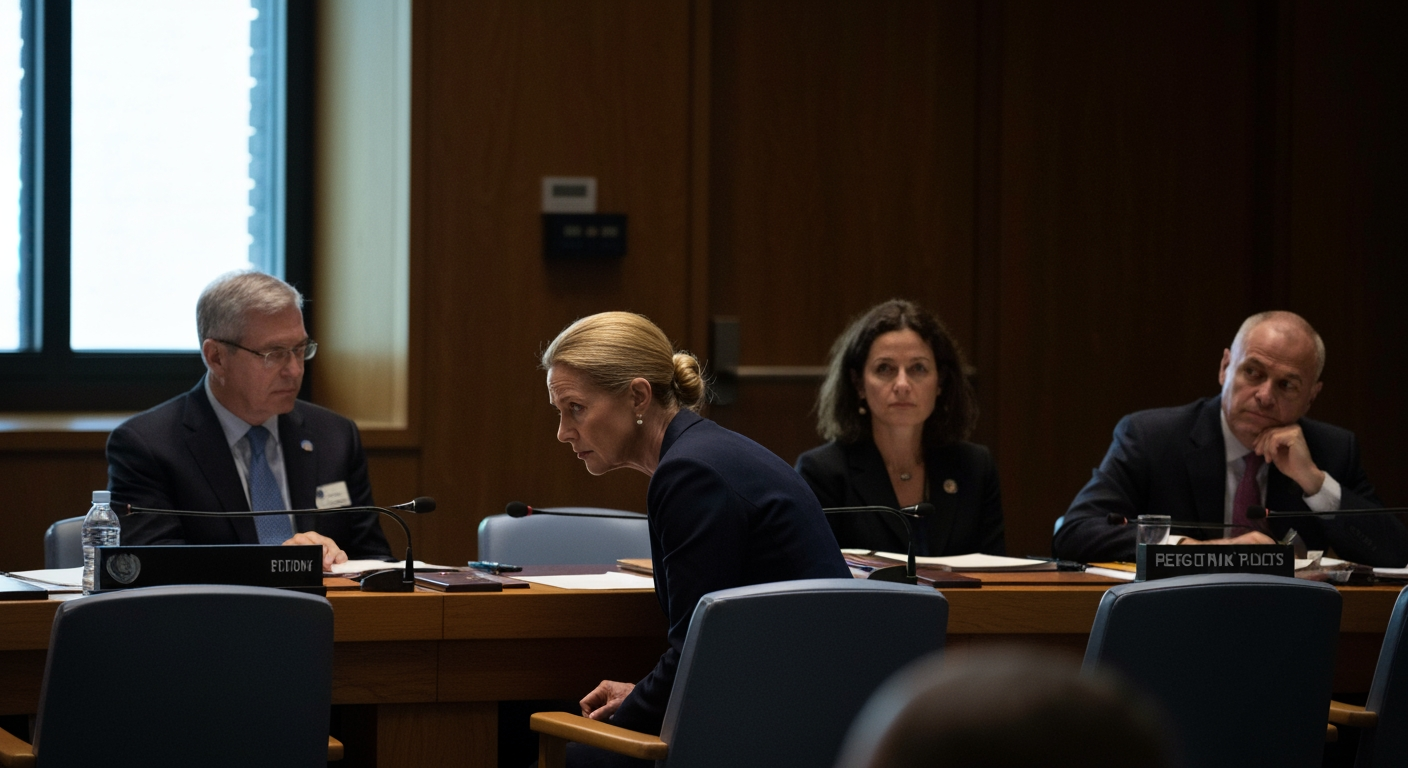
United Nations, New York – The United Nations Security Council, alongside numerous member states and the UN Secretary-General, has delivered a forceful rebuke to Israel over its recent suite of administrative and enforcement measures in the occupied West Bank, warning that the actions dangerously accelerate de facto annexation and imperil the long-sought two-state solution. This wave of international condemnation underscores growing alarm over policies perceived to systematically alter the legal and demographic landscape of Palestinian territory.
The latest outcry comes as Israel's security cabinet has approved a series of significant measures, including repealing limits on Israeli settlers acquiring land in the West Bank, transferring regulatory powers for licensing and construction from Palestinian authorities in certain areas, and initiating a process to register West Bank land as "state property." Critics across the globe view these steps as unilateral moves that not only violate international law but also dismantle the foundations of established peace agreements and significantly undermine the viability of an independent Palestinian state.
Unilateral Actions Spark Global Outcry
The recent Israeli decisions, approved in February 2026, have ignited a fresh wave of international criticism, drawing particular concern from the highest echelons of the United Nations. UN Secretary-General António Guterres explicitly warned that these new measures in the occupied West Bank violate international law and urged Israel to halt them, emphasizing the two-state solution as the "only path to lasting peace." His concerns were echoed by UN High Commissioner for Human Rights Volker Türk.
In a powerful display of collective disapproval, the UN missions for 85 member states issued a joint statement condemning Israel's expanding control over the West Bank, characterizing it as amounting to de facto annexation of Palestinian territory. The statement declared strong opposition to any form of annexation and demanded the immediate reversal of Israel's decisions, asserting that such actions are contrary to Israel's obligations under international law. These diplomatic expressions highlight a deepening international consensus that Israel's settlement policies are pushing the region towards a breaking point.
The new Israeli cabinet decisions are poised to enact sweeping changes to land registration and purchasing mechanisms in the West Bank, effectively allowing Israeli settlers to acquire property in areas previously subject to different legal restrictions. Furthermore, the transfer of building permit authority in locales such as the Hebron settlement bloc from Palestinian municipal control to Israel's civil administration is seen as a direct infringement on the Palestinian Authority's administrative powers, which were established under the Oslo Accords. Critics, including the Israeli NGO Peace Now, contend that these moves risk destabilizing the Palestinian Authority and constitute "massive land theft."
Undermining International Law and Peace Prospects
The international community, including numerous UN resolutions and the International Court of Justice (ICJ), consistently holds that Israeli settlements in the occupied Palestinian territories, including East Jerusalem, are illegal under international law. This position is rooted in Article 49 of the Fourth Geneva Convention, which prohibits an occupying power from transferring its own civilian population into occupied territory. An advisory opinion by the ICJ in 2004, and reaffirmed in 2024, explicitly declared Israeli settlements illegal and called on Israel to cease all new settlement activity and end its presence.
The latest Israeli measures are viewed as further entrenching this contested enterprise. Experts argue that repealing Jordanian-era laws governing land ownership and extending Israeli authority into areas meant for Palestinian civil control constitute serious violations of both international law and agreements like the Oslo Accords. Yonatan Mizrachi of Peace Now's Settlement Watch Team underscored that Israel has been violating international law since 1967 and that these recent actions represent a violation of international agreements signed by Israel itself.
The core concern among international observers is that such sustained settlement expansion and the accompanying administrative changes are "dangerously imperiling the viability of the two-state solution." The two-state solution, which envisions an independent Palestinian state alongside Israel based on the 1967 borders, remains the internationally recognized framework for peace. However, the continuous expansion of settlements effectively fragments Palestinian territory into an "archipelago of enclaves," making the establishment of a contiguous and sovereign Palestinian state increasingly difficult, if not impossible.
Intensifying Tensions and Humanitarian Strain
Beyond the legal and diplomatic ramifications, the accelerating settlement activity and associated policies contribute to a volatile environment on the ground. Reports indicate an alarming rate of violence in the occupied West Bank, including East Jerusalem. Settler attacks against Palestinians have reportedly increased in frequency and intensity, serving as an additional tool for displacing Palestinians from their land. These attacks, coupled with the demolition of Palestinian homes and confiscation of land—often under the pretext of lacking Israeli-issued building permits that are nearly impossible for Palestinians to obtain—exacerbate humanitarian concerns and lead to significant displacement.
The weakening of the Palestinian Authority, a direct consequence of Israel's expanded control over Areas A and B of the West Bank, also poses a significant risk to regional stability. The measures, which transfer regulatory powers and ease land acquisition for settlers, undermine the Palestinian Authority's administrative capacity and its ability to govern effectively. This erosion of Palestinian governance could further destabilize an already fragile political landscape, potentially fueling deeper resentment and conflict.
Israel's Stance and the Path Ahead
Israel consistently disputes the international consensus regarding the illegality of its settlements, asserting historical and security claims to the territories. Israeli officials, including Defense Minister Israel Katz and Finance Minister Bezalel Smotrich, have justified the recent decisions as necessary to "remove decades-old barriers, repeal discriminatory Jordanian legislation, and enable accelerated development of settlement on the ground." Prime Minister Benjamin Netanyahu's office has previously rejected UN condemnations as "one-sided" and denying the "historic" rights of the Jewish people to live in their homeland. Some in the Israeli government view these measures as part of a broader strategy to deepen Israel's hold on all parts of the West Bank and thwart the establishment of a future Palestinian state.
Despite Israel's stance, the international community's recent condemnations underscore a widening gap in perspectives and a growing sense of urgency. The UN Security Council has repeatedly called for an immediate and complete cessation of all settlement activities. The persistent disagreement over the legal status of the West Bank and the continuous expansion of settlements remain central obstacles to any meaningful peace negotiations. The current trajectory suggests an enduring stalemate, challenging international diplomacy to find a viable path toward a just and lasting peace for both Israelis and Palestinians. Without a significant shift, the prospects for a two-state solution appear increasingly dim, with profound implications for regional stability and human rights.
Related Articles


Ratko Mladić, "Butcher of Bosnia" and Convicted War Criminal, Dies at 84
THE HAGUE, Netherlands – Ratko Mladić, the former Bosnian Serb military commander known as the "Butcher of Bosnia" and convicted of genocide, war crimes, and crimes against humanity, has died at the age of 84. Serbian...


Long-Awaited 9/11 Mastermind Trial Set for 2028, Decades After Attacks
GUANTANAMO BAY, Cuba – Nearly a quarter-century after the devastating terror attacks of September 11, 2001, a military judge has finally set a trial date for Khalid Sheikh Mohammed, the alleged mastermind behind the...