United Kingdom Grapples with Widespread Racial Unrest as Anti-Immigrant Sentiments Ignite Violence
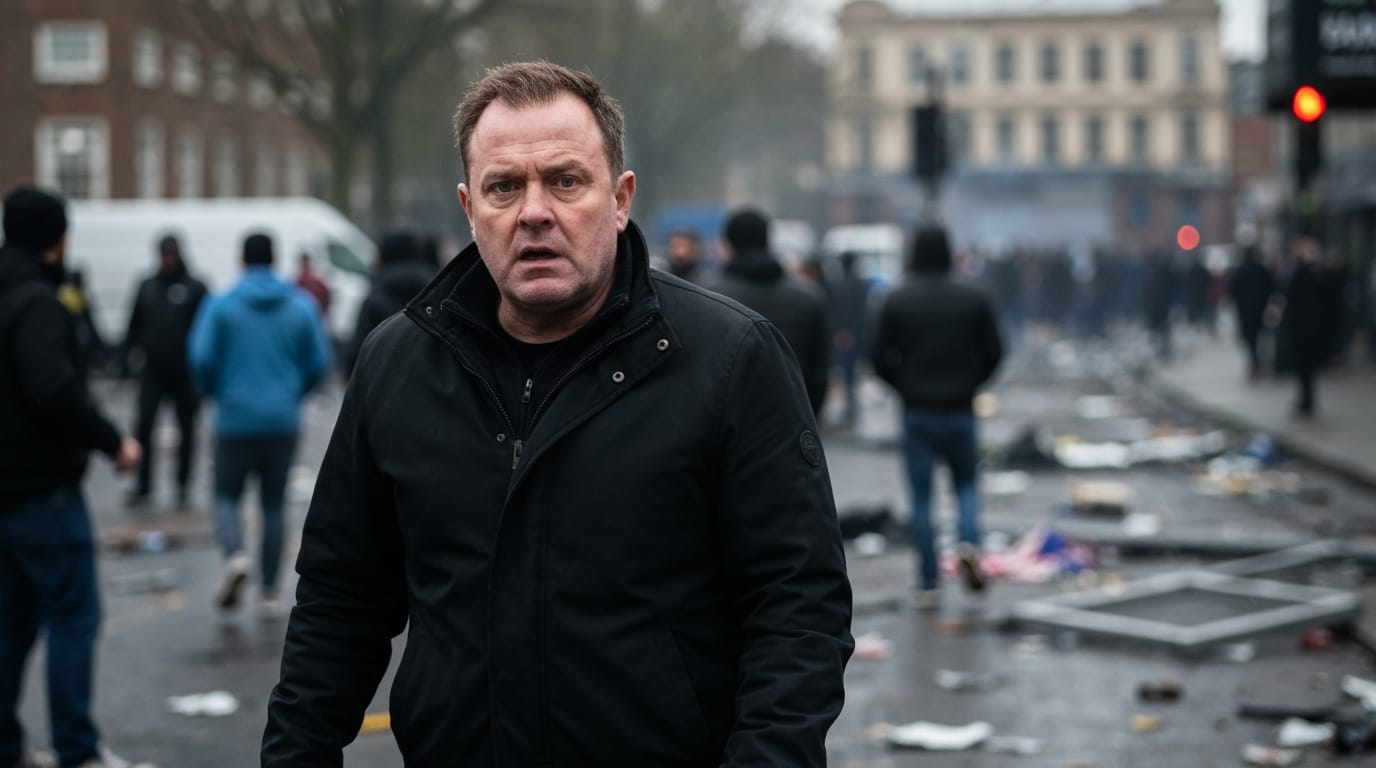
The United Kingdom is once again confronting a wave of intense racial unrest, with recent days witnessing a surge of anti-immigrant violence across Belfast, Northern Ireland, that quickly cascaded into parts of England and Scotland. This latest outbreak, ignited by a knife attack in Belfast, underscores a troubling pattern of escalating tensions, fueled by misinformation, far-right narratives, and deeply entrenched anxieties surrounding immigration and national identity. The events have left communities fractured, prompted condemnation from government officials, and reignited urgent debates over the state of race relations in the nation.
The Immediate Spark: Belfast Erupts in "Racist Thuggery"
The most recent and alarming incidents began on June 10, 2026, in north Belfast, following a knife attack where a Sudanese asylum seeker was charged with attempted murder. Swiftly, anti-immigrant sentiment, amplified through social media channels, transformed localized anger into widespread civil disorder. Masked individuals descended upon predominantly immigrant neighborhoods, setting ablaze homes, vehicles, and a city bus. Witnesses reported rioters, some reportedly shouting "foreigners out," engaging in door-to-door intimidation, forcing families, including Ukrainian refugees, to flee their residences under police protection.
The violence in Belfast was described by Northern Ireland Secretary Hilary Benn as "racist thuggery," a stark acknowledgment of the overtly racial motivation behind the attacks. Police responded with water cannons to disperse rioters, who pelted officers with projectiles, injuring several. The unrest quickly spread beyond Belfast, with reports of protests and violence emerging from other towns in Northern Ireland, and reaching into Scotland and England by nightfall, signaling a broad-based, coordinated nature to the disturbances. The Police Service of Northern Ireland recorded numerous incidents of criminal damage and arson, classifying some as hate crimes, highlighting the targeted nature of the assaults.
A Troubling Continuum: Echoes of 2024 and 2025
The June 2026 events in Belfast are not isolated but rather the latest manifestations of a growing trend of racial and anti-immigrant violence that has plagued the United Kingdom for the past two years. A significant precursor was the widespread unrest that gripped England and Northern Ireland between July 30 and August 5, 2024. These riots were triggered by a mass stabbing in Southport where three children were killed, and were then fueled by false claims circulated by far-right groups and political figures, alleging the perpetrator was a Muslim asylum seeker. This period saw extensive racist attacks, arson, and looting, marking the largest incident of social unrest in England since 2011. By July 2025, over 1,800 arrests had been made in connection with these disturbances, with sentences ranging up to nine years.
The year 2025 continued to see a proliferation of anti-immigration protests across the country, many escalating into violent confrontations. These demonstrations often targeted hotels housing asylum seekers and were frequently organized or attended by prominent far-right organizations such as Reform UK, Britain First, and Patriotic Alternative. These protests resulted in further injuries to police officers and numerous arrests, underscoring the persistent and often volatile nature of anti-immigrant sentiment. Towards the end of 2025, the case of Henry Nowak, an 18-year-old fatally stabbed in Southampton by a man of Sikh faith and Asian descent, became another flashpoint. Police footage of Nowak being handcuffed after the attack sparked outrage and was seized upon by figures like Nigel Farage, who decried a "two-tier policing system" allegedly biased against white people, further inflaming racial tensions and leading to further protests.
The Digital Catalyst and Far-Right Mobilization
A critical factor in the rapid escalation and spread of recent racial unrest has been the pervasive role of online misinformation and the strategic mobilization efforts of far-right groups. In almost every significant incident, false narratives and inflammatory rhetoric have been disseminated across social media platforms, transforming local incidents into national crises. Following the 2024 Southport stabbings, false claims about the perpetrator's identity were widely circulated by high-profile accounts, including that of far-right activist Tommy Robinson. Similarly, the December 2025 Henry Nowak case saw figures like Nigel Farage and Elon Musk weighing in, with Musk reportedly tweeting over 100 times about British politics with a focus on the killing, further stoking division.
Organisations such as the English Defence League, Patriotic Alternative, and Britain First have been instrumental in orchestrating and amplifying these protests, frequently using online platforms to call for action and disseminate their anti-immigrant and Islamophobic agendas. Nick Lowles, chief executive of Hope Not Hate, an organization monitoring extremism, highlighted how these groups exploit local emotions to stir hatred and dehumanize immigrants, creating a reproducible model that succeeds in inflaming public sentiment. The Human Rights Watch's 2025 report noted that misinformation campaigns targeting Muslim and migrant communities fueled incidents of racist, Islamophobic, and anti-migrant violence, often exacerbated by the rhetoric of some opposition parties and an ambivalent attitude from the government.
Living with Fear: Impact on Communities and Escalating Hate Crimes
The human cost of this escalating racial tension is profound, particularly for minority communities and asylum seekers who increasingly live in a state of fear and anxiety. Reports from Northern Ireland during the June 2026 riots described a "genuine sense of fear" among ethnic minority communities, with individuals being stopped in their cars and questioned about their nationality, and even nurses facing intimidation on their way to work. Twasul Mohammed, a Sudanese refugee helping families displaced in the Belfast riots, noted, "Everyone is terrified, we are keeping our kids at home".
Statistics reveal a stark reality of rising hate crimes across the UK. Racially motivated hate crimes consistently represent the highest reported category of hate crime. In the year ending March 2025, racially motivated offenses accounted for over two-thirds (71.12%) of all hate crimes recorded by police in England and Wales, with the overall number of hate crimes more than tripling since March 2013. August 2024, following the Southport stabbings and associated disorder, marked the single highest monthly level of race incidents ever recorded in Northern Ireland. Beyond the headline figures, individual incidents paint a grim picture, such as the attack on two Muslim men in York with tennis rackets and sticks by a group of balaclava-clad youths, or the assault on Sikh cab drivers in Wolverhampton. These incidents contribute to a pervasive sense of insecurity among minority groups, including long-standing UK citizens from diverse ethnic backgrounds.
Conclusion: A Nation Divided and a Call for Cohesion
The United Kingdom stands at a critical juncture, navigating deeply divisive issues of race, immigration, and national identity that have manifested in violent unrest across its towns and cities. From the far-right mobilizations following the Southport stabbings in 2024 to the recent "racist thuggery" witnessed in Belfast in June 2026, a clear pattern of exploitation of local incidents by extremist narratives has emerged. The ubiquitous nature of social media has proven to be both a platform for community organization and a fertile ground for disinformation, accelerating the spread of anger and hostility.
The escalating racial tensions underscore not only the immediate need for robust law enforcement responses to curb violence but also a deeper societal imperative for introspection. Addressing the root causes involves confronting the spread of misinformation, challenging xenophobic political rhetoric, and fostering greater understanding and integration within diverse communities. The repeated outbreaks of violence highlight the urgent need for a comprehensive national dialogue and strategies that move beyond mere "law and order" approaches, aiming instead to build genuine social cohesion and protect all residents from the specter of racial hatred and unrest.


