US Delegation Confronts "Wrecking-Ball Politics" at Pivotal Munich Security Conference
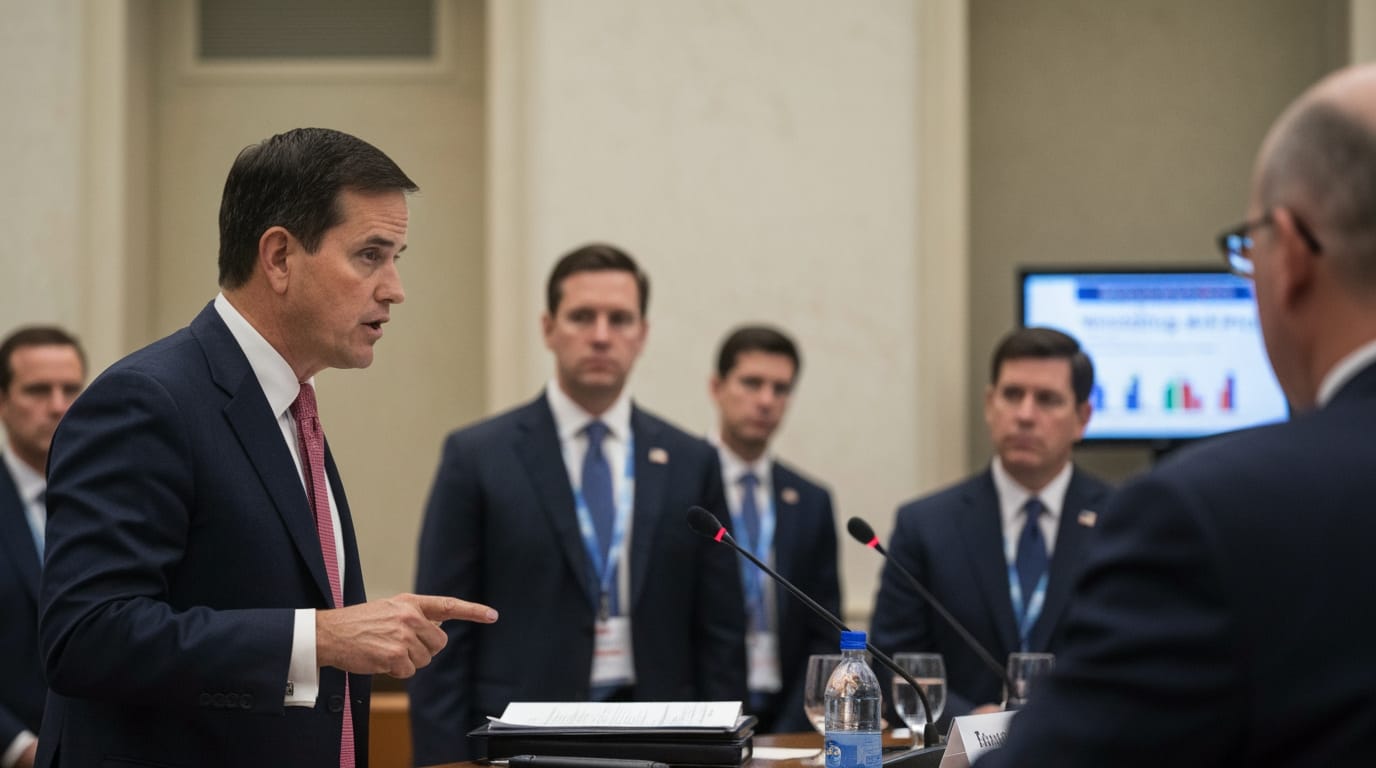
MUNICH, Germany – The annual Munich Security Conference (MSC) in February 2025 served as a critical juncture for transatlantic relations, as a high-profile U.S. delegation, featuring Secretary of State Marco Rubio, navigated a landscape increasingly defined by what some observers term "wrecking-ball politics." The American presence, led by Vice President J.D. Vance, conveyed a foreign policy approach that signaled a significant departure from established norms, prompting allies to grapple with a new era of international engagement.
The U.S. delegation to the 2025 MSC, a key forum for global security policy since 1963, drew considerable attention. Vice President J.D. Vance headed the American contingent, which included Secretary of State Marco Rubio and Director of National Intelligence Tulsi Gabbard, among other senior officials and congressional representatives. Their participation unfolded amidst a global environment marked by persistent conflict in Ukraine and growing uncertainties about the future of traditional alliances. Vice President Vance's address at the conference proved particularly impactful, with several media outlets describing it as a "wrecking ball" to the decades-long status quo of transatlantic relations. His remarks reportedly focused on "the threat from within" Europe, criticizing what he perceived as European leaders' suppression of free speech and their handling of immigration, rather than prioritizing traditional adversaries like Russia or China.
The term "wrecking-ball politics" has increasingly become a descriptor for a foreign policy doctrine characterized by a willingness to dismantle existing international agreements, institutions, and diplomatic norms in pursuit of national interests or perceived ideological purity. This approach, widely associated with the Trump administration, suggests a preference for unilateral action and transactional diplomacy over multilateral cooperation. The Munich Security Report, a foundational document for the conference, implicitly acknowledged this challenging era, stating that in an environment of "wrecking-ball politics," alliances require sustained effort to endure. It warned that those who merely observe risk being "entombed" and urged for bold new construction rather than reactive reconstruction of the old order. The report also highlighted a growing European realization that dependence on the U.S. military and accommodating U.S. policies had reached its limits, suggesting a painful awakening to the need for greater European autonomy.
Against this backdrop, the U.S. delegation's message at the 2025 MSC elicited varied reactions and underscored deep concerns among European allies. Discussions at the conference were heavily dominated by the ongoing conflict in Ukraine, yet the administration's stance on European security and potential negotiations with Russia remained a source of confusion for many. Secretary Rubio, in his capacity as Secretary of State, engaged in various meetings, including discussions with Russian counterparts. The stated objective of these engagements was to achieve a "durable lasting peace" in the conflict, one that would prevent future instability in Eastern Europe. Rubio emphasized that achieving an end to the conflict would require concessions from all sides, without predetermining what those might be. This emphasis on concessions, combined with the broader rhetoric from the U.S. delegation, signaled a potentially shifting approach to the conflict, moving away from unequivocal support for Ukraine's maximalist positions.
The implications of this "wrecking-ball" approach extend far beyond immediate policy changes, potentially reshaping the very foundations of global security architecture. The MSC report indicated that Europe was observing the U.S.'s "descent into 'competitive authoritarianism'" with growing apprehension, questioning the resilience of American democracy. This perspective suggests a fundamental divergence in values and priorities that could strain long-standing alliances like NATO. European leaders were urged to consider operating with less reliance on U.S. leadership and to become more assertive in defending their interests. The report highlighted the difficulty of rejecting trade deals or speaking out against violations of sovereignty when heavily dependent on the military assistance of the country enacting such policies. This sentiment points to a strategic imperative for Europe to fortify its own structures and develop more sustainable designs for security, becoming "bold builders" rather than merely reacting to demolition.
The 2025 Munich Security Conference, therefore, did not merely host discussions on global challenges but became a crucible for defining the future of international relations. The presence and pronouncements of the U.S. delegation, particularly Vice President Vance's challenging rhetoric and Secretary Rubio's diplomatic engagements within this new framework, signaled a profound recalibration of American foreign policy. As nations navigate an era where traditional alliances are questioned and international norms are under pressure, the conference underscored the urgent need for a reassessment of strategies and a potential redefinition of global partnerships in the face of an evolving geopolitical landscape.


