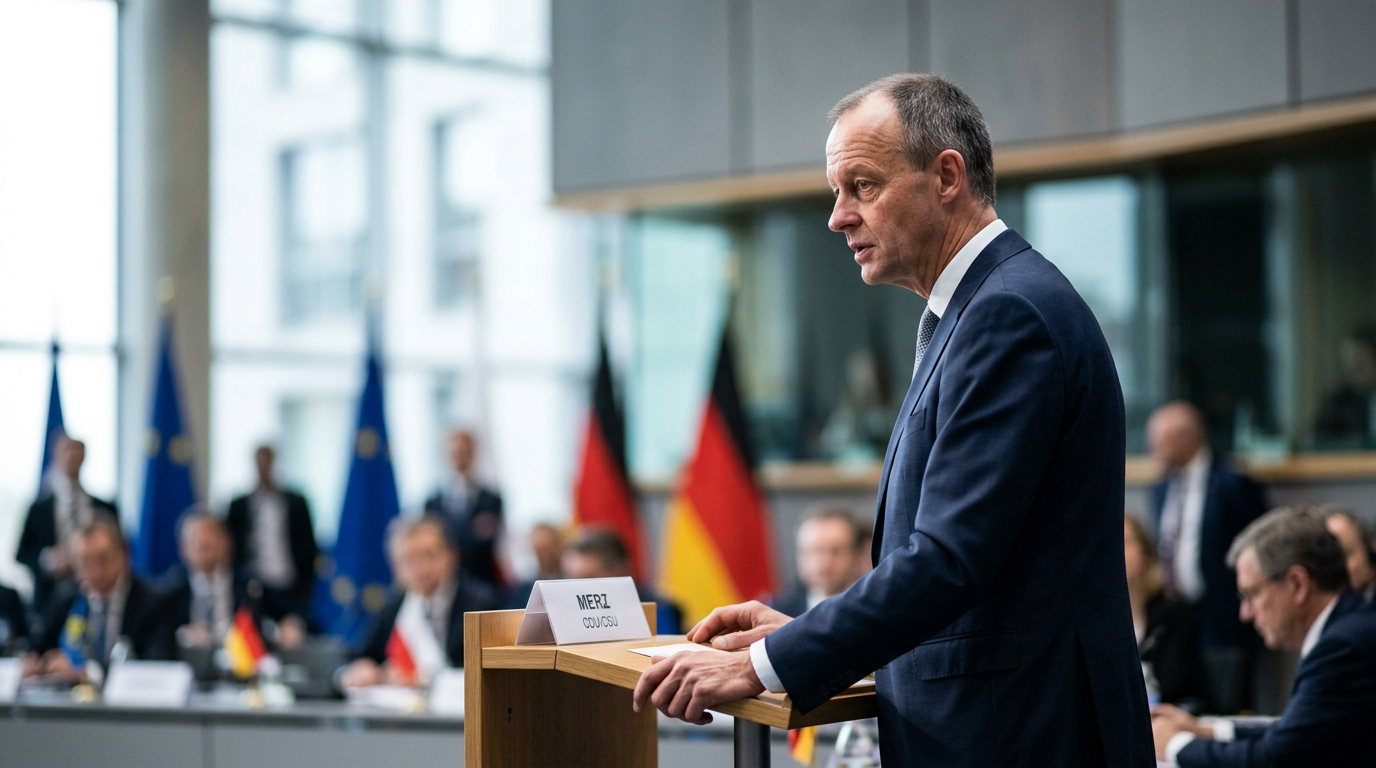
US Escalates Stance Against International Criminal Court with New Sanctions on President, Senior Lawyer

Washington D.C., August 18, 2026 – In a significant escalation of its campaign against the International Criminal Court (ICC), the United States on Tuesday imposed sanctions on the court's president, Tomoko Akane, and a senior trial lawyer, Abdoulaye Seye. The move, announced by Secretary of State Marco Rubio, marks the latest development in a long-standing contentious relationship between Washington and the Hague-based tribunal, further straining international efforts in justice and accountability.
Targeted Sanctions Unveiled
Secretary of State Marco Rubio declared that the sanctions target ICC President Tomoko Akane, a Japanese judge, and Abdoulaye Seye, a Senegalese national and senior trial lawyer. These measures, implemented under a Trump administration executive order from last year, freeze any U.S. assets the individuals may possess and effectively sever their access to the U.S. financial system. Rubio stated that these individuals "have directly engaged in efforts by the ICC to investigate, arrest, detain, or prosecute officials whose government has not consented to ICC jurisdiction." The specific actions cited include the ICC's past probe into U.S. troops in Afghanistan and its recent arrest warrants for Israeli Prime Minister Benjamin Netanyahu and former Israeli Defense Minister Yoav Gallant. The ICC condemned the sanctions, asserting that such actions against judicial officials undermine the rule of law and place the international legal order at risk.
A Deep-Rooted History of Antagonism
The United States has consistently maintained a contentious relationship with the ICC, an institution established in 2002 to prosecute war crimes, genocide, and crimes against humanity. Unlike more than 120 member countries, the U.S. is not a signatory to the Rome Statute, the treaty that established the court, and has long voiced concerns about its jurisdiction over non-member states' personnel. The current administration's hostility toward the ICC has intensified significantly in recent years.
The Trump administration's "campaign to systematically disable" the court, as described by Secretary Rubio, solidified with President Donald Trump's February 2025 executive order. This order declared a "national emergency" in response to what the administration termed the ICC's "illegitimate and baseless actions targeting America and our close ally Israel." Prior to this, in September 2020, the U.S. had already imposed sanctions on then-ICC Prosecutor Fatou Bensouda and another senior official, Phakiso Mochochoko, over the court's investigation into alleged war crimes by U.S. personnel in Afghanistan. Those sanctions, which included asset freezes and visa restrictions, were later lifted by the Biden administration in April 2021, which opted for engagement over sanctions. However, the Biden administration continued to express strong disagreement with the ICC's actions regarding Afghanistan and Palestinian situations. The re-imposition of sanctions under the current Trump administration signals a return to a confrontational stance.
Implications for International Justice and Diplomacy
These latest sanctions threaten to further destabilize the fragile ecosystem of international justice. ICC President Akane had previously warned in December that U.S. sanctions could "rapidly undermine the court's operations in all situations and cases, and jeopardize its very existence." Critics of the U.S. policy argue that such punitive measures are an unprecedented assault on an international judicial body and its officials, interfering with the independent exercise of judicial functions. Human rights organizations have labeled the use of sanctions against ICC officials a "stunning perversion" of a tool intended for rights abusers and kleptocrats.
The move also places the U.S. in opposition to many of its traditional allies who are strong supporters of the ICC and international law. While the U.S. government maintains its right to protect its personnel from what it views as politically motivated prosecutions, the international community largely sees the ICC as a crucial mechanism for holding perpetrators of mass atrocities accountable. The targeting of judicial figures directly involved in the court's leadership and prosecutorial efforts could deter future talent and cripple the court's capacity to deliver justice.
U.S. Justification: Sovereignty and Protection
The U.S. government has consistently framed its actions as necessary to protect its sovereignty and shield its service members and allies from what it considers unwarranted investigations. Secretary Rubio reiterated the administration's stance, calling the ICC a "corrupt and fatally politicized supranational court that has maliciously abused its authority and exceeded its mandate." He emphasized that the U.S. "will not tolerate its assault on state sovereignty."
The core of the U.S. argument rests on the principle that the ICC lacks jurisdiction over U.S. citizens because the U.S. has not ratified the Rome Statute. This position has been a consistent feature of U.S. foreign policy, with administrations, including the George W. Bush administration, taking extensive measures to guard against the court's assertion of power over U.S. personnel.
An Uncertain Future for Global Accountability
The imposition of sanctions on the ICC President and a senior lawyer marks a deepening rift between the U.S. and the international body dedicated to prosecuting the most heinous crimes. This latest action underscores the Trump administration's unwavering commitment to challenging what it perceives as the ICC's overreach, particularly concerning investigations into U.S. and Israeli actions. As the court vows to continue its work despite these pressures, the confrontation raises profound questions about the future efficacy of international legal institutions and the global pursuit of justice for victims of atrocities. The immediate future of the ICC, already operating under scrutiny and facing resource challenges, now appears more precarious than ever amidst this high-stakes diplomatic and legal standoff.
Related Articles

Ratko Mladić, "Butcher of Bosnia" and Convicted War Criminal, Dies at 84
THE HAGUE, Netherlands – Ratko Mladić, the former Bosnian Serb military commander known as the "Butcher of Bosnia" and convicted of genocide, war crimes, and crimes against humanity, has died at the age of 84. Serbian...

Long-Awaited 9/11 Mastermind Trial Set for 2028, Decades After Attacks
GUANTANAMO BAY, Cuba – Nearly a quarter-century after the devastating terror attacks of September 11, 2001, a military judge has finally set a trial date for Khalid Sheikh Mohammed, the alleged mastermind behind the...