US Intensifies Iran Campaign, Trump Reinstates Naval Blockade Amid Collapsed Truce
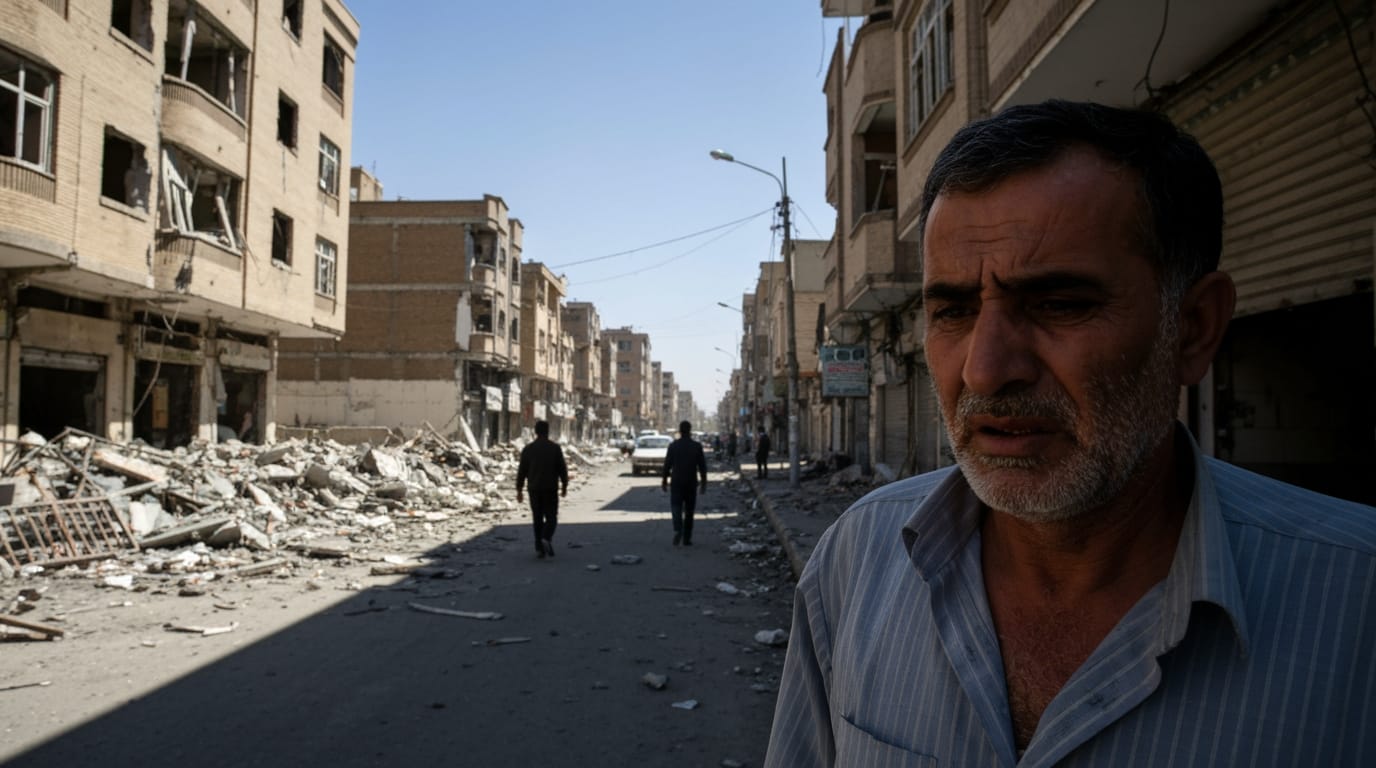
WASHINGTON D.C. – The United States has dramatically escalated its military pressure on Iran, resuming a comprehensive naval blockade of Iranian ports and unleashing a new wave of air and missile strikes across the Islamic Republic. The severe actions, announced by President Donald Trump on Monday, July 13, 2026, follow the swift collapse of a fragile ceasefire agreement established just weeks prior, plunging the region deeper into a conflict that has been raging since late February. The Strait of Hormuz, a critical global chokepoint, has once again become the epicenter of this intensified confrontation.
The renewed hostilities come as U.S. and Israeli forces continue "Operation Epic Fury," a sustained campaign targeting Iranian military assets and leadership that commenced on February 28, 2026. President Trump has formally notified Congress of the resumption of military action, declaring an interim deal with Tehran as "over" and signaling a firm commitment to degrading Iran's capabilities and ensuring the free flow of global commerce through the Strait of Hormuz.
Renewed Hostilities and Expanding US Military Operations
The ceasefire, codified in a Memorandum of Understanding (MoU) signed on June 17, 2026, by President Trump and Iranian President Masoud Pezeshkian, aimed to halt hostilities and initiate a 60-day framework for sanctions relief and nuclear talks. However, hopes for de-escalation were shattered around July 8 when the interim agreement collapsed. Iran allegedly struck multiple commercial ships in the Strait of Hormuz, prompting immediate U.S. retaliatory strikes on Iranian territory.
In the days leading up to the blockade's reinstatement, U.S. Central Command (CENTCOM) reported conducting extensive military operations, including approximately 140 strikes against Iranian military targets on July 12. These actions were a direct response to perceived threats against commercial shipping in the Strait of Hormuz. The strikes targeted a wide array of infrastructure, including missile and drone launch sites, naval assets, ammunition storage facilities, and coastal surveillance systems, according to the U.S. military. In a significant expansion of tactics, U.S. forces reportedly used one-way attack surface drones in combat for the first time on Sunday, striking a submarine and ship-maintenance facility at the Bandar Abbas Naval Base. Fresh explosions were reported across southern and southeastern Iran on Monday, July 13.
The ongoing "2026 Iran war," sparked by joint U.S.-Israeli airstrikes on February 28, 2026, has already seen substantial engagement. The initial onslaught, dubbed "Operation Epic Fury," involved nearly 900 strikes in just 12 hours, targeting Iranian missiles, air defenses, military infrastructure, and leadership, including the reported killing of Supreme Leader Ali Khamenei. The conflict, which the U.S. has characterized as "major combat operations" but not a formal declaration of war, has its roots in escalating tensions over Iran's nuclear program, ballistic missile capabilities, and regional military reach.
The Blockade's Return and the Contested Strait of Hormuz
Effective Tuesday, July 14, at 4 p.m. Eastern Time, the United States has reimposed a naval blockade against Iran. President Trump declared that this "Iranian Blockade" would specifically prevent Iranian ships or their customers from entering or leaving Iranian ports, while ensuring "fair and open use of the Strait" for all other countries. During a previous iteration of the blockade, U.S. warships intercepted or turned around over 140 commercial vessels, resorting to disabling ships' engine rooms in cases of non-compliance.
Adding another contentious layer to maritime control, President Trump announced that the U.S. would impose a 20% fee on all cargo shipments passing through the Strait of Hormuz. Trump asserted that the U.S. would act as the "Guardian of the Hormuz Strait," arguing for compensation for this role. This move contradicts previous U.S. assertions that the strait should remain open to all without tolls, as such fees could violate international norms on freedom of navigation and further escalate tensions. Iran, which has historically claimed full control over the strait and recently declared its closure, swiftly condemned the U.S. actions, with its foreign minister stating that Iran has "always been the guardian" of the waterway. The critical shipping lane, through which a significant portion of global oil and liquefied natural gas shipments pass, remains a central flashpoint, with disruptions impacting energy markets and supply chains worldwide.
Unraveling Diplomacy and Persistent Tensions
The brief period of de-escalation facilitated by the June MoU offered a glimmer of hope amidst months of intensifying conflict. The agreement included conditions such as a cessation of hostilities in Lebanon, an end to Iranian restrictions on the Strait of Hormuz, and a reduction of U.S. military assets in the region, alongside sanctions relief and a commitment to Iran's reconstruction. The U.S. Treasury, on June 22, 2026, issued a 60-day waiver on sanctions related to Iranian oil exports, representing a significant economic concession.
However, the U.S. decision to reimpose the blockade and ramp up strikes effectively rolls back nearly all of Iran's gains under this memorandum. The White House, despite starting the war on February 28, has sought to treat the fighting as separate "chapters," restarting a 60-day clock for congressional permission to engage in hostilities under the War Powers Act, a move that has drawn objections from some members of Congress.
Underlying these immediate events are long-standing tensions between the United States and Iran, stretching back decades. Before the current conflict, immediate concerns revolved around Iran's nuclear program, its ballistic missiles, and its military presence across the Middle East. Attempts to renegotiate the 2015 Joint Comprehensive Plan of Action (JCPOA) in 2025 and early 2026 were unsuccessful. The U.S. had significantly built up its military presence in the Middle East since January 2026, deploying air, naval, and missile defense assets amid escalating tensions. This buildup coincided with widespread anti-government protests in Iran, which saw a brutal crackdown by Iranian security forces.
Regional Repercussions and Global Impact
The resumption of aggressive military and economic measures carries severe regional and global ramifications. Iran has responded to U.S.-Israeli strikes with retaliatory missile and drone attacks targeting U.S. embassies, military installations, and oil infrastructure across the Middle East, including Bahrain, Jordan, Kuwait, Qatar, and the United Arab Emirates. The conflict has also spilled over into Israel, which experienced its own direct exchanges of fire with Iran in 2024 and 2025, and into Lebanon, where Israel launched a military offensive after Hezbollah fired rockets.
The intensified military exchanges, particularly in the Strait of Hormuz, have directly impacted global oil markets, with crude prices rising following renewed strikes. Shipping companies face rerouting or delays, amplifying concerns for energy security and the reliability of supply chains, especially those serving Asia and Europe. The targeting of Iranian infrastructure, including railway bridges and transport corridors vital for trade with China and Russia, marks a new phase of economic warfare. Human casualties have also been reported on both sides, with U.S.-Israeli strikes in February leading to civilian deaths, and Iran reporting fatalities from recent American attacks.
An Uncertain Path Forward
As July 2026 progresses, the conflict between the United States and Iran shows no signs of abatement. The reinstatement of the naval blockade and the continuation of military strikes underscore a commitment by the U.S. administration to a strategy of maximum pressure. The collapse of diplomatic efforts, coupled with Iran's determined response and the direct impact on global commerce, paints a grim picture for regional stability. With both sides demonstrating a willingness to escalate, the international community watches nervously as a full-scale war with widespread humanitarian and economic consequences remains a stark and present danger.


