US Intervention in Venezuela Draws Widespread Condemnation, Deemed Violation of International Law
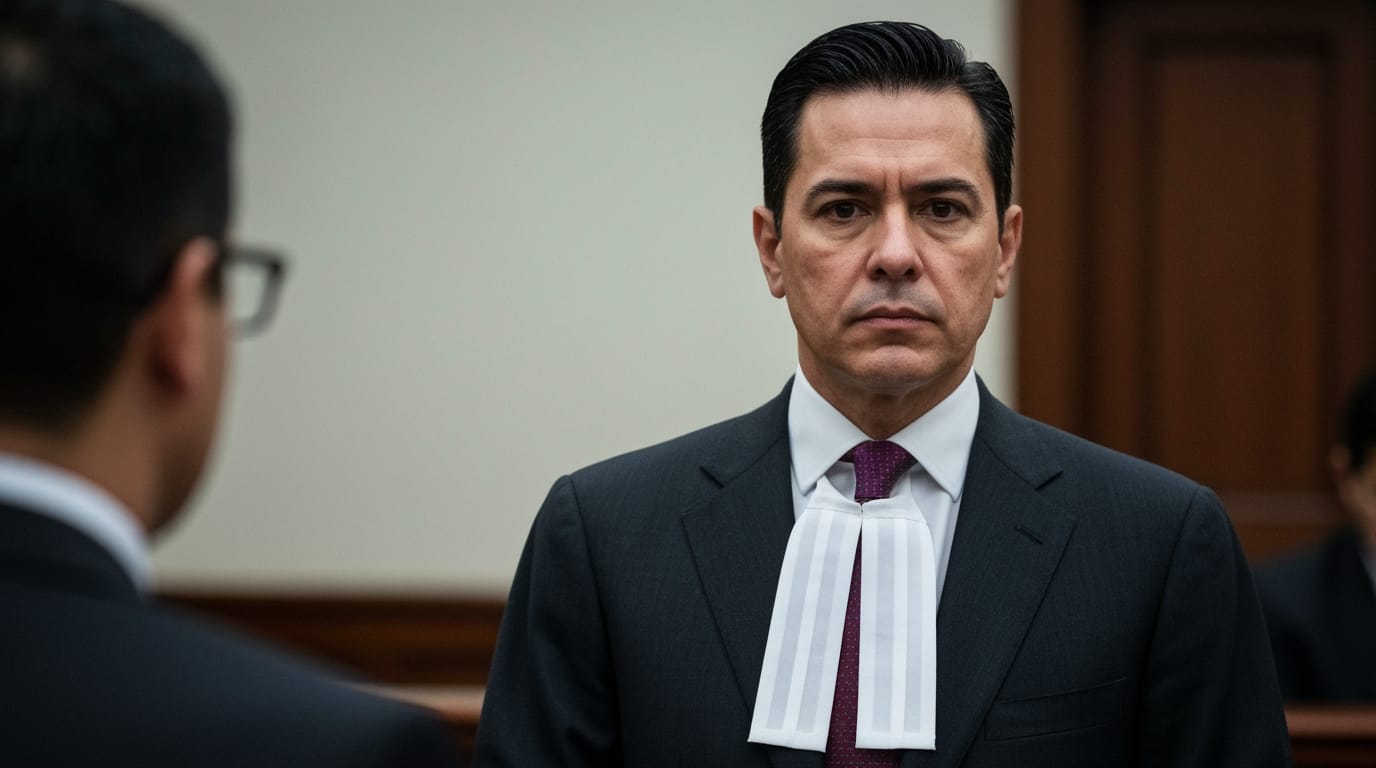
A recent military operation by the United States that led to the capture of Venezuelan President Nicolás Maduro and his wife, Cilia Flores, on January 3rd has ignited a firestorm of international condemnation and prompted legal experts worldwide to declare the action a blatant violation of international law. The audacious move, which included aerial strikes and ground operations in major Venezuelan cities, has been characterized as an illegal act of force and a severe breach of national sovereignty, challenging the foundational principles of the global legal order. The operation culminated in President Donald Trump's assertion that the US would "run the country" on an interim basis, raising further alarm about potential control over Venezuela's vast oil interests and setting a dangerous precedent for international relations.
The Audacious Operation and Its Immediate Aftermath
Early on Saturday, January 3rd, reports emerged of significant military activity in Venezuela, with aerial strikes and covert ground operations impacting Caracas, Miranda, La Guaira, and Aragua. These actions culminated in the apprehension of President Nicolás Maduro and his wife, Cilia Flores, who were subsequently transported to the United States to face drug-related charges. While the US presented the operation as a law enforcement action to capture accused criminals, Secretary of State Marco Rubio indicated that kinetic force was necessary to ensure the safety of US personnel during the arrests. President Trump quickly claimed a "successful large scale strike" and announced that the United States would "run the country" until a "safe, proper and judicious transition" could take place, further stating an intent to control Venezuela's oil interests. Venezuelan officials reported scores of civilians among the killed in the attacks, though specific numbers remain unconfirmed. The sudden and forceful removal of a sitting head of state, irrespective of the criticisms surrounding his governance, immediately triggered a global outcry regarding the legality and implications of such an intervention.
International Legal Framework Under Fire
The US operation in Venezuela has been widely criticized by legal experts as a profound infringement upon several core tenets of international law. At the forefront of these concerns is the explicit prohibition on the use of force enshrined in Article 2(4) of the United Nations Charter, a foundational treaty signed and ratified by the US itself. This article mandates that "All members shall refrain in their international relations from the threat or use of force against the territorial integrity or political independence of any state, or in any other manner inconsistent with the purposes of the United Nations". Legal scholars assert that the recent military action against Venezuela, lacking authorization from the UN Security Council or justification as an act of self-defense, represents a clear and unequivocal violation of this principle.
Furthermore, the intervention constitutes a severe breach of Venezuela's national sovereignty, a cornerstone of the international system. International law explicitly states that enforcement jurisdiction on the territory of another state requires its consent, which was not obtained in this instance. Experts emphasize that even if the US framed it as a law enforcement action, conducting such activity on foreign soil without permission is illegitimate. The alleged drug trafficking by Venezuelan officials, while a serious concern for the US, does not meet the international legal threshold of an "armed attack" that would justify a military response under the guise of self-defense. The 1986 International Court of Justice ruling in Nicaragua v. United States further established that military support for opposition forces constitutes prohibited intervention in internal affairs, reinforcing the illegality of external military actions without explicit consent or UN mandate. Trump's declaration that the US would "run" Venezuela until a transition also drew sharp criticism, with experts noting that regardless of a government's legitimacy, regime change by invasion, occupation, or foreign administration is unlawful, and such statements could be seen as an admission of occupation. Any seizure of Venezuelan oil interests, as hinted by the US, would additionally constitute pillage, a war crime under international law.
US Justifications and the Doctrine of Exceptionalism
The Trump administration's justification for the intervention primarily revolved around a 2020 US grand jury indictment of Nicolás Maduro and his wife for drug trafficking, framing the operation as a lawful attempt to apprehend criminals. US officials have also consistently cited the Maduro regime's human rights record and alleged corruption, alongside disputed election outcomes in 2018 and 2024, to question its legitimacy.
However, legal experts contend that such justifications do not hold water under international law. While the legitimacy of the Maduro regime may be contested by some nations, including the US, this does not provide a legal basis for military intervention. Similarly, while Venezuela's human rights situation has been a long-standing concern, experts argue that "accountability for human rights violations cannot be achieved by unilateral military intervention in violation of international law".
A recurring theme in the US approach to Venezuela, particularly under the Trump administration, has been a reliance on domestic laws to override international norms, a practice critics refer to as "US exceptionalism". The argument posits that American domestic law takes precedence, allowing the US to enforce its laws extra-territorially regardless of international legal frameworks. This strategy, which has also seen the US Coast Guard pursue and seize oil tankers subject to US sanctions on the high seas, aims to create a domestic legal basis for actions that lack international legal standing. While US courts might apply the "Ker-Frisbie doctrine" to assert jurisdiction over individuals brought to trial regardless of the method of capture, this domestic legal principle does not legitimize actions that violate international law on the global stage.
Global Repercussions and Eroding Norms
The international community's response has been largely one of condemnation and concern, highlighting the significant threat posed to the global rule of law. The UN Secretary-General expressed "deep alarm" and "deep concern that the rules of international law have not been respected". Major international allies and adversaries, including Mexico, France, China, and Russia, echoed these sentiments, with China's foreign ministry calling it a "hegemonic act" that violates international law and Venezuela's sovereignty.
The Organization of American States (OAS) Secretary General Albert Ramdin called on "all actors to fully respect international law and the applicable inter-American legal framework," stressing the need for peaceful dispute resolution and adherence to human rights. The OAS Charter explicitly prohibits member states from using coercive measures against the sovereign will of another state. Even within the US, some politicians, like Senator Lisa Murkowski, questioned the legal basis of the military operation, noting that the Trump administration had not provided sufficient information to Congress to evaluate its legality.
Legal scholars widely agree that the US intervention sets a dangerous precedent, potentially eroding the fundamental principle that borders and governments cannot be altered by force. This principle is crucial for maintaining international stability and is the same one invoked against Russia's invasion of Ukraine. If such interventions are normalized, it risks plunging the international system into a more chaotic state where powerful nations can unilaterally impose their will, undermining decades of efforts to establish a rules-based order. The human cost, including reported civilian casualties, further underscores the devastating impact of such actions on the Venezuelan populace.
A Profound Challenge to Global Governance
The US military intervention in Venezuela, culminating in the capture of President Nicolás Maduro, represents a profound challenge to the established norms and principles of international law. While the stated motivations of the US included combating drug trafficking and addressing human rights concerns, legal experts are nearly unanimous in their assessment that the operation violated fundamental prohibitions against the use of force, extraterritorial law enforcement, and the infringement of national sovereignty, as enshrined in the UN Charter and customary international law. The international community's widespread condemnation underscores the gravity of the situation and the perceived erosion of a rules-based global order. Moving forward, the ramifications of this intervention could extend far beyond Venezuela, potentially setting a perilous precedent for future international relations and posing a significant test for the resilience and enforcement mechanisms of international law itself. Calls from international bodies like the UN and OAS for adherence to legal frameworks, peaceful resolution, and respect for the will of the Venezuelan people highlight the urgent need for diplomatic solutions to avert further escalation and uphold global stability.


