US Trade Chief Sounds Alarm: WTO's Future Role Questioned After Landmark Talks Collapse
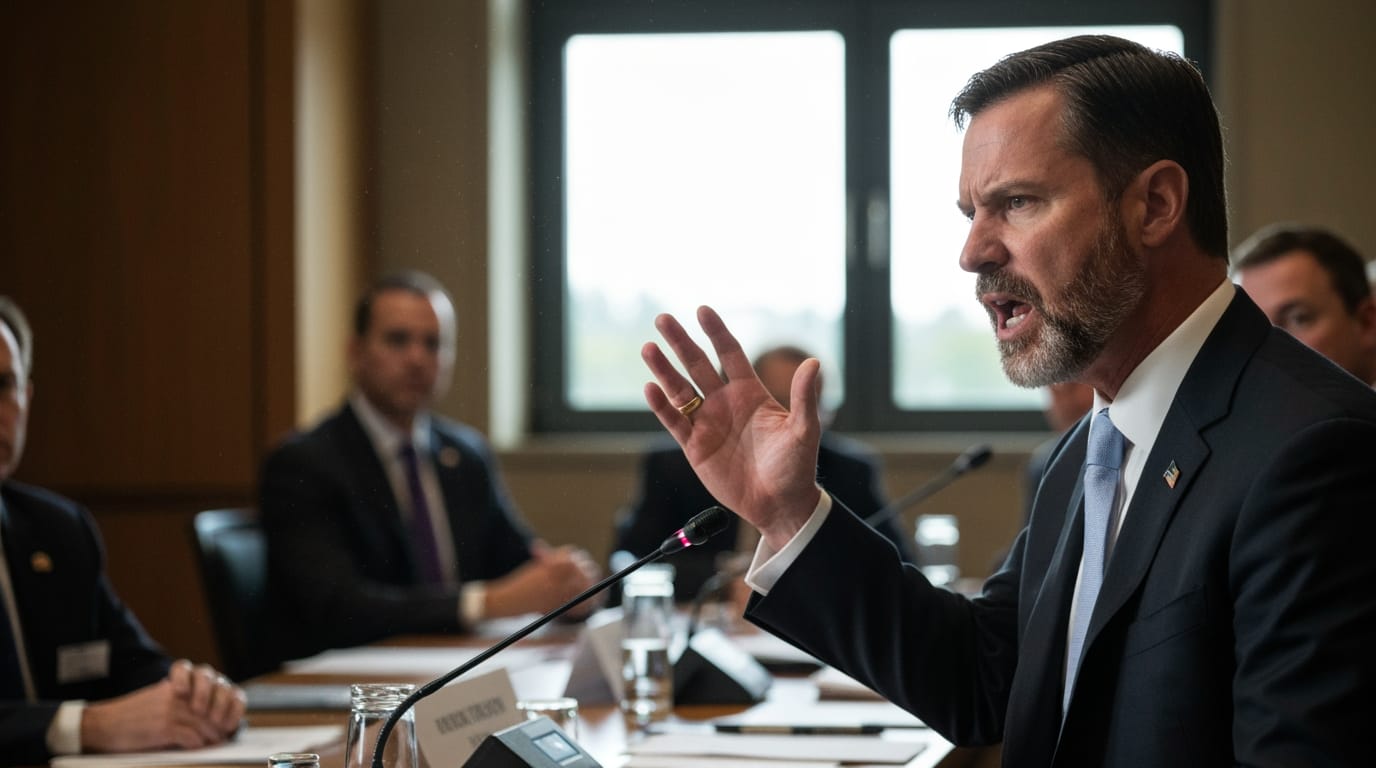
YAOUNDÉ, Cameroon – The World Trade Organization (WTO) faces an uncertain future following the dramatic collapse of its 14th Ministerial Conference (MC14) in Yaoundé, Cameroon, on March 30, 2026. US Trade Representative Jamieson Greer delivered a scathing rebuke of the global trade body, expressing profound disappointment and signaling a strategic pivot towards alternative trade alliances outside the traditional multilateral framework. The failure to extend a critical 28-year moratorium on customs duties for e-commerce, blocked by Brazil and Turkey, emerged as a central point of contention, casting a long shadow over the WTO's capacity to adapt to the evolving demands of the 21st-century global economy.
The impasse not only underscores deep divisions among member states but also fuels long-standing concerns about the organization's relevance and effectiveness in addressing contemporary trade challenges. Greer's strong statements suggest a significant re-evaluation of the United States' engagement with the WTO, potentially heralding a more fragmented global trade landscape where bilateral and plurilateral agreements gain prominence. The implications extend far beyond the immediate failure, touching upon the very architecture of international trade governance and the predictability vital for businesses worldwide.
E-commerce Moratorium: A Digital Divide Halts Progress
The immediate catalyst for the breakdown in Yaoundé was the inability of WTO members to reach a consensus on extending the moratorium on customs duties for electronic transmissions. This moratorium, in place since 1998, has prevented countries from imposing tariffs on digital goods and services, fostering the growth of the digital economy. The United States, a staunch advocate for its continuation, pushed for a permanent extension or, failing that, a minimum of four years. However, these efforts were ultimately thwarted by objections from Brazil and Turkey, which declined to support the extension.
The lapse of this moratorium means that, theoretically, WTO member countries could now begin imposing tariffs on digital transmissions, a move that could significantly disrupt global e-commerce and increase costs for businesses and consumers. While USTR Greer stated that the United States has already secured bilateral commitments from "dozens of countries – and nearly all of our major trading partners" not to impose such tariffs on US digital transmissions, the broader uncertainty for the global digital economy remains. The dispute highlights a fundamental divergence in perspectives on the taxation and regulation of the digital realm, a crucial area of growth that the WTO has struggled to effectively govern. Business leaders have voiced concerns that the failure to renew the moratorium creates an unpredictable environment, emphasizing its criticality for stability in the digital trade sphere.
USTR Greer's Blistering Critique and US Strategic Shift
In the aftermath of the failed talks, US Trade Representative Jamieson Greer did not mince words, characterizing the lack of agreement as a "disappointment at the lack of seriousness" demonstrated by many WTO member countries in pursuing a "broadly acceptable reform agenda." Greer, a key architect of President Donald Trump's trade policies, reiterated his long-held skepticism regarding the WTO's intrinsic value, asserting that the Yaoundé conference had only reinforced his view that the organization would likely play a "limited role" in future global trade policy endeavors.
This strong statement signals a potential acceleration of a US trade strategy that has increasingly favored bilateral and regional agreements over multilateral consensus. Greer explicitly stated the US intent to "work outside of the WTO with all interested partners" to achieve common goals if the organization proves incapable. This approach aligns with a pattern observed under recent US administrations, which have frequently criticized the WTO's dispute settlement system, particularly the paralysis of its Appellate Body due to US blocking of appointments since late 2019. The US has also advocated for significant reforms to foundational WTO principles, including the "most favored nation" rule and the criteria for classifying developing countries, implicitly targeting economic giants like China. The US's willingness to tie its cooperation on broader WTO reform to the e-commerce moratorium further illustrates its assertive stance and demand for tangible progress on its priorities. This shift reflects a broader US desire to recalibrate the global trading system to better serve its national interests and address perceived imbalances.
The WTO's Deepening Crisis of Relevance
The failure of the MC14 represents more than just a setback; it is another symptom of a deepening crisis within the World Trade Organization. Director-General Ngozi Okonjo-Iweala acknowledged the widespread disappointment, stating that members were "very close to a Yaoundé package of agreements" but ultimately "ran out of time." However, the underlying issues are structural and profound. The WTO's consensus-based decision-making mechanism, which grants every member a de facto veto, frequently leads to impasses, making significant reforms and new agreements exceptionally difficult to achieve.
Ministers and delegates arrived in Yaoundé with the stated task of revitalizing an institution widely recognized as weakened by geopolitical tensions, stalled negotiations, and rising protectionism. Yet, little progress was made on crucial areas such as agriculture subsidies and broader institutional reforms. Efforts to rebuild the WTO's predictable trade terms are increasingly being overshadowed by a "spaghetti bowl" of free trade agreements, bilateral initiatives, and plurilateral arrangements, as noted by Dmitry Grozoubinski of the Geneva Trade Platform. This fragmentation underscores the challenge of maintaining a unified global trading system in an era of diverging national priorities and heightened economic nationalism. The inability to resolve the Appellate Body deadlock and the lack of progress on transparency regarding government subsidies, particularly concerning China, further undermine the WTO's effectiveness as a multilateral enforcement and negotiation forum.
Implications for Global Trade and Future Governance
The fallout from the Yaoundé ministerial conference carries significant implications for the landscape of global trade. The immediate consequence is increased uncertainty for businesses engaged in digital trade, as the absence of a moratorium opens the door for new tariffs. This unpredictability could stifle innovation and investment in the digital economy, impacting a sector that has been a significant driver of global growth.
More broadly, the US stance and the WTO's continued struggles could accelerate a shift away from a rules-based multilateral trading system towards one characterized by a patchwork of regional and bilateral deals. While such agreements can foster trade among specific partners, they risk creating a less coherent and potentially more protectionist global environment. The absence of a strong, universally accepted framework for trade governance could exacerbate trade tensions, particularly as major economic powers pursue their interests through direct negotiations rather than through multilateral consensus.
The long-term challenge lies in how the international community will manage global trade issues that require collective action, such as climate change, supply chain resilience, and digital governance. If the WTO's capacity to facilitate new rules and resolve disputes continues to diminish, the global trading system could become increasingly fragmented and less equipped to address complex, interconnected challenges. The path forward for the WTO will require a fundamental re-evaluation of its operational mechanisms and a renewed commitment from its most influential members to find common ground, or risk being increasingly sidelined in an evolving world.
Conclusion: A Crossroads for Multilateralism
The 14th Ministerial Conference in Yaoundé marks a critical juncture for the World Trade Organization and the future of multilateral trade governance. USTR Jamieson Greer's sharp criticism and the US's expressed intent to pursue trade arrangements with "like-minded countries" outside the WTO signal a clear dissatisfaction with the current state of affairs and a potential redirection of global trade policy. The failure to agree on fundamental issues like the e-commerce moratorium exposes deep fissures within the organization and questions its ability to evolve with the global economy.
While the WTO Director-General emphasizes that negotiations will continue in Geneva, the repeated inability to achieve significant breakthroughs at ministerial conferences suggests a systemic challenge. The choice between revitalizing the existing multilateral framework or embracing a more fragmented, alliance-based approach will profoundly shape the global economic order. The coming months will be crucial in determining whether member states can bridge their divides and reaffirm the WTO's foundational principles, or if the global trading system will continue its trajectory towards a complex and potentially less stable future.


