Venezuela Releases Opposition Figures Amidst Political Upheaval and International Pressure
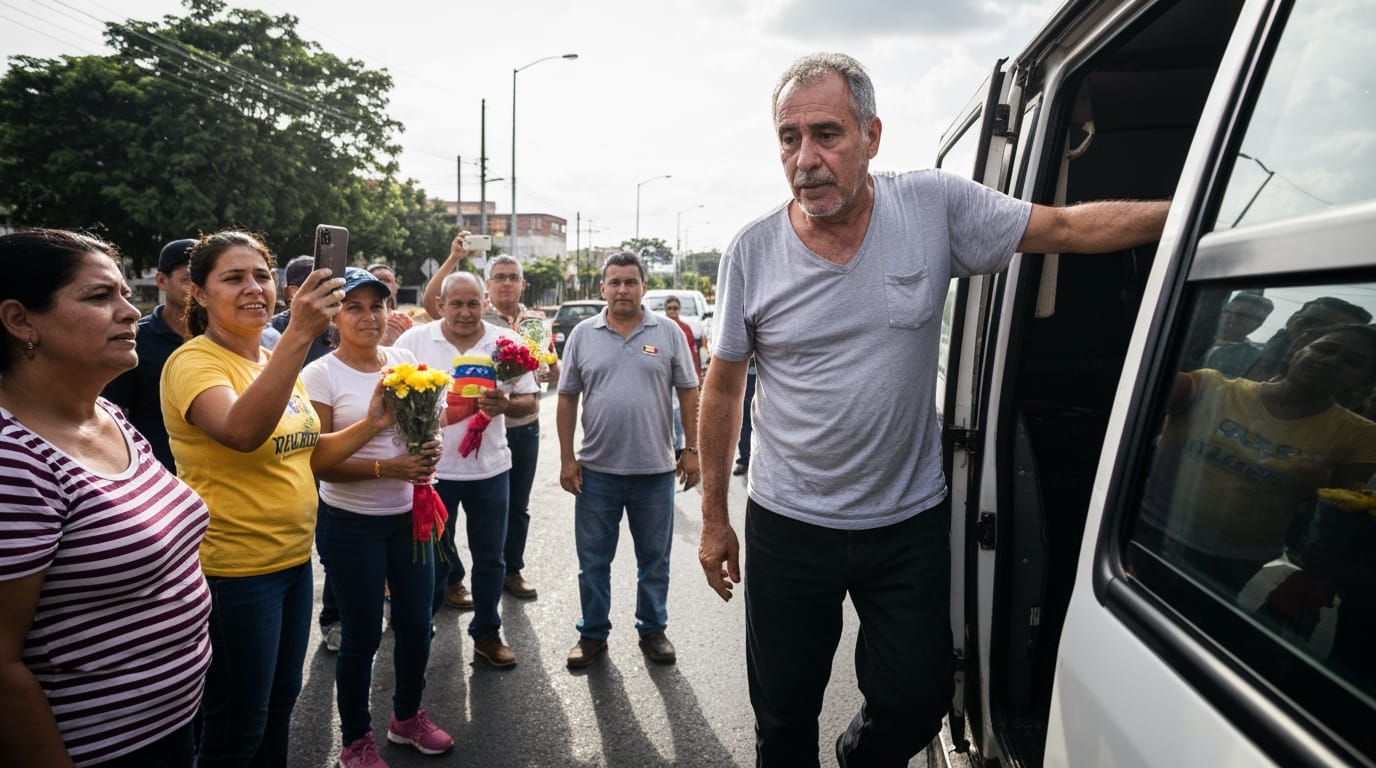
CARACAS, VENEZUELA – In a significant development that could reshape Venezuela's tumultuous political landscape, the interim government has initiated the release of numerous opposition figures, activists, and foreign nationals from detention. The move, characterized by authorities as a gesture to "consolidate peace" and foster "national unity," comes less than a week after former President Nicolás Maduro was captured by U.S. forces to face drug-trafficking charges. This action has been widely interpreted as a direct response to intense international pressure, particularly from the United States.
The releases signal a potentially pivotal moment for a nation long grappling with political polarization, economic hardship, and accusations of human rights abuses. While greeted with cautious optimism by human rights organizations and the international community, the precise number and full identities of those being freed remain a subject of ongoing verification.
Key Releases Mark a Shift
Among the high-profile individuals confirmed to be released are Enrique Márquez, a former presidential candidate, and Biagio Pilieri, an opposition leader associated with María Corina Machado’s 2024 presidential campaign. Videos circulated on social media showed Márquez and Pilieri embracing loved ones, symbolizing a glimmer of hope for many families of political detainees.
Additionally, five Spanish nationals, including the prominent Spanish-Venezuelan activist Rocío San Miguel, have been freed. San Miguel, a lawyer and human rights defender, was detained in February 2024 on charges of treason, conspiracy, and terrorism linked to an alleged plot against Maduro. Her release, along with fellow Spanish citizens Andrés Martínez, José María Basoa, Ernesto Gorbe, and Miguel Moreno, was confirmed by Spain's foreign ministry. Martínez and Basoa had been arrested in September 2024 on allegations of being Spanish spies, claims vehemently denied by Spain. The Spanish Foreign Minister José Manuel Albares hailed the development as "a positive step" in Venezuela's new phase.
Jorge Rodríguez, the head of Venezuela's National Assembly and brother of the acting president, Delcy Rodríguez, announced the releases, stating that "an important number" of individuals were being freed immediately. He emphasized that the measure was a "unilateral gesture" from the executive branch aimed at "reaffirming our unbreakable decision to consolidate peace in the republic and peaceful coexistence among all."
Political Maneuvering Amidst Seismic Shifts
The timing of these releases is crucial, occurring days after the dramatic capture of former President Nicolás Maduro by U.S. forces. This event fundamentally altered the political calculus in Caracas, paving the way for Delcy Rodríguez to assume the interim presidency. The White House has credited former U.S. President Donald Trump with securing the prisoners' freedom, framing it as a result of "maximum leverage" being applied to benefit both American and Venezuelan people. Trump has reportedly backed Delcy Rodríguez's administration, contingent on access to Venezuela's significant oil reserves.
Political analysts suggest that the Venezuelan government frequently uses prisoner releases as a strategic tool in moments of high tension or negotiation. Ronal Rodríguez, a researcher at the Venezuelan Observatory, noted that the government releases prisoners at "politically strategic moments," viewing them as a "bargaining chip" in broader political dealings. This aligns with past instances, such as the July 2025 release of 10 jailed U.S. citizens in exchange for over 200 Venezuelans deported by the U.S. administration.
The government's announcement also follows a period of escalating tensions with Washington, during which Venezuela had already released dozens of dissenters in two previous phases. This current wave of releases appears to be a direct consequence of the changed leadership and the subsequent pressure exerted by the U.S.
The Lingering Shadow of Detention
Despite the current releases, human rights organizations emphasize that hundreds of political prisoners likely remain incarcerated across Venezuela. Alfredo Romero, president of Foro Penal, an advocacy group for prisoners, reported that as of late December 2025, there were 863 people detained in Venezuela "for political reasons." Other estimates suggest the number could be as high as 1,000.
The Venezuelan government consistently denies the existence of political prisoners, asserting that those detained have committed genuine crimes aimed at destabilizing the government. However, organizations like Foro Penal have long countered this, highlighting that many are held for participating in protests, criticizing the government on social media, or other forms of dissent.
In December 2025, the Maduro administration announced the release of 99 individuals detained in connection with protests following the widely disputed 2024 presidential election. While framed by the government as an act demonstrating "unrestricted respect for human rights," civil society groups treated this news with caution, emphasizing the selective nature of the releases and the significant number of individuals still imprisoned. Critics argue that such selective releases "re-victimize" those who remain detained and their families, creating an indefinite wait without clear criteria for freedom.
Concerns also persist regarding the conditions of detention, with reports indicating that many prisoners suffer from serious illnesses and face "progressive physical deterioration" due to unsanitary environments and limited access to food and medicine.
International Reactions and Future Trajectories
The international community is closely monitoring these developments. Spain's prompt confirmation and positive assessment underscore the diplomatic weight placed on these releases. The United States, having been instrumental in the recent political shift, is likely to continue to exert influence on the interim Venezuelan government regarding human rights and democratic reforms.
Opposition leader María Corina Machado, whose 2024 presidential campaign faced severe obstacles, hailed the releases, viewing them as evidence that "injustice" would ultimately not prevail. However, the cautious optimism from rights groups reflects a deep-seated apprehension that these releases could be merely symbolic gestures rather than a comprehensive dismantling of what they describe as a "repressive system." There is a strong call for unconditional and widespread releases, as well as accountability for past abuses.
The unfolding situation in Venezuela presents a complex interplay of internal political dynamics and external pressures. The initial releases offer a fragile hope for a de-escalation of tensions and a potential path toward broader reconciliation. However, the path forward remains fraught with challenges, including calls for transparent electoral processes, full restoration of civil liberties, and addressing the root causes of the nation's profound political and humanitarian crisis. The international community, along with Venezuelan civil society, will remain vigilant to ensure that these initial steps lead to sustained and meaningful change.


