White House Dismisses European Troop Deployment in Greenland Amidst Acquisition Standoff
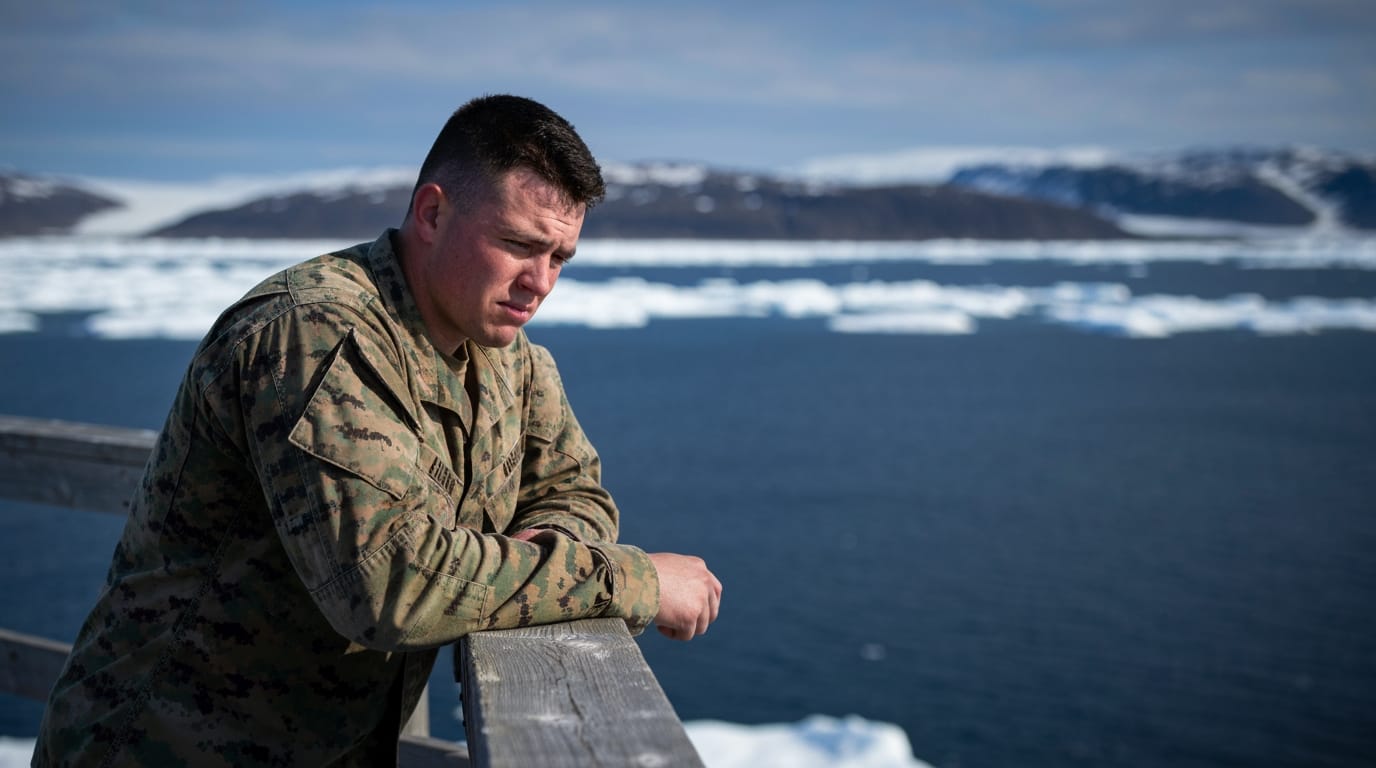
NUUK, Greenland – In a move highlighting deepening transatlantic divisions over Arctic security, a multinational contingent of European troops has commenced military exercises in Greenland, intending to underscore European commitment to the region. The White House, however, has swiftly dismissed the significance of this deployment, asserting that it will not alter President Donald Trump’s stated objective of acquiring the vast Arctic island. This divergence in perspectives comes in the wake of recent high-level talks that revealed a "fundamental disagreement" between U.S. and Danish-Greenlandic officials regarding the island's future.
European nations, including France, Germany, the United Kingdom, Norway, Sweden, and the Netherlands, have dispatched military personnel to Greenland, with Danish Prime Minister Mette Frederiksen affirming that the island's defense is a "common concern" for NATO. This coordinated effort aims to signal to Washington that NATO allies possess the capacity and willingness to safeguard the strategically vital territory, thereby obviating any perceived necessity for a U.S. takeover.
European Resolve in the Arctic
The current European military deployment, while initially modest in scale, is designed to serve as a foundational step for potentially larger and more permanent rotational presences in Greenland. Details of the initial deployment indicate the participation of approximately 15 French "mountain specialists," a 13-person German reconnaissance team, two Norwegian personnel, three Swedish officers, and a single British officer. These forces are engaging in exercises intended to bolster Denmark's preparedness for military operations in the unique Arctic environment. Danish Defense Minister Troels Lund Poulsen has indicated plans for an expanded and more enduring military footprint throughout 2026, emphasizing the collective NATO responsibility for Arctic security. Denmark itself has pledged to increase its own military presence, committing additional funds for advanced capabilities such as ships, drones, and fighter jets.
European leaders have framed this enhanced military cooperation as a direct response to the escalating geopolitical tensions in the Arctic and a reaffirmation of the territorial integrity of the Kingdom of Denmark. European Commission President Ursula von der Leyen underscored this sentiment, stating unequivocally that Greenland "belongs to its people" and that the European Union fully respects the will of its inhabitants. Further cementing this stance, France announced plans to open a consulate in Greenland, a move French Foreign Minister Jean-Noël Barrot described as a "political signal" asserting that "Greenland is not for sale."
U.S. Position Remains Unchanged
Despite the clear message from European allies, the White House has maintained a steadfast position on its desire to acquire Greenland. White House Press Secretary Karoline Leavitt explicitly stated that the European troop movements would "not affect" President Trump's decision-making process or his goal of acquisition. President Trump has reiterated his conviction that the United States "needs" Greenland for national security, arguing that Denmark cannot adequately protect the island from potential aggression by Russia or China. He warned that if the U.S. does not assert control, those powers would "go in."
The persistent U.S. interest in acquisition has led to a notable disparity in how recent diplomatic engagements are characterized. While Danish Foreign Minister Lars Løkke Rasmussen described discussions in Washington as "frank but constructive" and aimed at establishing a working group to address differences, the White House presented them as "technical talks on the acquisition agreement" for the U.S. to purchase Greenland. This stark difference highlights the profound policy chasm between the two sides. Both Denmark and Greenland have consistently rejected any notion of sale, viewing U.S. pressure as an "unacceptable" infringement on their sovereignty.
Greenland’s Pivotal Geopolitical Role
Greenland's heightened profile in international relations is directly linked to its critical geopolitical and strategic importance. The island is considered a "pivotal point" in the escalating competition for military, economic, and energy dominance in the Arctic. As climate change accelerates the melting of Arctic ice, new maritime passages are opening, significantly enhancing Greenland's strategic value for international shipping and military surveillance.
The island's location, particularly its position along the Greenland-Iceland-United Kingdom (GIUK) Gap, makes it essential for monitoring and potentially restricting naval movements, including those of Russia, in the North Atlantic and Arctic Ocean. Furthermore, Greenland hosts Pituffik Space Base, formerly Thule Air Base, a vital U.S. military installation equipped with missile early warning, defense, and space surveillance capabilities. Beyond its strategic geography, Greenland holds substantial reserves of rare earth elements and other critical minerals, materials indispensable for advanced technological and military applications. The U.S. views these resources as a crucial opportunity to reduce vulnerabilities in supply chains and counter China's dominant position in the rare earth market. The growing militarization of the Arctic by powers like Russia and China further underscores the region's escalating tensions, making Greenland an increasingly contested zone.
Looking Ahead: An Unresolved Future
The dispatch of European troops to Greenland represents a clear assertion of sovereignty and collective defense by European NATO members in the face of persistent U.S. acquisition proposals. While the White House has chosen to downplay the impact of this European presence, the actions taken by Denmark and its allies underscore a unified commitment to the existing international framework for Arctic security. The immediate future suggests continued diplomatic friction as the U.S. maintains its acquisition goals while Denmark and Greenland, supported by European partners, remain resolute in their rejection. The ongoing military exercises in the Arctic region are poised to become a recurring feature, symbolizing a joint effort to reinforce stability in a region of profound global strategic interest.


