World Cup 2026 Draw Becomes Political Spectacle Amidst FIFA Peace Prize Controversy
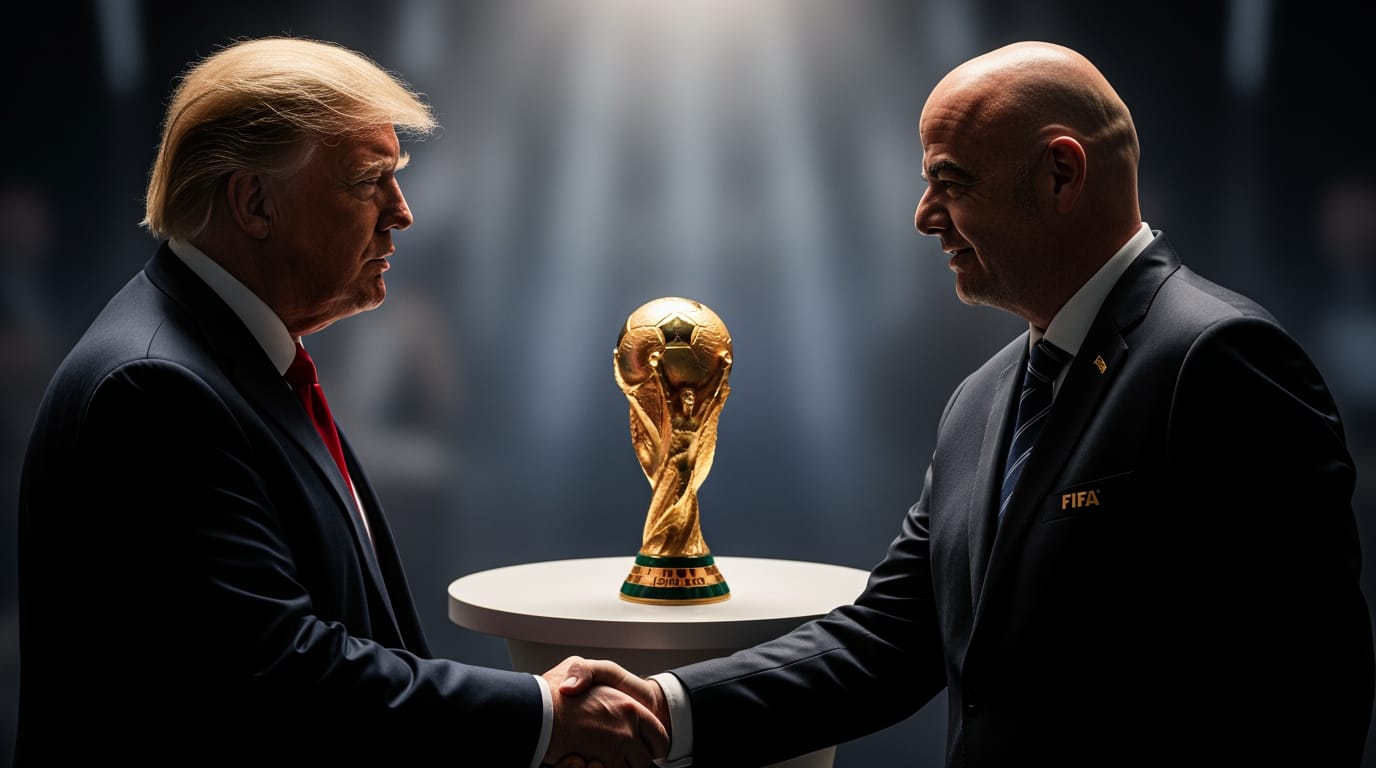
WASHINGTON D.C. - The world of football converged on Washington D.C. today for the highly anticipated draw of the 2026 FIFA World Cup, but the event at the iconic Kennedy Center quickly transcended sport, becoming a focal point of geopolitical intrigue and an unexpected stage for political accolades. As football's global governing body, FIFA, prepared to unveil the pathway for the expanded 48-team tournament, all eyes were on an unannounced, yet widely expected, recipient of a newly minted "FIFA Peace Prize"—former U.S. President Donald Trump, whose close relationship with FIFA President Gianni Infantino has consistently blurred the lines between sports and statecraft. The spectacle underscored the enduring political dimensions of the world's most popular sport, raising questions about neutrality, diplomacy, and the very definition of "peace" within the international arena.
A Tournament of Unprecedented Scale
The 2026 FIFA World Cup marks a significant milestone for the sport, set to be the largest iteration of the tournament in history. Co-hosted by the United States, Canada, and Mexico, it will feature an unprecedented 48 national teams, a substantial increase from the 32 teams that competed in Qatar in 2022. This expansion translates into 104 matches played across 16 host cities, 11 of which are in the United States, three in Mexico, and two in Canada. FIFA President Gianni Infantino has championed this expanded format, envisioning it as a monumental event that will not only elevate the sport but also leave a "profound and long-lasting" legacy for host communities and inspire a new generation of players. Infantino has optimistically stated that the tournament will be the "equivalent of 104 Super Bowls" from a global perspective, aiming to lift the global mood and foster unity through the universal language of football. The tournament is projected to attract over five million fans to stadiums and engage billions worldwide, underscoring its immense cultural and economic impact.
Trump's Enduring Political Influence on the Global Game
Donald Trump's engagement with the 2026 World Cup bid dates back to 2018 when, as president, he actively lobbied for the North American joint bid. He called on African nations and countries worldwide to support the U.S., Canada, and Mexico, even suggesting that American support for other nations might be conditional on their backing for the World Cup bid. To allay concerns regarding his administration's stringent immigration policies, Trump reportedly sent multiple letters to FIFA President Infantino, guaranteeing that foreign teams, officials, and fans would face no restrictions entering the U.S. for the tournament, a critical assurance for a global event.
His influence has continued into what has been described as his "second presidency," positioning the World Cup as a centerpiece event, particularly in light of the upcoming 250th anniversary of U.S. independence in 2026. Trump's presence at the draw ceremony today, and his expected prominent role, highlights his ongoing interest in leveraging the tournament for both diplomatic and domestic political gain. However, this political engagement has not been without controversy. He has recently threatened to relocate World Cup matches from Democratic-run cities if he deems conditions "unsafe," injecting domestic political tensions directly into the tournament's planning. Furthermore, his administration's immigration policies continue to raise concerns, with several countries—including some that have qualified for the World Cup—facing full or partial immigration restrictions, potentially affecting fans' ability to attend.
The FIFA Peace Prize: A Diplomatic Own Goal?
A significant development overshadowing the draw is the establishment and inaugural awarding of the "FIFA Peace Prize – Football Unites the World." This new annual award, conceived by Gianni Infantino, is intended to honor individuals who "help unite people in peace through unwavering commitment and special actions." While the recipient was not officially announced beforehand, widespread speculation, fueled by Infantino's own cryptic remarks, pointed squarely to Donald Trump. Infantino had previously expressed public support for Trump's nomination for the Nobel Peace Prize, suggesting a pattern of alignment between the two figures.
The timing of the prize's creation, just weeks after Trump was passed over for the Nobel Peace Prize, has drawn considerable scrutiny and raised eyebrows among observers. Critics suggest the award represents a reward for political alliance rather than genuine contributions to global peace, with some questioning its integrity given FIFA's own stated commitment to human rights and political neutrality. The close relationship between Infantino and Trump, described by some as a "strategic alliance," has led to accusations of cronyism and a perceived undermining of FIFA's ethical guidelines. Human rights advocates have voiced concerns that honoring Trump, especially in light of his immigration policies and rhetoric, contradicts the very principles of inclusivity and peace that FIFA purports to uphold.
Geopolitical Echoes: The Abraham Accords Connection
The discussion around peace and political influence within FIFA is not entirely new. In 2021, Gianni Infantino, speaking in Israel, had floated the idea that the U.S.-brokered Abraham Accords could pave the way for Israel to co-host a World Cup with its Arab neighbors. The Abraham Accords, normalization deals between Israel and several Arab states, were a significant diplomatic achievement under the Trump administration. Infantino questioned, "Why can't we dream of the World Cup in Israel and its neighbors? With the Abraham Accords, why should we not do it here in Israel with her neighbors in the Middle East and the Palestinians?"
However, the complexities of such proposals were vividly illustrated during the 2022 World Cup in Qatar. Despite the diplomatic overtures of the Abraham Accords, Israeli journalists and fans encountered widespread hostility and displays of Palestinian solidarity from Arab fans, suggesting a disconnect between government-level agreements and popular sentiment in the region. This experience highlighted the challenge of using sport to bridge deep-seated political and social divides, adding another layer of context to Infantino's rhetoric on peace and unity through football. His attendance at a controversial event in Jerusalem also drew criticism from Palestinian football authorities, who reportedly cancelled a meeting with him.
Conclusion: Sport and Statecraft Intertwined
As the world witnessed the 2026 World Cup draw unfold, it was clear that the event was far more than a mere sporting procedure. It served as a powerful reminder of how deeply intertwined sport and statecraft have become, particularly at the highest levels. The intersection of the expanded World Cup, Donald Trump's prominent role, Gianni Infantino's vision for global football, and the controversial FIFA Peace Prize presented a complex tableau of ambition, diplomacy, and debate. While FIFA maintains its mission to unite the world through football, the events surrounding this draw underscore the ongoing challenge of separating the beautiful game from the intricate and often contentious world of international politics. The 2026 World Cup, already set to be historic in scale, appears poised to continue this tradition, played out against a backdrop of shifting global alliances and persistent political engagement.